

 GMA Brandtalk
 Tracking
 Archives

Babies with biliary atresia need urgent diagnosis and support
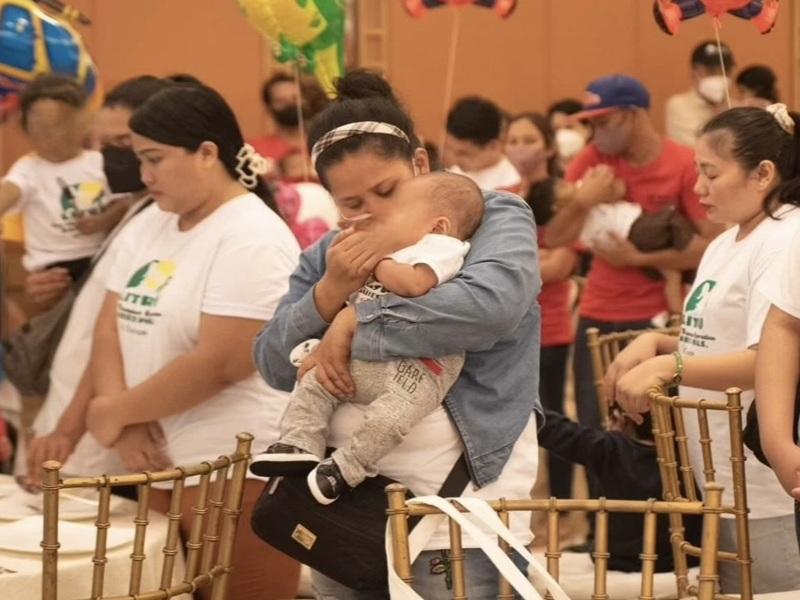
What many parents dismiss as ordinary newborn jaundice can be a warning sign of biliary atresia, a rare but fatal liver disease that requires urgent medical attention and, in many cases, a liver transplant.
For Jenny Sumalpong, founder of Litro (Liver Transplant Operation) Babies Philippines Inc., awareness is critical because the disease is present from birth and can rapidly destroy a child’s liver if left untreated.
“Since birth naman pag-inborn talaga ang sakit nila. Iba-iba kasi sila ng case. Hindi na sila abot talaga ng 2 years," said during an interview with GMA News Online.
(It’s an inborn condition present since birth. Each case is different, but many of them don’t reach the age of two.)
Sumalpong said symptoms worsen quietly until the damage is already severe.
“Pag sobrang taas na ng bilirubin nila, sobrang paninilaw na nila, malaki na yung tiyan nila, sobrang sira na yung liver nila. That is the time na kailangan na talaga nila ng agarang transplant," she added.
(When their bilirubin levels are extremely high, they become very jaundiced, their stomachs swell, and the liver is already badly damaged. That’s when an urgent transplant is really needed.)
With pediatric liver transplants limited locally, Litro Babies Philippines helps families navigate diagnosis, fund raising, donor preparation, and overseas treatment. The group often serves as the bridge between a child's illness and survival.
Since its founding ten years ago, the organization has helped more than 200 Filipino children undergo liver transplants abroad, mainly in India, with two to three babies sent every month, Sumalpong said.
A race against time and money
A liver transplant abroad costs at least P2 million, excluding airfare, accommodation, and daily expenses, an amount far beyond the reach of most Filipino families.
“At least 2 million ang kailangan kasi 1.8 million yung transplant and siyempre yung allowance pa, airfare, accommodation, isi-shoulder nila yun.”
(At least P2 million is needed because P1.8 million for the transplant alone, and of course their allowance, airfare, and accommodation, all shouldered by the family.)
“Actually, nasa 200 plus na po sila lahat na napadala… Every month 2–3 babies ang naipapadala.”
(Actually, there are already over 200 babies sent to India. Every month, there two to three babies are being sent for transplant.)
Recovery usually takes at least three months, and the reported success rate is 95 percent.
Still, Sumalpong said the biggest burden falls on poor families who cannot raise millions on their own.
“Syempre lalo na yung mga talagang indigent, hindi naman nila ma-afford maiipon yung million.”
(Especially indigent families, they can’t afford to save millions.)
When warning signs are missed
For Ana Bena Ventanilla, 34, whose two-year-old daughter Benalyn has not yet undergone a transplant. The early symptoms that manifested were dismissed while they were still in the province.
“Naninilaw po siya pero sabi po doon sa’min, ibilad lang… wala naman din po kaming alam sa Biliary (Atresia).”
(She was jaundiced, but we were told to just expose her to sunlight… we didn’t know about biliary atresia.)
Benalyn was diagnosed only at four months old. The family is now raising $38,000 for a transplant while living in Manila, away from their other children.
“Hindi ko inaasahan na mada-diagnose at mangyayari sa amin, kala ko napapanood ko lang ito sa TV e," she said.
(I didn't expect it to be diagnosed and happen to us, I thought I was just watching situations like this on TV.)
Survival after transplant
For Rellie Anne Joy Camato, whose son Zachary underwent a liver transplant in 2022, the journey involved fear, fundraising, and uncertainty.
“Ang hirap… bakit siya sa dami ng bata.”
(It’s so hard… why him, among so many children?)
Doctors warned the family that survival was not guaranteed.
“Sinabihan kami ng doktor na hindi sila sigurado kung mabubuhay siya.”
(The doctors told us they were not sure if he would survive.)
Despite complications and a second surgery, Zachary survived and is now on lifetime medication and check ups.
“Importante, buhay siya kasama namin.”
(What’s important is that he’s alive with us.)
Call for early detection
Sumalpong urged parents to seek medical help immediately if jaundice persists beyond the first week of life, especially if accompanied by pale stools and a swollen abdomen.
“Pag pinanganak niyo ang anak niyo na madilaw and after a week hindi pa rin natatanggal yung paninilaw, better go to the doctor na," she noted.
(If your baby is born jaundiced and it doesn’t go away after a week, it’s better to go to the doctor.)
Her hope, she said, is that increased awareness and stronger government support can prevent children from being lost simply because help came too late.
“Ang hope ko lang naman… sana may gobyerno na tutulong.”
(My only hope is that the government can help.) — BAP, GMA Integrated News

