

 GMA Brandtalk
 Tracking
 Archives

EXPLAINER: What is the ‘Anti-Epal’ provision in the 2026 national budget bill?
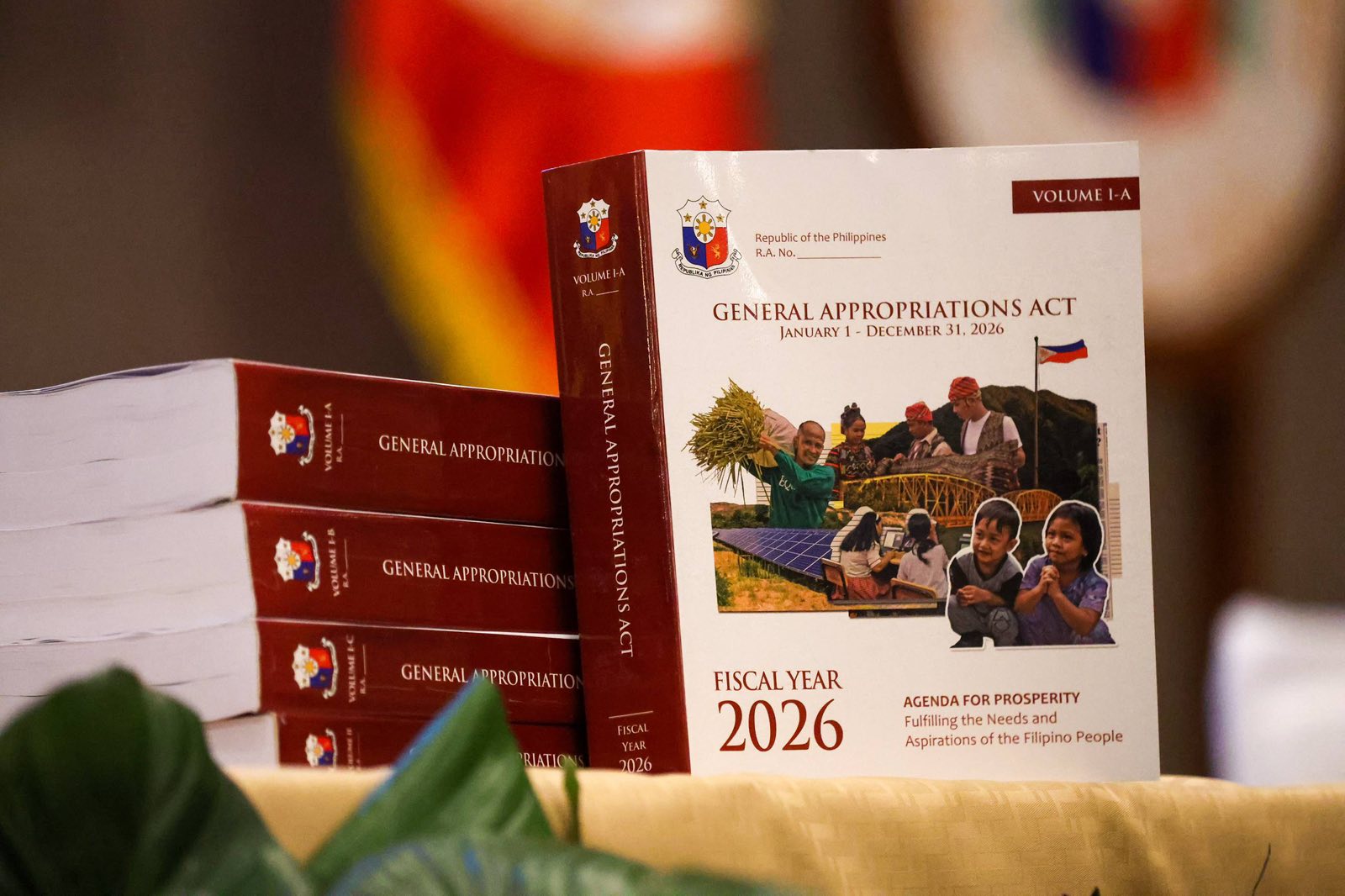
The bill outlining the P6.793-trillion national budget for 2026 is now up for the review of the President, and it features a provision that seeks to end the longstanding patronage politics fueled through the distribution of financial aid.
The bicameral conference committee report, which was recently ratified by the Senate and the House of Representatives, bars political involvement in the distribution of cash and other forms of financial assistance.
Section 19 of the 2026 enrolled budget bill specifically provides that all cash assistance and other forms of financial aid distributions shall be conducted exclusively by authorized government officers and personnel or accredited partners.
No public officials holding elective positions, electoral candidates, politicians, political parties, or any of their representatives, except for officials having direct administrative and executive authority over the implementing agency, shall therefore influence, be present in, participate in, or take part in the actual distribution of any cash assistance and other forms of financial aid in the following programs:
- Protective Services for Individuals and Families in Difficult Circumstances (PSIFDC);
- Tulong Panghanapbuhay sa Ating Disadvantaged/Displaced Workers (TUPAD);
- Medical Assistance to Indigent and Financially Incapacitated Patients (MAIFIP); and
- Other similar government financial assistance programs.
No political signage, branding, paraphernalia, or activity shall likewise be displayed or conducted within the distribution area.
It also states that the national government agencies responsible for distributing cash assistance and other forms of financial aid shall establish, formulate, adopt, and enforce mandatory requirements, protocols, and reporting mechanisms to ensure strict compliance with such a policy.
The Joint Congressional Oversight Committee on Public Expenditures will be in charge of monitoring the agencies’ compliance with the requirements of the provision.
When the bicam approved and adopted the report on the disagreeing provisions in the 2026 General Appropriations Bill (GAB), House committee on appropriations chairperson Rep. Mikaela Suansing said that this provision would allay concerns that the increased funding allocated to government cash aid programs could reinforce patronage politics.
Suansing, however, conceded that no prohibition was included in the proposed budget law that eliminates the issuance of guarantee letters by politicians for citizens' access to the MAIFIP program of the Department of Health (DOH).
“Hindi po naka-specify 'yung guarantee letter kasi lahat po ng types—AICS, MAIFIP, TUPAD—covered na po ‘yun,” she said.
(The provision does not specifically mention guarantee letters because all types—AICS, MAIFIP, TUPAD—are already covered.)
‘Not necessary’
For Senate President Vicente “Tito” Sotto III, the issuance of guarantee letters is unnecessary despite it not being explicitly prohibited in the Anti-Epal provision.
“Any legislator or even members of the Executive department, gusto nila mage-endorse sila ng letter, parang gano’n. Okay ‘yun, but it's no longer necessary. It's not necessary, hindi katulad dati, kailangan may GL pa para bigyan. Hindi na. Wala na, binigay na nga do’n sa agency,” Sotto said.
(Any legislator or even members of the Executive department want to endorse a letter. That's okay, but it's no longer necessary. It's not necessary now, unlike before where guarantee letters are needed. It’s no longer like that now as we’ve given that to the agency itself.)
“Not necessary. Eh ‘pag ginawa mo ‘yun, epal ka. Kitang kita ka. ‘Yun nga ‘yung iniiwasan natin. Hindi na kailangan gawin ‘yun,” he added.
(It’s not necessary. If you do that, you're epal. You could be easily seen. That's what we want to avoid. There's no need for guarantee letters.)
To recall, the proposed funding for the MAIFIP was raised to P51 billion for 2026, after lawmakers finalizing next year’s national budget approved the increase.
The MAIFIP is a financial aid program of the DOH targeted to provide assistance for the medical expenses of eligible applicants, including indigent and financially incapable patients.
EXPLAINER: What is DOH's MAIFIP program?
The program, however, has drawn criticism for its heavy reliance on guarantee letters from politicians, a practice critics say perpetuates patronage politics. These guarantee letters are often issued by government officials such as senators and congressmen to hospitals, committing to shoulder the full or partial medical costs of qualified patients.
Malacañang previously said that MAIFIP funds will not go through politicians, but would be released directly to local government hospitals, with the DOH implementing the program.
For Senator Sherwin Gatchalian, chairman of the Senate committee on finance, the DOH has the capacity to remove the issuance of guarantee letters, if they want to.
“‘Yung GL, it's part of the DOH process. So, kung tatanggalin ‘yan, DOH na magtanggal niyan. Kaya nilang tanggalin ‘yan. Hindi na kailangan ng batas ‘yan. In fact, wala namang batas creating the GL. It's their guidelines that created the GL. So, kung gustong tanggalin ng DOH, pwede naman tanggalin. Kung pwedeng i-reform para mas mabilis ibigay sa tao, mas pwede rin ‘yun,” he explained.
(The guarantee letters are part of the DOH process. So, if it's going to be removed, DOH should be the one to remove it. They can remove it. There's no need for a law to do that. In fact, there's no law creating the guarantee letters. It's the DOH’s guidelines that created them. So, if the DOH wants to remove it, they can do so. If the DOH wants to reform it so it can be given faster to people, that's also possible.)
Asked why the legislators did not specifically add a provision on the guarantee letters, Gatchalian said, “This is a budget bill eh. So, ang budget bill is appropriations... So, whether the program is beneficial or not, kailangan DOH at ‘yung Committee on Health mapag-usapan ‘yan.”
(This is a budget bill. So, the budget bill is for appropriations... So, whether the program is beneficial or not, the DOH and the Committee on Health need to discuss that first.)
Safeguards
Regardless, the senators stood firm that the Anti-Epal provision is important to alleviate the patronage politics in the country.
“Importante siya dahil in-apply natin ‘yun sa lahat ng cash aid, lahat ng mga ayuda programs ng gobyerno na hindi pwedeng gamitin ng pulitiko for their own political patronage. So malaking safeguard ‘yan na ilagay sa general provision. So ibig sabihin, lahat ng programa ng gobyerno sakop nito dahil nasa general provision,” Gatchalian said.
(This is important because we have applied that to all cash aid programs of the government. These programs cannot be used by politicians anymore for their own political patronage. So that is a big safeguard to be included in the general provision. So that means, all government programs would be covered because it’s in the general provision.)
Sotto, meanwhile, said that the Anti-Epal provision would also put focus on helping those in need, rather than politicians.
“Very important para mawala ‘yung isyu ng patronage politics. Kaya mahalaga na nandodoon ‘yung mga provisions na ‘yun para once and for all, makita rin ng mga kababayan natin na pinayagan natin ‘yung mga gano’n para nga makatulong sa mga medical expenses ng ating mga kababayan,” he said.
(It's very important because it would get rid of the issue of patronage politics. That provision has to be there so that once and for all, the people would see that we just want to help them with their medical expenses.)
Section 20
Aside from the Anti-Epal provision indicated under Section 19, there is also another provision that generally considers the display or attachment of politicians’ names, images, and logos on government projects "unnecessary."
Section 20 of the enrolled version of the 2026 budget provides that: The display and/or affixture of the name, picture, image, motto, logo, color motif, initials, or other symbol or graphic representation associated with any public official, whether elected or appointed, on signboards for all programs, activities, and projects funded under this Act shall be considered unnecessary pursuant to COA Circular No. 2013-004 dated January 30, 2013, as amended, and therefore prohibited.
This provision has been indicated in the past General Appropriations Acts since 2022.
The enrolled budget bill has already been transmitted to Malacañang for review. President Ferdinand “Bongbong” Marcos Jr. will either sign it into a law or veto certain line items and provisions.
Executive Secretary Ralph Recto said Tuesday that Marcos and his team are now thoroughly reviewing the bill to ensure its integrity and effective execution.
The President is expected to sign the proposed 2026 budget in the first week of January. —AOL/VBL, GMA Integrated News

