

 GMA Brandtalk
 Tracking
 Archives

Marcos vows tighter 'anti-epal’ rules in 2026 budget
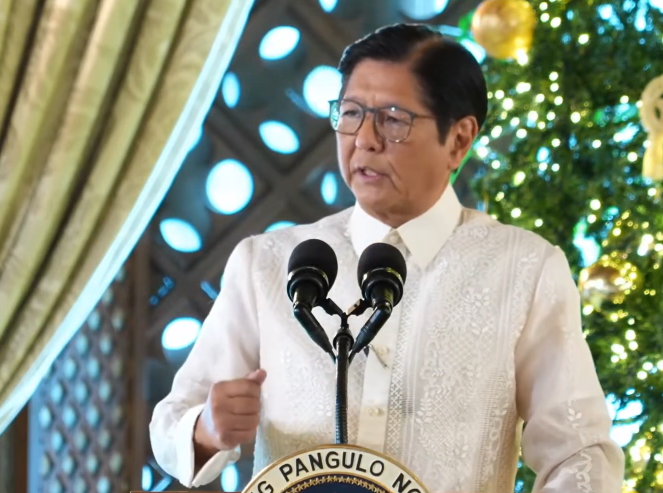
President Ferdinand “Bongbong” Marcos Jr. on Monday said the government will “strictly implement” the provision in the 2026 national budget that bars politicians from distributing cash and other forms of financial assistance.
Marcos made the commitment as he signed Republic Act No. 12314, or the General Appropriations Act (GAA), which outlines the national government's P6.793-trillion budget for 2026.
“Politicians shall be barred from the distribution of any financial aid, and we shall ensure that the support reaches the intended beneficiaries without patronage. Walang bawas, walang kulang,” the President said moments after he signed the budget measure into law.
An "anti-epal" special provision was supposedly included in the law, which prevent politicians from using government programs, projects, or funds to promote themselves.
The word “epal” is Filipino slang for someone who wants attention or wants to be noticed, especially in a way that’s inappropriate or self-serving. In politics, it usually refers to officials who take credit for government projects to boost their public image or electoral appeal.
Section 19 of the enrolled copy of the 2026 General Appropriations Bill (GAB) specifically provides that all cash assistance and other forms of financial aid shall be distributed exclusively by authorized government officers and personnel or accredited partners.
Public officials holding elective positions, electoral candidates, politicians, political parties, or their representatives—except those with direct administrative and executive authority over the implementing agency—are prohibited from influencing, being present in, participating in, or taking part in the actual distribution of any cash assistance and other forms of financial aid under the following programs:
- Protective Services for Individuals and Families in Difficult Circumstances (PSIFDC)
- Tulong Panghanapbuhay sa Ating Disadvantaged/Displaced Workers (TUPAD)
- Medical Assistance to Indigent and Financially Incapacitated Patients (MAIFIP)
- Other similar government financial assistance programs
No political signage, branding, paraphernalia, or activity shall be displayed or conducted within the distribution area.
To recall, the MAIFIP program of the Department of Health drew criticism for its reliance on guarantee letters from politicians—a practice critics say perpetuates patronage politics.
These letters were typically issued by government officials, such as senators and congressmen, committing to shoulder full or partial medical costs of qualified patients.
Local government funds
Marcos also said the role of local government units (LGUs) will be strengthened through increased allocations under the Local Government Support Fund (LGSF), enabling them to address local development needs, support livelihoods, and create safe and resilient communities.
“I stand firm in my constitutional duty to ensure the faithful execution of laws. Therefore, I hereby condition the implementation of certain provisions in this Act to conform to existing laws, policies, rules, and regulations,” the President said.
Among the budget items subject to conditional implementation are "Engineering and Administrative Overhead Expenses", "Payment of Retirement Benefits and Pensions, Capacity Development Programs, and "Foreign Service Posts."
Marcos also cited programs and projects that will be carried out within legal and regulatory frameworks, such as the School-Based Feeding Program, Medical Scholarship and Return Service Program.
Also covered by more stringent rules are the PAMANA Program, Residential Care Services to Vulnerable Groups by accredited social welfare and development agencies, infrastructure projects of GOCCs, and programs for senior citizens and persons with disabilities.
“This shall ensure that these programs promote our long-term development goals,” Marcos said.—MCG, GMA Integrated News

