

 GMA Brandtalk
 Tracking
 Archives

PH Navy says China increased 'coercive actions' in SCS; embassy denies
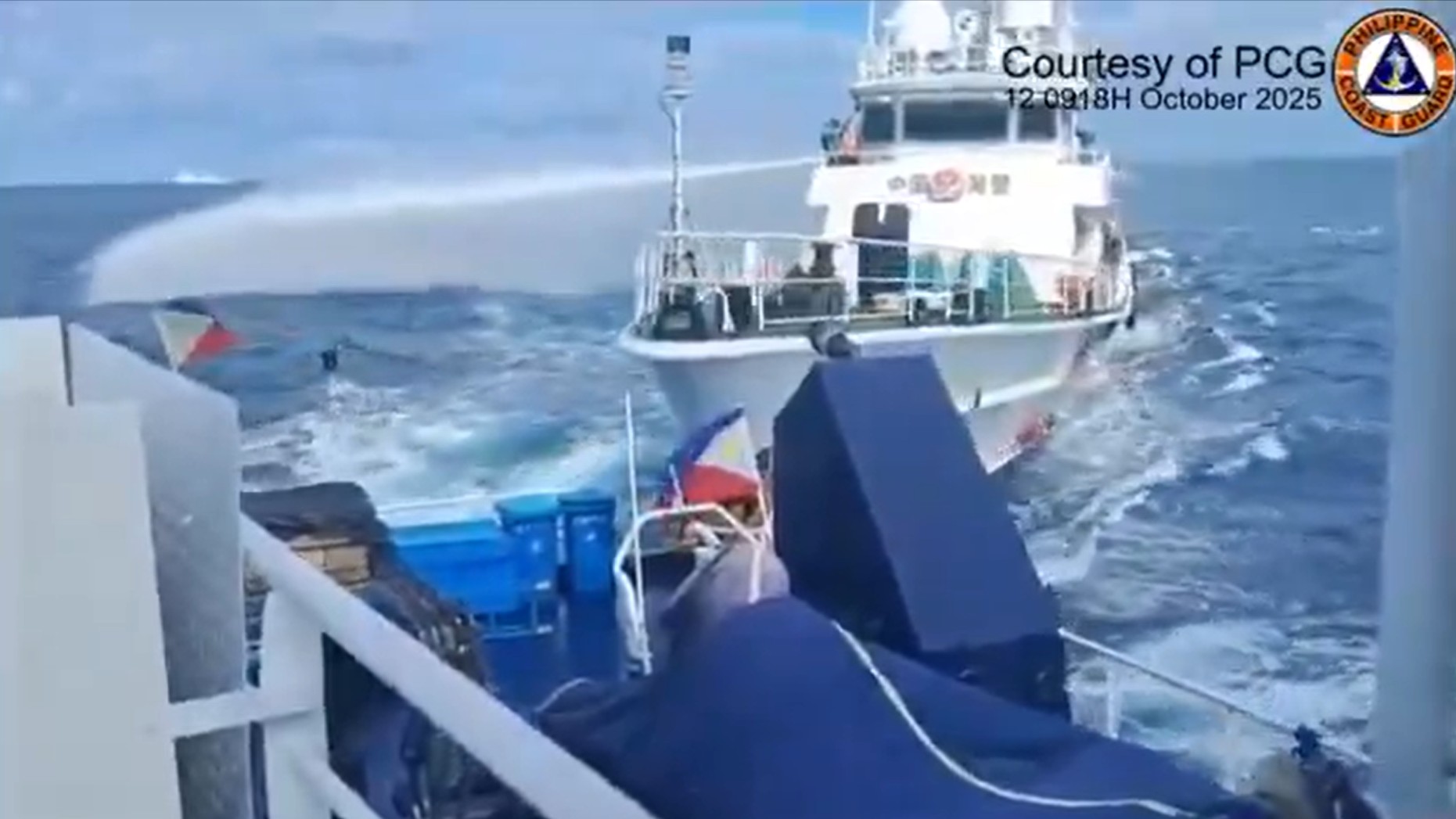
The Philippine Navy has issued a report indicating that the Chinese maritime forces reinforced its front line coercive actions in the South China Sea in 2025—a finding rejected by the Chinese Embassy in Manila.
Based on the six-page assessment shared by Philippine Navy spokesperson for the West Philippine Sea (WPS) Rear Admiral Roy Vincent Trinidad, the People's Liberation Army Navy (PLAN) operations in and around the WPS between 2024 and 2025 "showed greater integration with joint forces, more consistent presence at the periphery of Philippine territory and exclusive economic zone (EEZ), and improved readiness for escalation."
In 2024, the Philippine Navy said the PLAN's activity was only "periodic and limited to support roles," with most direct pressure to Philippine vessels being applied by the China Coast Guard (CCG).
However, in 2025, the PLAN presence reportedly became "more consistent, predictable, and geographically closer to contested areas."
The PLAN also supposedly increased joint sails and shadowing operations using large CCG cutters, indicating a tighter command-and-control integration.
"By 2025, the PLAN shifted from intermittent support to a persistent deterrent posture highlighting Beijing's willingness to escalate and respond to any crisis," the report read.
China rejects
The Chinese embassy, for its part, denied claims in the Philippine Navy's report, saying that it is the Philippines that "makes provocation at sea."
"We firmly reject the Philippine side's so-called report. It is full of misperceptions and bias against China, maliciously slanders China's military activities, distorts China's position on the South China Sea issue and deliberately misleads the public," the embassy said in a statement.
The embassy also stood firm that China pursues a national defense policy that is "defensive in nature and adheres to a military strategy of active defense" aimed at safeguarding national sovereignty, security, and development interests.
Tensions continue as Beijing claims almost all of the South China Sea, a conduit for more than $3 trillion of annual shipborne commerce, including parts claimed by the Philippines, Vietnam, Indonesia, Malaysia, and Brunei.
Parts of the South China Sea that fall within Philippine territory have been renamed by the government as West Philippine Sea to reinforce the country’s claim.
The West Philippine Sea refers to the maritime areas on the western side of the Philippine archipelago including Luzon Sea and the waters around, within and adjacent to the Kalayaan Island Group and Bajo de Masinloc.
In 2016, the Permanent Court of Arbitration in the Hague ruled in favor of the Philippines over China's claims in the South China Sea, saying that it had "no legal basis."
China has refused to recognize the decision. — VDV, GMA Integrated News

