

 GMA Brandtalk
 Tracking
 Archives

Bills seek to bar dynasties, contractors from party-list system
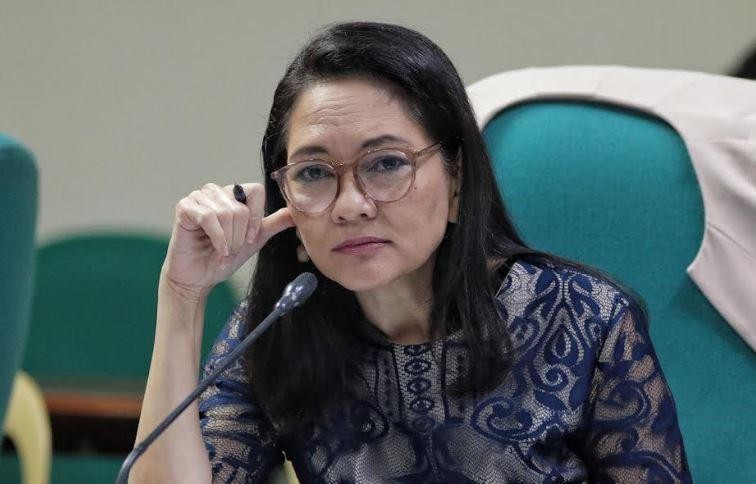
Senator Risa Hontiveros and Akbayan Party-list on Monday separately filed Senate and House bills seeking prohibit members of political dynasties and government contractors from becoming nominees or representatives, amending Republic Act 7491 or the Party-List System Act.
Under Senate Bill No. 1656, Hontiveros is pushing to bar any person from becoming, or serving as a substitute for, a party-list nominee or representative if he or she:
- Is a spouse or relative within the fourth degree of consanguinity or affinity of an incumbent elective official, including a party-list representative;
- Is a spouse or relative within the fourth degree of consanguinity or affinity of a nominee of any party-list organization or a candidate for any elective public office in the same election; or
- Succeeds to the office of a party-list representative who is his or her spouse or relative within the fourth degree of consanguinity or affinity.
- The measure also prohibits party-list nominees, representatives, or organizations from directly or indirectly:
- Holding contracts or subcontracts to supply the government, or any of its divisions, subdivisions, or instrumentalities, with goods or services or to perform construction or other works;
- Serving as a partner, director, officer, member, or stockholder of any corporation, partnership, or entity that holds any such contract or subcontract; or
- Possessing any beneficial ownership, pecuniary interest, or financial stake in any such contract or subcontract.
"This bill aims to reclaim the voice of ordinary Filipinos who’ve been shut out of power because of abusive personalities using the party-list system as a backdoor to power,” Hontiveros said in a statement.
“Kung gusto nilang rumaket, huwag nilang gamitin ang party-list system," she added.
According to Hontiveros, political dynasties and government contractors have "hijacked" the party-list system.
“Tama na ang pangha-hijack nila. If they’re not genuinely fighting for the Filipino people, they don't belong in this system,” she added.
(Their hijacking should stop. If they're not genuinely fighting for the Filipino people, they don't belong in this system.)
A counterpart bill was filed in the House by Akbayan party-list Reps. Chel Diokno, Perci Cendaña, and Dadah Ismula, as well as Dinagat Islands Rep. Kaka Bag-ao, under House Bill No. 7074.
“Our bill seeks to restore the true intent of the law and keep the party-list system out of the hands of those who seek to exploit it. It also guarantees that marginalized sectors have a real voice in Congress, enabling them to fight for their rights and welfare,” Diokno said.
Similar to SB No. 1656, the House’s version also seeks to remove the three-seat limit to enable full, democratic, and proportional representation. It also prohibits the registration of party-list organizations patterned after television or radio programs, government assistance programs, or the names of public officials, celebrities, and other public figures.
“These provisions ensure that the system remains focused on genuine sectoral representation," Diokno said.
Akbayan lawmakers also cited a recent Philippine Center for Investigative Journalism report showing that 66% of party-list groups who won seats in the 19th Congress had at least one nominee from an established political dynasty.
In addition, congressional inquiries into anomalies in flood control projects have revealed that a substantial number of party-list representatives benefit directly from government projects by acting as contractors.
Under Republic Act No. 7941, or the Party-List Law, groups that obtain a minimum of 2% voter share in a party-list race are entitled to one House seat. An additional seat is granted proportionally based on additional voter share.
However, the law currently allows each party-list group to occupy no more than three seats.
Party-list groups that receive less than 2% of the total votes may still be entitled to one seat if those garnering at least 2% are not enough to fill the 64 seats, or 20% of House members, allocated for party-list representatives under the Constitution.—MCG, GMA Integrated News

