

 GMA Brandtalk
 Tracking
 Archives

DMW seeks supplemental budget amid Middle East conflict
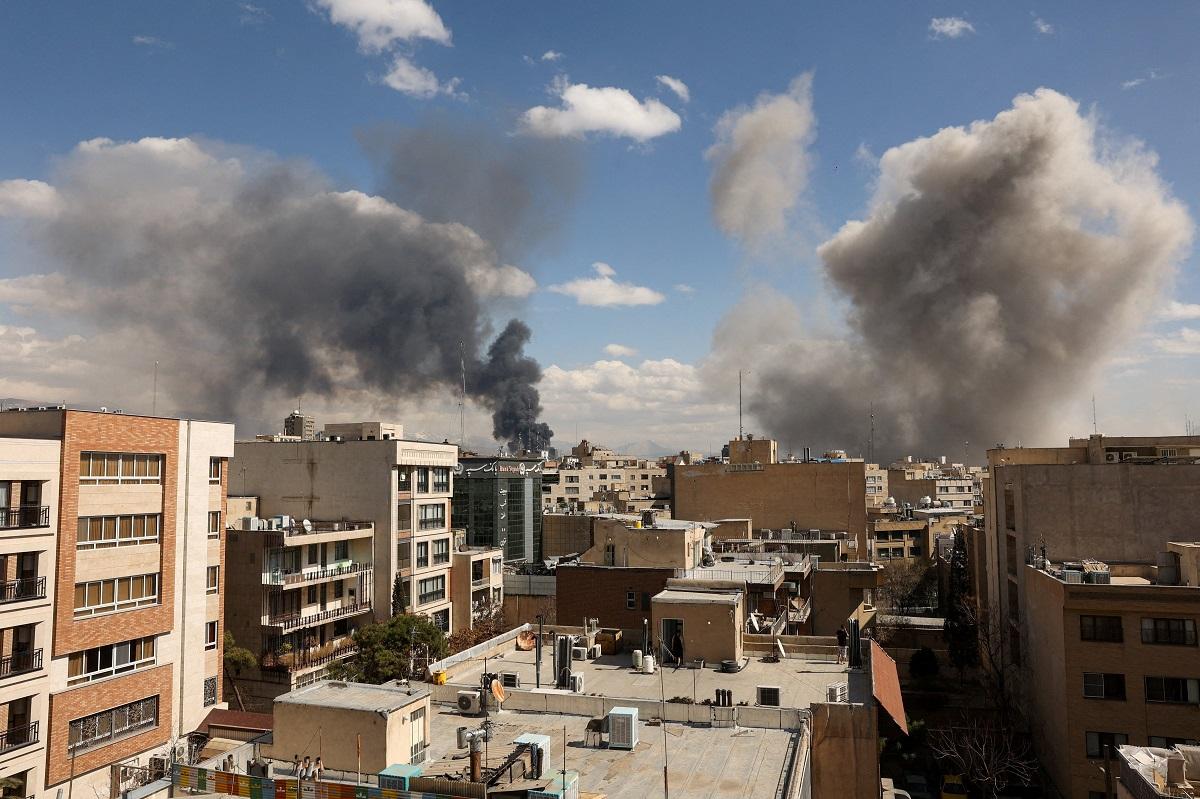
The Department of Migrant Workers (DMW) said Friday it will be needing a supplemental budget from the national government to fund the repatriation of Filipinos in preparation for a possible worst-case scenario in the ongoing conflict in the Middle East.
During a hearing of the Senate committee on foreign relations, Senator Risa Hontiveros asked if Congress needs to pass a supplemental budget to assist overseas Filipino workers (OFW) in the Middle East and provide them necessary subsidies.
"Yes po. We need the funding in a worst-case scenario. We can live with the current budget, with the current level of repatriation requests. However, 'yung tanong 'na, 'Kapag worst-case scenario, kakayanin ba?' also depends on pagpaparami ng repatriation requests antimano pa lang para makalabas na 'yung sinong gustong makalabas at maging efficient tayo," DMW Secretary Hans Cacdac answered.
(Yes. We need the funding in a worst-case scenario. We can live with the current budget, with the current level of repatriation requests. However, the question of whether or not we can handle the worst-case scenario also depends on the increasing number of repatriation requests so that we can repatriate all of them and do that efficiently.)
"But the short answer is yes, (we need) supplemental funding," he added.
Overseas Workers Welfare Administration (OWWA) Administrator Patricia Yvonne Caunan said the current Emergency Repatriation Fund (ERF) stands at P1.5 billion.
Before the crisis started, Caunan said, the repatriation cost per individual was P135,000 to P140,000. When the conflict broke out, however, the OWWA chief said the amount may reach up to P150,000 per individual.
"Nasabi po ng DFA (Department of Foreign Affairs) 'yung number of Filipinos ay 2.4 million. 'Pag nag-run po kami ng simulation ng at least 0.5% ang affected or around 12,000 na magre-request ng repatriation po, mayroon po kaming funding gap na agad na P338 million,” Caunan explained.
(The DFA said the number of Filipinos is at 2.4 million. When we ran a simulation, considering at least 0.5% affected or around 12,000 who will request repatriation, we immediately have a funding gap of P338 million.)
"So sabihin po natin at 1% ang mag-request, that would be around 24,000, Mr. Chair. Ang amin pong funding gap ay nasa P2.2 billion na po, so because the total estimated cost will be around P3.67 billion at P150,000 po,” she added.
(So, for example, let's say 1% will make a repatriation request. That would be around 24,000, Mr. Chair. Our funding gap will be at P2.2 billion because the total estimated cost will be around P3.67 billion at P150,000.)
Senator Sherwin Gatchalian, chairman of the Senate committee on finance, then said that if there are 93,000 Filipinos—whether or not they are OFWs—who need to be repatriated from the Middle East, the supplemental budget request may reach up to P13 billion.
"I'm thinking of the worst kasi I've been listening earlier, magfa-file ng supplemental budget. Ito rin ang hihingiin later on 'di ba," Gatchalian said.
(I'm thinking of the worst because I've been listening earlier that there's a request to file a supplemental budget. This is what will be requested later on.)
Cacdac concurred with the figures of the Senate finance committee chair.
"Yes po. Mr. Senator, we have to know the terrain. We have to know the people whom we will expect to cover. So yes, I would accept the figure," the DMW chief said.
The Department of Finance (DOF), on the other hand, said that it would coordinate with the Department of Budget and Management (DBM) and look into the possibility of providing a supplemental budget.
"What we're thinking of is to allow the use of contingent funds but probably going beyond that, we're looking at savings if any, and I suppose we're open for that also," DOF Undersecretary Maria Edita Tan said. — VDV, GMA Integrated News

