

 GMA Brandtalk
 Tracking
 Archives

LTFRB OKs fare hikes across almost all public utility vehicles
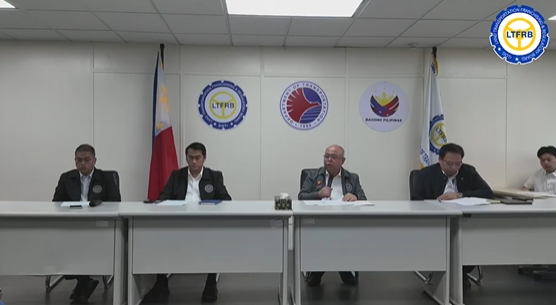
The Land Transportation Franchising and Regulatory Board (LTFRB) has approved fare hikes of P1 to as much as P40 peso in all public utility vehicles, except regular taxis and motorcycle taxis, amid the the fuel price shock resulting from the Middle East conflict
The fare increases will be effective Thursday, March 19, 2026.
In a press conference Tuesday, LTFRB chairman Assistant Secretary Vigor Mendoza II said increasing the fare was a “balancing act” that put premium on the sustainability of public utility vehicles amid increase in the prices of fuel, particularly diesel.
“This decision that covers all modes of land public transportation is proof of the national government’s genuine concern on the welfare of those in the transport sector too while protecting the interest of the general commuting public,” Mendoza said.
“And this is timely because the transport sector is currently facing a serious challenge on the prices of petroleum products as a result of the Middle East tensions,” he added.
He said the provisional fare increase could be implemented by operators by Thursday and will be permanent once they secure a fare matrix before June.
The approved rates adjustments are as follows:
- Tradition PUJ - P1 increase on base fare for the first four kilometers, bringing the minimum to P14 from P13, plus 20 centavos hike per succeeding kilometer to a rate of P2 from P1.80 per kilometer charge
- Modern PUJ - P2 hike on minimum base fare to P17 from P15, plus 20 centavos increase for succeeding kilometers to a rate of P2.40 from P2.20 per kilometer travel charge
- Metro/City bus (ordinary) - P2 hike for first five kilometers to base fare of P15 from P13; plus 24 centavos increase in per succeeding kilometer charge to P2.49 from P2.25
- Metro/City bus (aircon) - P3 increase on base fare to P18 from P15; plus 33 centavos hike in per succeeding kilometer charge to P2.98 from P2.65
- Provincial bus (ordinary) - P1 hike on minimum fare to P12 from P11; plus 30 centavos increase in succeeding per kilometer charge to P2.20 from P1.90
- Provincial bus (aircon) - 35 centavos
- increase in succeeding per kilometer charge to P2.45 from P2.10
- Provincial bus (deluxe) - 35 centavos hike in per kilometer charge to P2.60 from P2.25
- Provincial bus (super deluxe) - 35 centavos increase in per kilometer charge to P2.70 from P2.35
- Provincial bus (luxury) - 45 increase centavos per kilometer charge to P3.35 from P2.90
- Airport taxi - P40 increase on flagdown rate to P115 from P75
- TNVS - (Sedan) - P20 hike on base fare to P65 from P45
- TNVS (AUV/SUV) - P20 increase on base fare to P55 from P35
- TNVS (Premium) - P20 increase on base fare to P165 from P145
- P2P - 15% increase based on existing fare on the existing fare on the route
— Ted Cordero (@Ted_Cordero) March 17, 2026
The LTFRB chief said approved fare increases were thoroughly deliberated and was supported by data and analysis, including that of the Department of Economy, Planning, and Development (DEPDev).
Mendoza said the public land transport regulator took into consideration the position papers of various stakeholders, the series of public consultations, and land public transportation cost analysis since the last fare hike for passenger buses since September 2022.
Among the major considerations include the increase in maintenance and other operational costs from 7.54% during the last bus fare hike in 2022 to 54.29% in 2024.
The LTFRB chief said other factors include the geopolitical tension that include the war in Ukraine and the recent Middle East conflict, as well as the wage increase for workers across the country since the last fare hike in 2022.
“These compelling circumstances prompted the Board to allow a reasonable rate of increase,” according to the LTFRB decision.
Moreover, Mendoza said that the LTFRB decision reflects a 15% increase in fares vs wage increase of 19%, even citing an example on how the fare hike would have a positive impact on the bus operators.
The LTFRB also outlined conditions for the implementation of the fare hikes, including granting a 20% discount to senior citizens and PWDS, and for students—everyday during school days.
“Notwithstanding the fuel subsidy distribution, the Board is more than mindful of the extraordinary increases in fuel prices currently experienced by PUV operators,” according to the LTFRB decision.
Mendoza said motorcycle taxis and regular taxis have filed their respective petitions for a fare hike as well.
—AOL, GMA Integrated News

