

 GMA Brandtalk
 Tracking
 Archives

Marcos vows to beef up infra after visit to Bicol mega cold storage
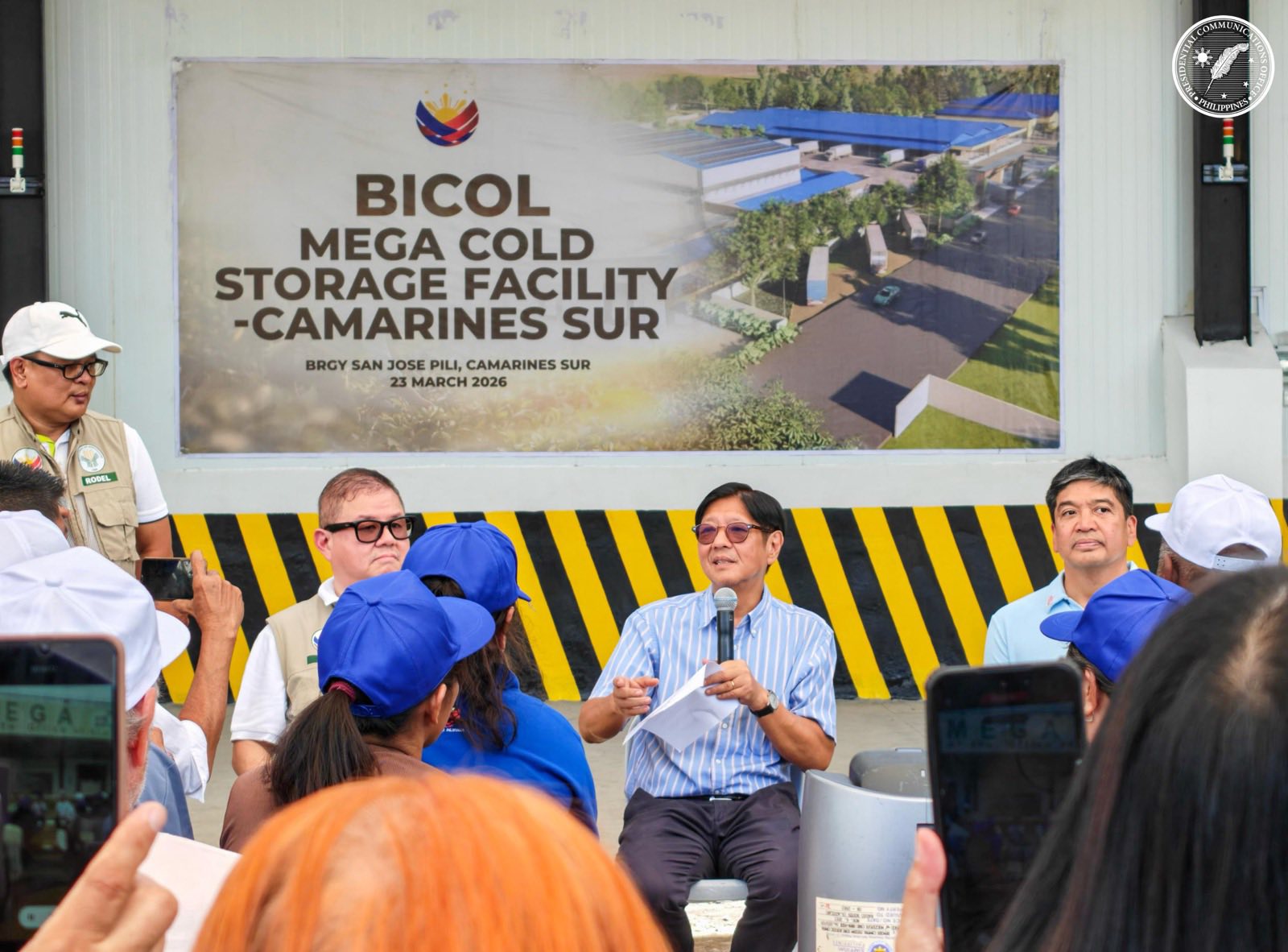
President Ferdinand Marcos Jr. on Monday inspected the Bicol Mega Cold Storage and Vegetable and Fruit Processing Facility in Pili, Camarines Sur and vowed to continue boosting the country’s agricultural infrastructure.
Marcos also acknowledged farmers’ sacrifices to help the Philippines achieve food security and assured that the government’s projects will fully benefit them.
“Kasi pagka wala tayong ganito (cold storage), ‘yung mga produkto natin, lalo na ‘yung mga gulay, ‘yung mga itlog, lahat ng produkto natin na hindi tumatagal ay kailangan ninyong ibenta dahil masisira, hindi magagamit,” the President said.
(If we don’t have this kind of cold storage facility, our products, especially vegetables, eggs, and other produce that have a short shelf life will need to be sold as soon as possible because it will spoil easily, it cannot be used.)
“Kaya kung anong presyo ang sasabihin ng trader, eh wala kayong magagawa. Kaya pagka may cold storage na, at magko-control nitong cold storage ay hindi ‘yung malalaking kompanya,” he added.
(That’s why you cannot do anything when the traders set the prices. If we have a cold storage, and the ones controlling the cold storage are not the big companies.)
Marcos said the government will organize a local group to control and operate the facility to the locals’ advantage.
“Kayo ang magsasabi kung kailan ibebenta, kaninong tatanggapin na produkto,” he said.
(You will say when it will be sold, whose products will be accepted.)
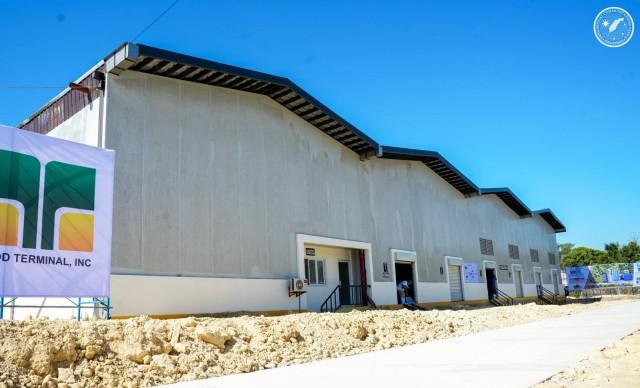
The Bicol Mega Cold Storage facility has six refrigerated warehouse rooms for commodities and one room for preparation, one blast freezer with a capacity of two tons, and a solar power system that will ensure the safety of produce like vegetables, fruits, meat, poultry, and fish.
It was funded with a P500 million investment and has a combined annual capacity exceeding 200,000 tons.
The mega cold storage facility is expected to benefit over 200,000 farmers and farmers cooperatives and associations (FCAs) in the Bicol Region, Visayas, and Mindanao.
So far, 24 operational cold storage facilities have been established across the country from June 2022 to October 2025.
Marcos said he also wanted farmers to earn additional income from the Vegetable and Fruit Processing Facility, a postharvest hub that handles receiving, processing, and storing of fruits and vegetables into chilled, frozen, dried, canned, and puree products.
The processing facility has a racking system, a washing vat and tumbler, a pressure cooker, a peeling and cutting table, a pulper finisher, and cold storage.
“Mayroon tayong mga processing na ganito, ang may-ari, lokal, para kung ano man ang dagdag – ang tawag nila value-added – kung ano man ang dagdag sa presyo ng produkto ay hindi mapupunta sa malaking korporasyon, kundi mapupunta sa ating mga nagsasaka,” he said.
(We have processing facilities like this that are locally-owned. So that whatever is the value added won’t go to big corporations, but will benefit our farmers.)
The President also observed the production process and sampled some of the processed products.
Meanwhile, Marcos also inspected two Solar-Powered Irrigation Projects (SPIPs) worth P332 million in Minabalac and Bula towns in Camarines Sur.
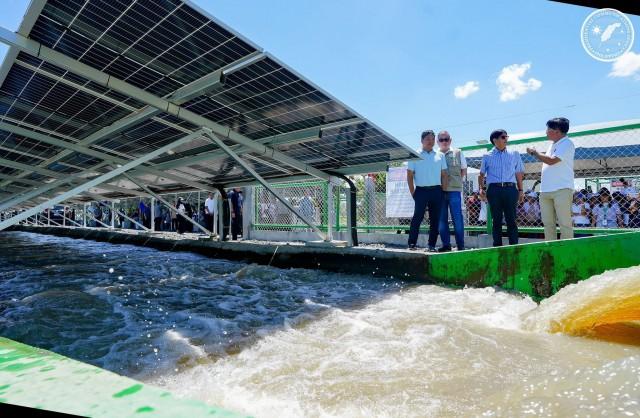
These are the P126.7 million Solar Pump Irrigation Project by the San Agustin-San Ramon Agrarian Reform Farmers' Cooperative (SARF) in Bula, and the P205.46 million New MASSBA Solar Pump Irrigation Project Phase I in Minalabac.
Funded under the Establishment of Groundwater Pump Irrigation Project (EGPIP) Solar CY 2024, the combined projects cover more than 1,800 hectares of farmland and serve 1,854 farmer-beneficiaries. — JMA, GMA Integrated News

