

 GMA Brandtalk
 Tracking
 Archives

Senators say Philippines already in crisis due to Middle East conflict
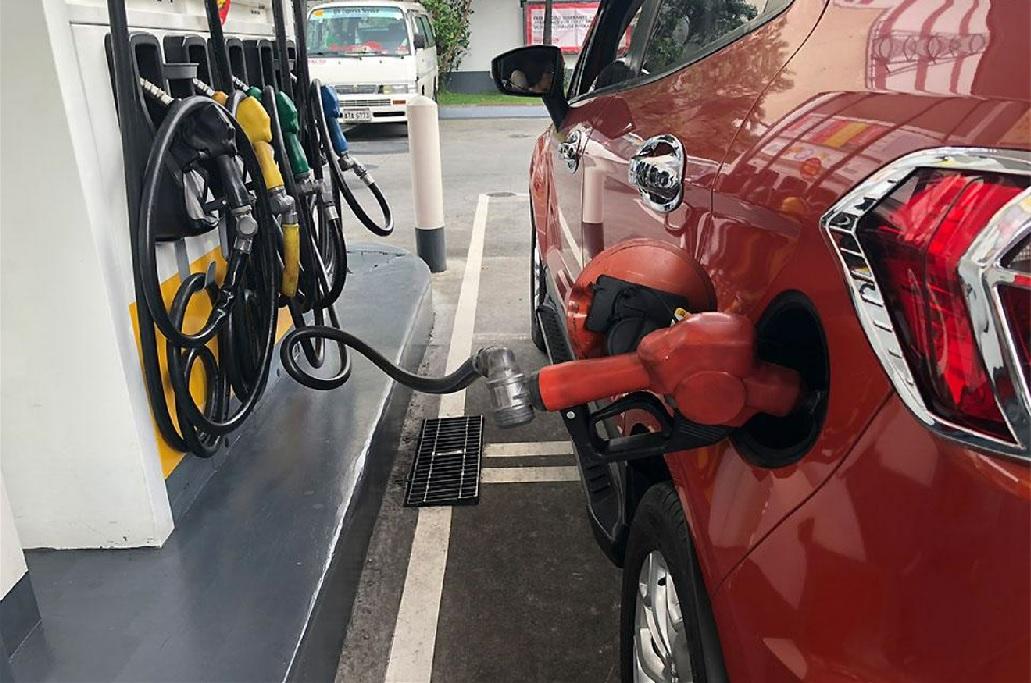
Several senators on Tuesday expressed belief that the Philippines is already in a crisis as it continues to suffer from the effects of the heightened tensions in the Middle East.
This developed after Malacañang brushed off concerns of an oil crisis in the country, saying fuel supply remains adequate but acknowledged a prevailing "price disruption."
During the convening of the Proactive Response and Oversight for Timely and Effective Crisis Strategy (PROTECT) hearing at the upper chamber, Senator Loren Legarda said it must be determined how much is available under the national budget that could be used to address the crisis.
"'Wag na tayo lost in translation or nagmamaang-maangan na may krisis (Let's not be lost in translation or deny that there's a crisis). Until we define it as a crisis, we will not act in record time to save our people. So, each agency represented here must act as if we're in a crisis because we are in a crisis," Legarda said.
"Anybody who says, 'Chill lang tayo, wala namang krisis, 'no' (Anybody who says, let's just chill because there's no crisis, no)," Legarda added.
"If we do not admit that there's a crisis in the Middle East, affecting our OFWs and their families, affecting the prices of our petroleum products, energy, food prices, transport, and displacing millions of Filipinos, the agencies will not act with urgency," she said.
Senator Bam Aquino also reiterated his call to declare a state of national emergency, saying the country has been in a crisis for nearly a month now.
"Kailangan ng pamahalaan ng mas malawak na kapangyarihan upang agad-agad na matugunan ang krisis na ito. Sa ilalim ng state of national emergency, maaari tayong magpatupad ng mga hakbang sa pag-regulate sa presyo ng essential goods at pagtitiyak na may sapat na supply sa ating merkado," Aquino said.
(The government needs broader powers to immediately address this crisis. Under a state of national emergency, we can implement measures to regulate the prices of essential goods and ensure that there is adequate supply in our market.)
He also pointed out that the government has earmarked P220 billion for assistance in the 2026 national budget that could be used to help various sectors such as transportation and small businesses.
Call to suspend VAT
Aquino also asked the Department of Energy (DOE) about the possibility of suspending the 12% value-added tax (VAT), not just the excise tax on petroleum products, amid the Middle East conflict.
"VAT is 12% of the price of fuel at the gas station, correct, 'di ba? Is there a possibility na i-suspend rin natin 'yung VAT? Kasi kung 12% ‘yan ng P120, eh 'di ang laki niyan kaagad, 'di ba? That's what—P14, P15 right away," he said.
(VAT is 12% of the price of fuel at the gas station, right? Is there a possibility that we also suspend the VAT? Because if that's 12% of P120, then that’s big, right? That's like P14 or P15 right away.)
DOE Undersecretary William "Wimpy" Fuentebella, in response, affirmed that the possibility of reforming VAT on petroleum products during emergencies has been under discussion.
"All taxes, because we have to make sure that we itemize everything under the unbundling principles po. Yes," Fuentebella said.
Aquino said the Senate is willing to conduct special sessions if reforms on the VAT are necessary.
Already in crisis
Senator JV Ejercito, meanwhile, also said the country is already in a crisis because the current situation is "no longer normal."
"We are in crisis already! Creation of the task force or crisis committee should have been done right when the conflict started. Nonetheless, the formation of the committee now is still welcome," he said.
Ejercito has been pushing for the creation of an interagency task force that would work to address the impacts of the escalating conflict in the Middle East to the Philippines' economic and energy sectors.
President Ferdinand "Bongbong" Marcos Jr. has ordered the creation of a crisis committee amid the rising fuel prices brought about by the conflict in the Middle East, according to Palace Press Officer Undersecretary Claire Castro.
Castro refused to provide details on the committee because it was still being finalized. She said the panel would focus on addressing the concerns of those affected by the Middle East crisis, which has triggered multiple double-digit increases in local fuel prices.
Crisis committee
Senate Minority Leader Alan Peter Cayetano, for his part, welcomed Marcos' directive to create a government crisis committee, saying the move aligns with earlier calls from the Senate to strengthen the country's preparedness for major disruptions.
"Nasusubukan ang ating pundasyon 'pag mayroong kalamidad o sakuna… I don't think there's a problem that we expect the worst or prepare for the worst. Kung hindi, nandiyan 'yung contingency plan [to implement]," Cayetano said.
(A country's foundation is tested when there is a calamity or disaster… I don't think there's a problem that we expect the worst or prepare for the worst. If not, there is a contingency plan to implement.)
Senator Joel Villanueva also expressed support for the crisis committee.
"The impact of the conflict in the Middle East demands nothing less than a whole-of-government response. Ensuring stable supply of food and petroleum products affects every Filipino family and we cannot afford a piecemeal approach here," Villanueva said. — VDV, GMA Integrated News

