ADVERTISEMENT
Filtered By: Topstories
News

LIVE UPDATES: Conflict in the Middle East (April 15, 2026)


+
Add GMA on Google
Make this your preferred source to get more updates from this publisher on Google.
Live blog coverage has ended.
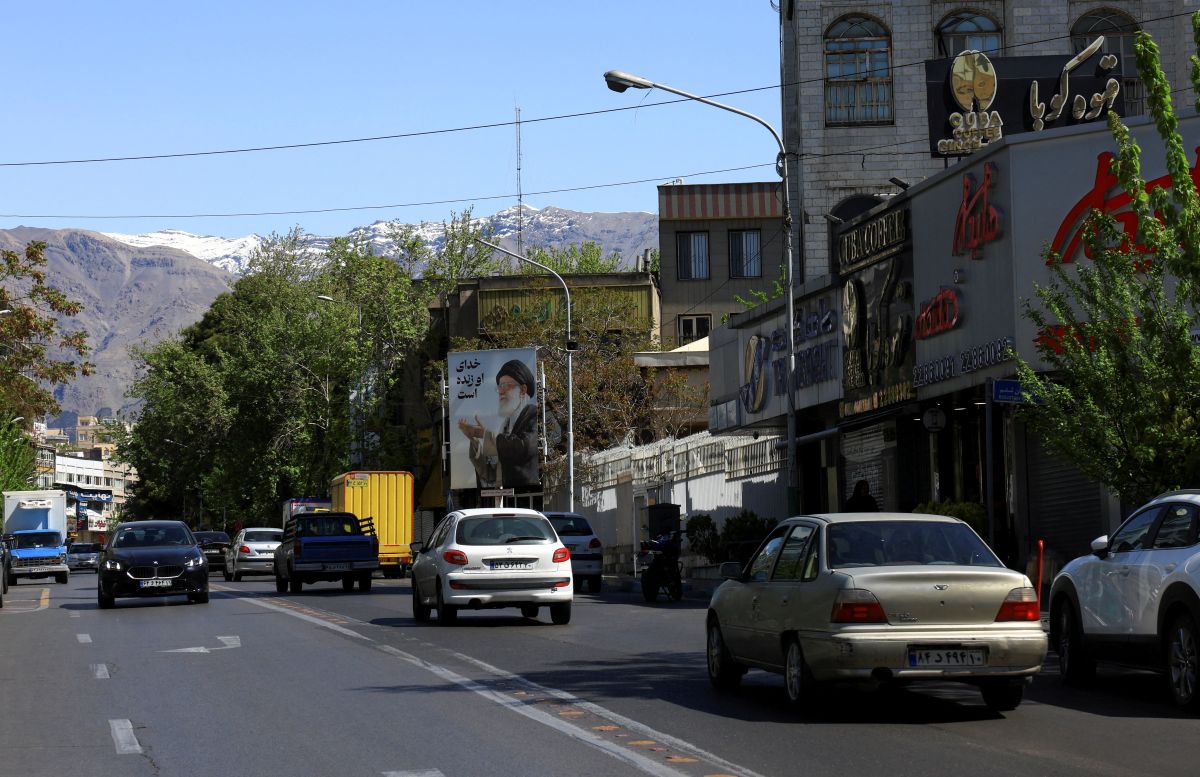
Tehran, Iran during the two-week ceasefire with the US
Auto-refresh

Trump says Iran war could end soon, as US blockades Iranian ports

US President Donald Trump said the war with Iran could end soon, telling the world to watch out for an "amazing two days," while US forces imposing a blockade turned back vessels leaving Iranian ports.

"I think you're going to be watching an amazing two days ahead," Trump told ABC News reporter Jonathan Karl, according to a post by the reporter on X, adding he did not think it would be necessary to extend a two-week ceasefire that expires next week.

"I think it can be over very soon. It will end soon," he said.

Remittances fall to 9-month low in February

Remittances from overseas Filipinos fell to a nine-month low in February, data released by the Bangko Sentral ng Pilipinas (BSP) on Wednesday showed.

Cash remittances, or money transfers coursed through banks and other formal channels, stood at $2.786 billion (P167.08 billion) for the month—down from $3.020 billion (P181.11 billion) in January but slightly higher than the $2.716 billion (P162.88 billion) recorded in February 2025.

Iran used Chinese spy satellite to target US bases, FT reports

Iran secretly acquired a Chinese spy satellite in late 2024 that allowed it to target US military bases across the Middle East during the recent war, the Financial Times reported on Wednesday.

The TEE-01B satellite, built and launched by Chinese company Earth Eye Co, was acquired by the Islamic Revolutionary Guard Corps' Aerospace Force after it was launched into space from China, the report said, citing leaked Iranian military documents.

Oil tankers transiting Strait of Hormuz since start of Iran war

The US blockade on vessels entering or leaving Iranian ports adds to uncertainty over shipping through the Strait of Hormuz, which has been all-but-shut since the start of the Iran war.

Ordinarily, roughly one fifth of global oil and gas exports transit the Strait of Hormuz.

US destroyer interdicted two oil tankers attempting to leave Iran, official says

WASHINGTON — A US destroyer interdicted two oil tankers attempting to leave Iran on Tuesday, a day after US President Donald Trump's blockade went into effect, and instructed them to turn around, a US official said, speaking on condition of anonymity.

The ships had left Chabahar port on the Gulf of Oman and were contacted by the warship via radio communication, the official said. It was unclear whether any further warnings were given.

The disclosure adds further detail to the start of Trump's blockade, which aims to pressure Iran to end its effective closure of the Strait of Hormuz, a choke point for about 20% ?of the world's oil.


King Charles to head to US to woo Trump and restore 'closest of friendships'

LONDON - King Charles will have tea and a private meeting with President Donald Trump during his US state visit later this month, as the British government hopes his "soft power" can heal a damaging rift between the allies caused by the Iran war.

The monarch and his wife Queen Camilla head across the Atlantic on April 27, a four-day trip ostensibly to mark the 250th anniversary of US independence from Britain but one that now has far greater significance amid a growing spat between Trump and Prime Minister Keir Starmer.

"The visit ... recognizes the challenges the United Kingdom, the United States, and our allies face across the world," a Buckingham Palace spokesperson said on Tuesday. "This visit is a moment to reaffirm and renew our bilateral ties as we address those challenges together, in the UK's national interest."

State dinner

Unveiling details of the trip, the spokesperson said Trump and first lady Melania Trump would greet the king and queen in Washington with a private tea, followed by a ceremonial welcome at the White House, a state dinner, and a meeting between the monarch and president.

As previously announced, the king will also address Congress, becoming just the second British monarch to do so following his mother Queen Elizabeth in 1991. The royal couple will later visit New York where they will meet families of victims of the September 11, 2001, attacks.

The US leg of their tour ends with a visit to Virginia, before Charles heads off to Bermuda, a British overseas territory where he is the head of state.

Amid the pomp of a royal state visit, the British government hopes the trip will demonstrate the value of what a foreign office spokesperson called "the closest of friendships".

That characterization has come under strain since the US and Israel launched an attack on Iran in late February, with Trump frequently singling out Britain and Starmer personally for failing to provide active support for the offensive.

He has dismissed Starmer as "not Winston Churchill" and Britain's aircraft carriers as "toys", although the president's affection for Charles and the British royals has remained unwavering.

Opinion polls show Trump is deeply unpopular in Britain, and some politicians have said the visit should be called off.

"(Trump) is a dangerous and corrupt gangster, and that is how we must treat him," Ed Davey, leader of the Liberal Democrat party, said in parliament on Monday.

"I really fear for what Trump might say or do while our king is forced to stand by his side. We cannot put His Majesty in that position."

In response, Starmer, who has sought to distance himself from the war but also avoid any direct rebuke of the president, reiterated the importance of the two countries' ties.

"The monarchy, through the bonds that it builds, is often able to reach through the decades on a situation like this," Starmer said.

One issue neither Trump nor the king will want to overshadow the visit is discussion about Jeffrey Epstein.

Charles' brother Andrew Mountbatten-Windsor is facing police scrutiny over his ties to the late disgraced US financier while Melania Trump gave an extraordinary address last week to deny that she had had any relationship with Epstein.

Some US lawmakers have said the king should meet with Epstein's victims, but notwithstanding Camilla's longtime support for causes which seek to end sexual and domestic violence, a palace source said this would not be possible because it might impact on potential criminal action.

"We fully understand and appreciate the survivors' position," the source said.

"Even though the risk may be small that a meeting or any public comments could impact on those inquiries, or the proper course of the law, that is a risk that we simply can't take, for the best interest for the survivors themselves." —Reuters

Vice President Vance says US-Iran mistrust cannot be solved overnight

WASHINGTON - US Vice President JD Vance said on Tuesday there was a lot of mistrust between Washington and Tehran that cannot be resolved overnight but he added that Iranian negotiators wanted to make a deal and that he felt "very good about where we are."

Talks to end the Iran war could resume in Pakistan over the next two days, President Donald Trump said on Tuesday, after the collapse of weekend negotiations prompted Washington to impose a blockade on Iranian ports.

A fragile two-week ceasefire between the US and Iran still has a week to run. Vance was involved in the talks last weekend in Pakistan.

"There is a lot of, of course, mistrust between Iran and the United States of America. You are not going to solve that problem overnight," Vance said during a Turning Point USA event.

Iranian negotiators wanted to make a deal, he said. "I feel very good about where we are," Vance added.

The Iran war began when the US and Israel attacked Iran on February 28. Iran responded with its own strikes on Israel and ?Gulf states that host US bases. US-Israeli strikes on Iran and Israeli attacks in Lebanon have killed thousands and displaced millions. —Reuters

Read more:
https://www.gmanetwork.com/news/topstories/world/983941/vice-president-vance-says-us-iran-mistrust-cannot-be-solved-overnight/story/
More stories: https://www.gmanetwork.com/news/ Follow us: https://www.facebook.com/gmanews/

Read more:
https://www.gmanetwork.com/news/topstories/world/983941/vice-president-vance-says-us-iran-mistrust-cannot-be-solved-overnight/story/
More stories: https://www.gmanetwork.com/news/ Follow us: https://www.facebook.com/gmanews/

US Democrats will try, and try again, to rein in Trump's Iran war powers

WASHINGTON —The US Senate will vote as soon as Wednesday on the latest Democratic-led effort to rein in President Donald Trump's war powers, and party leaders promised on Tuesday to keep bringing up such resolutions as long as the Iran war continues.

"Forty-five days into this war, Congress has been sidelined because our Republican colleagues refuse to take a strong stand against this war and duck it completely because they're afraid of Trump," Democratic Leader Chuck Schumer of New York said in a Senate speech on Tuesday.

Trump said on Tuesday talks to end the Iran war could resume in Pakistan over the next two days, after the collapse of weekend negotiations prompted Washington to impose a blockade on Iranian ports. Failure to reach an agreement in those talks raised doubts over the survival of a two-week ceasefire that still has a week to run.

Congressional Democrats have tried and repeatedly failed in recent months to pass war powers resolutions to force Trump to stop military action and obtain lawmakers' authorization before launching military operations, in both Venezuela and Iran.

Democrats are attempting to link their efforts to rein in Trump on Iran to affordability, as disruptions in shipments of oil and natural gas have caused a run-up in U.S. gasoline prices and agricultural products such as fertilizers - on top of the long list of other high consumer prices.

Few issues resonate with U.S. voters more deeply than price increases, and the latest inflationary upswing is unsettling Republican insiders worried about their party's prospects less than seven months before November elections that will determine control of Congress.

10 more resolutions

Schumer said 10 more war powers resolutions have been filed and Democrats intended to bring them up every week while the conflict in Iran, which began on February 28, continues.

Trump's fellow Republicans, who hold slim majorities in both the Senate and House of Representatives, have blocked the resolutions that have come up to date and there has been no indication that any are shifting their position.

Republican lawmakers say they support Trump's actions and do not expect the war to continue for much longer. "The military effort here has been extraordinarily successful," Senate Republican leader John Thune of South Dakota told a news conference.

"I think the administration has a clear objective, a clear plan, and if they can execute on it that question (of whether Congress should authorize a prolonged conflict) won't be a necessary one that we will be forced to answer," Thune said.

Although the U.S. Constitution says that Congress, not the president, can declare war, that restriction does not apply for short-term operations or if the country faces an immediate threat.

The White House says Trump's actions are legal and within his rights as commander-in-chief to protect the U.S. by ordering limited military operations.

Timing of the vote had not been announced by Tuesday evening, but Senate aides said they expected the next resolution - sponsored by Senator Tammy Duckworth of Illinois, a combat veteran - to come to the floor as soon as Wednesday.

House of Representatives aides said they expected a vote on a similar Iran war powers resolution in that chamber as soon as Thursday. —Reuters

US, Iran may resume talks this week despite port blockade

ISLAMABAD/WASHINGTON/DUBAI —Talks to end the Iran war could resume in Pakistan over the next two days, U.S. President Donald Trump said on Tuesday, after the collapse of weekend negotiations prompted Washington to impose a blockade on Iranian ports.

Gulf, Pakistani and Iranian officials also said negotiating teams from the U.S. and Iran could return to Pakistan later this week, though one senior Iranian source said no date had been set.

"You should stay there, really, because something could be happening over the next two days, and we're more inclined to go there," Trump was quoted as saying in an interview with the New York Post.

While the U.S. blockade drew angry rhetoric from Tehran, signs that diplomatic engagement might continue helped calm oil markets, pushing benchmark prices below $100 on Tuesday.

The highest-level talks between the two adversaries since the 1979 Islamic Revolution ended in Islamabad without a breakthrough, raising doubts over the survival of a two-week ceasefire that still has a week to run. Among the slew of issues at stake were access to the Strait of Hormuz, Iran's nuclear program and international sanctions on Tehran.

Since the United States and Israel began the war on February 28, Iran effectively shut the strait to nearly all vessels except its own, saying passage would be permitted only under Iranian control and subject to a fee. Nearly a fifth of global oil and gas supplies previously flowed through the narrow waterway, making the fallout from its closure widespread.

In a countermeasure, the U.S. military said it began blocking shipping traffic in and out of Iran's ports on Monday. Tehran has threatened to hit naval ships going through the strait and to retaliate against its Gulf neighbors' ports.

IMF cuts growth outlook

U.S. Central Command said the blockade of Iranian ports, which only applies to ships going to or from Iran, involved more than 10,000 U.S. military personnel, more than a dozen warships and dozens of aircraft.

"During the first 24 hours, no ships made it past the U.S. blockade and 6 merchant vessels complied with direction from U.S. forces to turn around to re-enter an Iranian port on the Gulf of Oman," CENTCOM said in a statement posted on X.

Shipping data showed the blockade had made little difference to Strait of Hormuz traffic on Tuesday, with at least eight ships crossing the waterway.

The latest standoff has further clouded the outlook for global energy security and the supply of goods that rely on petroleum.

The International Monetary Fund cut its growth outlook and said the global economy would teeter on the brink of recession if the conflict worsens and oil stays above $100 per barrel into 2027. The International Energy Agency meanwhile slashed its forecasts for global oil supply and demand growth.

The United States' NATO allies including Britain and France said they would not be drawn into the conflict by taking part in the blockade, although they have offered to help safeguard the strait by drawing together a defensive multilateral mission to assist when an agreement is in place.

China, the main buyer of Iranian oil, said the U.S. blockade was "dangerous and irresponsible" and would only aggravate tensions.

Suspension of nuclear activity

U.S. Vice President JD Vance, who led Washington's delegation in Pakistan, has said Trump was adamant that any enriched nuclear material must be removed from Iran and a mechanism be established to verify that Iran is not developing nuclear weapons.

A source briefed on the matter confirmed reports that the U.S. had proposed a 20-year suspension of all nuclear activity by Iran "with all sorts of restrictions."

Two Iranian sources said Iran had rejected the proposal, suggesting a halt of just three to five years.

One source involved in the negotiations in Pakistan said backchannel talks since the weekend had produced good progress in closing the gap on the nuclear issue, bringing the two sides closer to a deal that could be put forward at a new round of talks.

It was unclear what kind of nuclear deal could be quickly agreed by the U.S. and Iran, given the complexity of the 2015 nuclear deal between Tehran and world powers that Trump withdrew from in 2018, and the likely need for monitoring and verification by the International Atomic Energy Agency.

Iran also wants international sanctions removed, a move the U.S. could only pledge with broader support.

Further complicating Pakistan's mediation efforts, Israel has continued targeting Iran-backed Hezbollah in Lebanon. Israel and the United States say that campaign is not covered by the ceasefire, while Iran has insisted it is.

Israeli and Lebanese envoys met in Washington on Tuesday in talks hosted by Secretary of State Marco Rubio, the first direct negotiations between the two countries since 1983. Lebanon's government sought the negotiations despite objections from Hezbollah, which Israel wants to see disarmed before any peace deal.

Israel killed more than 350 people in Lebanon in the war's worst strikes hours after the Iran ceasefire was announced last week, but later said it was willing to discuss a separate ceasefire with the Lebanese government.

Ceasefire holding

With the war unpopular at home and rising energy prices causing political blowback, Trump paused the U.S.-Israeli bombing campaign last week after threatening to destroy Iran's "whole civilization" unless it reopened the strait.

A Reuters/Ipsos poll conducted from April 10 to 12 after the ceasefire was announced showed that 35% of Americans approve of U.S. strikes against Iran, down from 37% a week earlier.

The ceasefire has largely held over its first week despite sharp rhetoric from both sides.

An Iranian military spokesperson called any U.S. restrictions on international shipping "piracy", while Trump said Iran's navy had been "completely obliterated" and that only a small number of "fast-attack ships" remained.

"Warning: If any of these ships come anywhere close to our BLOCKADE, they will be immediately ELIMINATED," Trump wrote on social media. —Reuters


Trump turns on Meloni, says he is ‘shocked’ by Italian leader

ROME — Italian Prime Minister Giorgia Meloni lacks courage and has let Washington down, US President Donald Trump told an Italian newspaper on Tuesday, delivering a blunt public rebuke to one of his closest European allies.

Meloni had been a vociferous supporter of Trump, but she distanced herself from him after he went to war with Iran in February, and on Monday she openly criticized him for lashing out at Pope Leo, saying his verbal assault was "unacceptable."

Trump responded in an interview with Corriere della Sera, saying Meloni was "very different from what I thought" and denouncing her for refusing to help re-open the Strait of Hormuz, which has been blocked by Iran.

"I'm shocked by her. I thought she had courage. I was wrong," he was quoted as saying in the Italian-language article.

The White House declined to comment on the reported quotes. Meloni's office also declined to comment, but politicians of all stripes rallied to her defense, including Foreign Minister Antonio Tajani, head of the coalition Forza Italia party.

"We are, and will remain, sincere supporters of Western unity and steadfast allies of the United States, but that unity is built on loyalty, respect and mutual frankness," he said, applauding Meloni for denouncing Trump's attack on the pope.

"On Pope Leo XIV, she said exactly what all of us Italian citizens think," he added in a statement on X.

Trump reprimand marks latest blow for Meloni

Trump's criticism marked a dramatic change in tone toward Meloni, the only European leader to attend his inauguration in 2025 and whom he had hailed as "a great leader" just one month ago.

On Tuesday he accused her of failing to back US efforts to tackle Iran's nuclear program and guarantee energy flows through the Gulf, saying she wanted America "to do the job for her."

Asked about her condemnation of his comments on Pope Leo, he said: "She is the one who is unacceptable, because she does not care whether Iran has a nuclear weapon and would blow Italy up in two minutes if it had the chance."

The reprimand capped a tumultuous month for Meloni, who lost a crunch referendum on judicial reform in March and then saw her political ally Viktor Orban ousted from power in Hungary.

The US-Israeli war in the Gulf threatens to upend the economy with surging energy costs and is hugely unpopular with Italians, putting Meloni on a collision course with Trump.

Seeking to distance herself from the conflict, she refused to let US fighters use an airbase in Sicily for combat operations in Iran last month and on Tuesday, she suspended a military cooperation pact with Israel.

Trump said the surge in energy prices should have encouraged Italy, which is heavily dependent on oil and gas imports, to help re-open the Strait of Hormuz.

"They pay the highest energy costs in the world and are not even ready to fight for the Strait of Hormuz... They depend on Donald Trump to keep it open," Trump said. — Reuters