

 GMA Brandtalk
 Tracking
 Archives

EXPLAINER: Who are the middle class in the Philippines amid the rising prices?
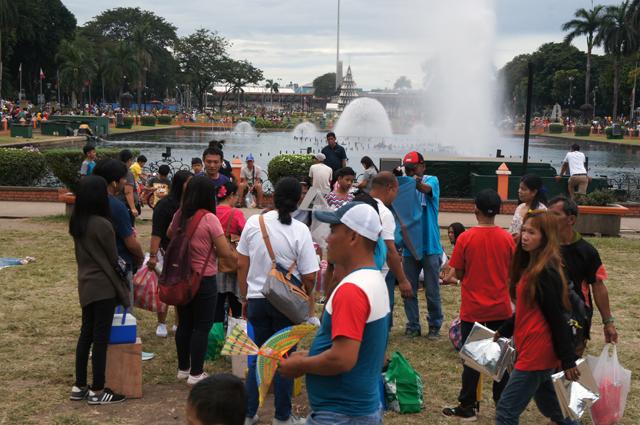
As fuel prices remained high due to the Middle East conflict, middle-class families are asking, "What about us?"
As they feel the pinch of higher transportation and living costs while receiving little to no government help, some government agencies are looking to expand their assistance to include families whose incomes are a bit higher than those entitled to cash doles.
The Philippine Health Insurance Corporation said it is considering offering additional benefits for middle-income contributors.
Senator Sherwin Gatchalian, chairperson of the Senate finance committee, said the government is weighing a suspension of pension premiums for the middle class.
But who belongs to the middle-income class?
According to the Philippine Institute for Development Studies (PIDS), middle-income households in the country are those with per capita income between two and 12 times the official poverty line, or in 2023, an income of P13,873 a month.
In its 2026 study titled “The Middle Class and Vulnerability to Income Poverty: Implications for Social Protection in the Philippines,” living standards or welfare in the Philippines are typically measured using per capita current income rather than consumption.
“The poverty line is defined as the minimum income deemed necessary for a household to meet basic needs, food and non-food, and most importantly to obtain adequate nutrition,” PIDS stated.
“This approach ensures the classification is consistent with official poverty statistics and policy-relevant, in particular compatible with existing social protection measures,” it added.
The middle-income class has three categories:
- Lower middle-income: P27,746 - P55,492 monthly family income
- Middle middle-income: P55,492 - P97,111 monthly family income
- Upper middle-income: P97,111 - P166,476 monthly family income
For 2023, the poverty threshold was set at a national average of P13,873 per month, higher than the poverty ceiling of P11,998 in 2021.
The PSA computes the poverty threshold by dividing the food threshold by the total basic expenditure—the amount required to meet basic non-food needs such as education, health, housing, electricity and water, clothing, among others.
In a November 2025 survey of the Social Weather Stations, a total of 51% Filipino families rated themselves as poor.
This is equivalent to around 14.3 million families for the current survey, with the majority or 65%, being noted in Mindanao, followed by Balance Luzon at 45% and Metro Manila with 37%.
The current data places the national media Self-Rated Poverty Threshold (SRP Threshold) at P15,000, while the national median Self-Rated Poverty Gap (SRP Gap) is now at P6,000.
According to the study, "the middle-income class is growing but remains vulnerable."
"The pandemic induced downward mobility, with middle- to high-income households dropping from 52.8 percent in 2018 to 49.1 percent in 2021 but recovered to 51.3 percent by 2023," it said.
As for the rural-urban distribution of income groups, the study showed that middle-income households dominate the urban areas.
Three regions stand out as middle-income: National Capital Region (65.0 percent), Cordillera Administrative Region (55.2 percent) and CALABARZON (50.7 percent).
"These regions benefit from economic concentration, a large services sector and industrial areas that offer formal employment, and better infrastructure and connectivity," the study said.—LDF, GMA News

