ADVERTISEMENT
LIVE
Filtered By: Topstories
News

LIVE UPDATES: Conflict in the Middle East (April 18, 2026)


+
Add GMA on Google
Make this your preferred source to get more updates from this publisher on Google.
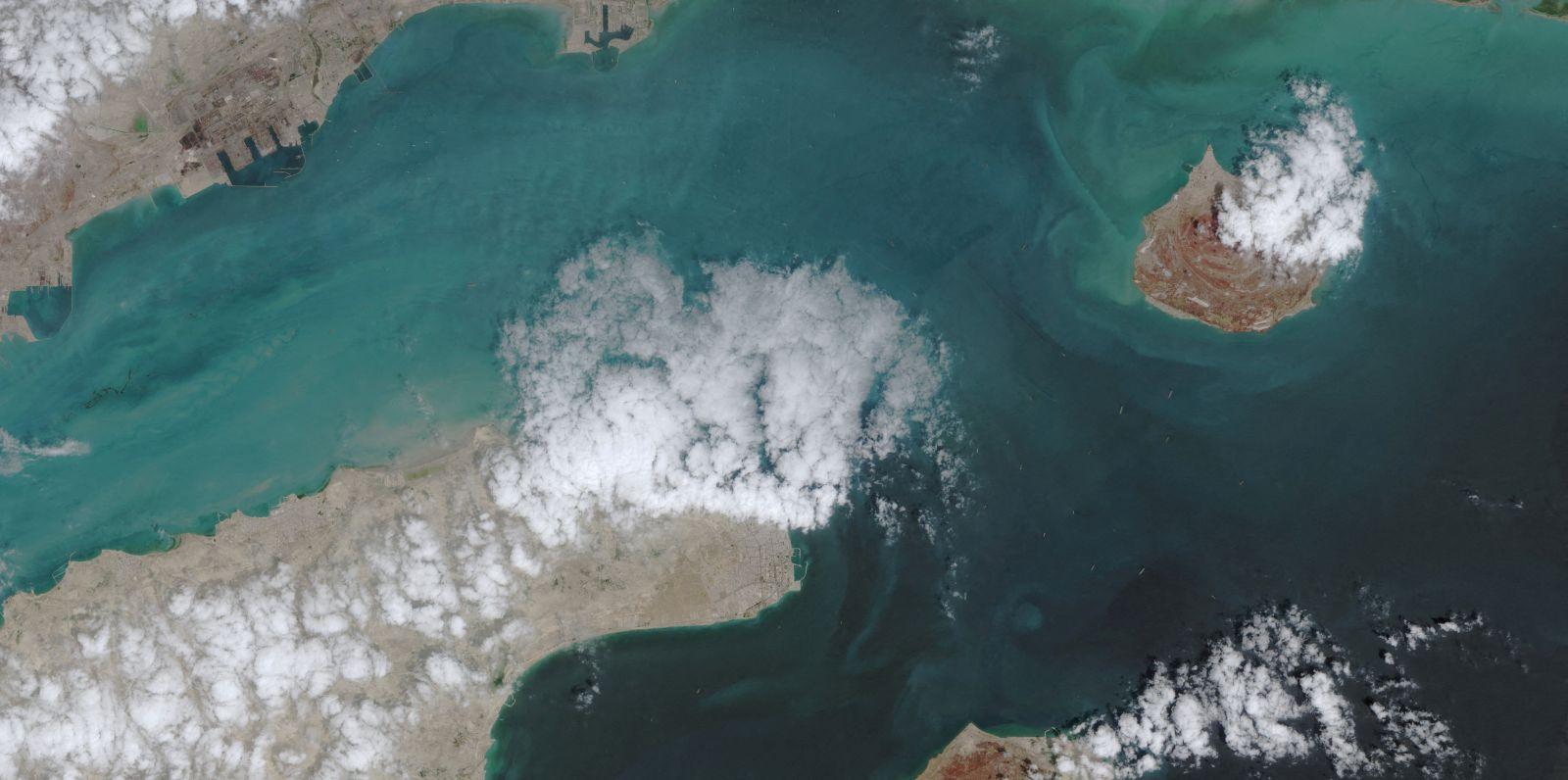
A satellite image shows the ship movement at the Strait of Hormuz
Auto-refresh

PNP reports 294 closed gas stations

The Philippine National Police (PNP) said the number of gas stations that temporarily closed due to high oil prices resulting from the Middle East war stood at 294 nationwide as of April 18, 2026.

The PNP monitored 14,257 gas stations across the country. 

It also said that from March 1 to date, authorities have filed 27 cases involving fuel-related violations, including seven cases of hoarding, one case of profiteering, and 19 other offenses covering illegal storage, transport, and trading of petroleum products.

Marcos announces diesel rollback of P24.94/liter, P3.41/liter for gasoline

President Ferdinand “Bongbong” Marcos on Saturday urged oil companies to implement the rollback for both diesel and gasoline prices in full and without delay, amid an expected major cut in pump prices next week.

In a video message, Marcos said diesel price is expected to go down by P24.94 per liter, gasoline by P3.41, and kerosene by P2.00.

“Mas malaki ito kaysa sa rollback noong nakaraang linggo at malinaw ang ibig sabihin nito para sa ating lahat. May ginhawang parating,” Marcos said.

(This is bigger than last week's rollback and it clearly means something for all of us. Relief is coming.)

Iran command closes Hormuz again over US blockade

TEHRAN, Iran — Iran's central military command announced on Saturday it would resume "strict management" of the Strait of Hormuz, reversing a decision to unblock the strategic channel as part of negotiations with Washington.

In a statement shared on state television, the headquarters said Washington had broken a promise by continuing its naval blockade of ships sailing to and from Iran's ports.

Until the United States restores freedom of movement for all vessels visiting Iran, "the situation in the Strait of Hormuz will remain strictly controlled," the statement said. — Agence France-Presse

15 foreign-flagged ships carrying 260 Filipino seafarers pass Hormuz

The Department of Migrant Workers (DMW) on Saturday reported that at least 15 foreign-flagged ships with up to 260 Filipino crew members on board exited the Strait of Hormuz hours after Iran temporarily reopened the critical waterway. 

According to a report by JP Soriano on Super Radyo dzBB, Migrant Workers Secretary Hans Leo Cacdac confirmed that as of posting time, several of these ships were already traveling off the coast of Africa while others were already in Southeast Asia.

Higher flights fuel surcharge seen amid Middle East crisis

The public should brace for a dramatic increase in airfares as Transportation Secretary Giovanni Lopez on Saturday signaled an "inevitable adjustment" to flight fuel surcharges. 

At a news forum on Saturday, Lopez bared that the cost of jet fuel has more than doubled since the onset of the US-Israel versus Iran conflict.

“Dati, pre-war ang bili ng airlines companies ay $80 to $90 per barrel ngayon po pumapalo na sa $200 per barrel,” the Transportation chief said.

(Pre-war, the price of airline companies was $80 to $90 per barrel, now it's hitting $200 per barrel.)

With this, Lopez cited the wide gap between local fuel surcharge rates and the rest of the world. 

He said the Philippine maintained a Level 4 fuel surcharge for the entirety of March, while other regions have seen surcharges spike to Level 13 or 14.

US renews Russian oil waiver after pressure from countries dealing with Iran war price shocks

The Trump administration on Friday renewed a waiver allowing countries to buy sanctioned Russian oil at sea for about a month, even as lawmakers accused the government of going easy on Moscow as its war on Ukraine grinds on.

The Treasury Department's waiver lets countries purchase Russian oil and petroleum products loaded on vessels as of Friday through May 16. It replaces a 30-day waiver that expired on April 11 and excludes transactions involving Iran, Cuba and North Korea.

The move is part of the administration's effort to control global energy prices that have shot higher during the US-Israeli war on Iran. It came after countries in Asia, suffering from the global energy shock, pressed Washington to allow alternative supplies to reach markets

Over 19,000 PUV units under service contracting to start Monday — DOTr

Thousands of public utility vehicle (PUV) units nationwide will begin operating under the government's service contracting program (SCP) on Monday, April 20, 2026, according to Transportation Secretary Giovanni Lopez.

At a news forum in Quezon City, Lopez said only a few PUV units participated when the SCP rolled out last Wednesday, April 15, 2026.

Motorcycle taxi, delivery riders endure long lines for ayuda in QC, Makati

Transport network company (TNC) riders on Saturday lined up at government payout centers in Makati City and Quezon City to receive ayuda or cash assistance amid the impact of the Middle East crisis.

According to a report by Sam Nielsen on Super Radyo dzBB, riders waited in line around the Quezon Memorial Circle for the special payout of the Department of Social Welfare and Development (DSWD).

US renews Russian oil waiver after pressure from countries dealing with Iran war price shocks

WASHINGTON - The Trump administration on Friday renewed a waiver allowing countries to buy sanctioned Russian oil at sea for about a month, even as lawmakers accused the government of going easy on Moscow as its war on Ukraine grinds on.

The Treasury Department's waiver lets countries purchase Russian oil and petroleum products loaded on vessels as of Friday through May 16. It replaces a 30-day waiver that expired on April 11 and excludes transactions involving Iran, Cuba and North Korea.

The move is part of the administration's effort to control global energy prices that have shot higher during the US-Israeli war on Iran. It came after countries in Asia, suffering from the global energy shock, pressed Washington to allow alternative supplies to reach markets.

Reversal by Treasury

"As negotiations (with Iran) accelerate, Treasury wants to ensure oil is available to those who need it," a Treasury Department spokesperson said.

Just two days earlier, Treasury Secretary Scott Bessent said Washington would not be renewing the waiver for Russian oil and another for Iranian oil, which is set to expire on Sunday.

Global oil prices tumbled 9% on Friday to about $90 a barrel after Iran temporarily reopened the Strait of Hormuz, an oil choke point in the Gulf. But the war has already created the worst global energy supply disruption in history, the International Energy Agency has said.

The war, which enters its eighth week on Saturday, has damaged more than 80 oil and gas facilities in the Middle East, and Tehran has warned it ?could close the strait again if the recent US Navy blockade of Iranian ports continued.

High oil prices are a threat to President Donald Trump's fellow Republicans ahead of November's midterm elections.

Trump has also faced pressure from partner countries on the oil price. A US source said partner countries on the sidelines of Group of 20, World Bank and International Monetary Fund meetings in Washington this week had requested the US extend the waiver. And he spoke about oil this week in a call with Prime Minister Narendra Modi of India, a big purchaser of Russian oil.

The waiver on Iranian oil, which the Treasury Department issued on March 20, allowed some 140 million barrels of oil to ?reach global markets and helped relieve pressure on energy supply, Bessent said last month.

Lasting damage

US lawmakers from both political parties had slammed the administration over the sanctions waivers, saying they stood to help the economy of Iran while it was at war with the US and of Russia as it was at war with Ukraine.

The waivers could impede the West's efforts to deprive Russia of revenue for its war in Ukraine ?and put Washington at odds with its allies. European Commission President Ursula von der Leyen has said now is not the time to relax sanctions against Russia.

Russian presidential envoy Kirill Dmitriev said in a social media post about the renewal of the waiver: "US-Russian economic and energy cooperation will continue." He had said the first waiver on Russian oil would free 100 million barrels of crude, equal to almost a day's worth of global output.

Brett Erickson, a sanctions expert at the consulting firm Obsidian Risk Advisors, said Friday's renewal is likely not the last waiver Washington will issue.

"The conflict has done lasting damage to global energy markets, and the tools available to stabilize them are nearly exhausted," Erickson said. —Reuters

Trump says he has 'good news' on Iran, no clarity on peace deal

WASHINGTON/ISLAMABAD - US President Donald Trump said there had been "some pretty good news about Iran", suggesting optimism about peace talks to end the war on Iran, but he said a ceasefire in the conflict may not be extended without a deal by Wednesday.

Iran hours earlier had temporarily reopened the Strait of Hormuz following a separate US-brokered ceasefire agreement by Israel and Lebanon. But subsequent statements from both sides left uncertainty over how quickly shipping might return to normal through the global oil choke point.

Trump, speaking on Air Force One late on Friday, declined to elaborate on what the good news was.

Unclear if any direct talks this weekend

"It seems to be going very well in the Middle East with Iran," he told reporters while returning to Washington from Phoenix, Arizona. "We're negotiating over the weekend. I expect things to go well. Many of these things have been negotiated and agreed to."

But in a sharp contrast, he said he may end the ceasefire with Iran unless a long-term deal to end the war is agreed before it expires on Wednesday, adding that a US blockade of Iranian ports would continue.

The war with Iran, which began on February 28 with a US-Israeli attack, has killed thousands and sent oil prices surging because of the de facto closure of the strait, which until recently carried about a fifth of the world's oil trade.

Trump has told Reuters there would probably be more direct talks between Iran and the US this weekend. Some diplomats said that was unlikely given the logistics of gathering in Islamabad, where the talks are expected to take place.

There were no signs of preparations early on Saturday for talks in the Pakistani capital, where the highest-level US-Iran negotiations since the 1979 Islamic Revolution ended without agreement last weekend.

The key Pakistani mediator, army chief Field Marshal Asim Munir, has been holding talks in Tehran since Wednesday.

A Pakistani source aware of mediation efforts said a meeting between Iran and the US could produce an initial memorandum of understanding, followed by a comprehensive peace agreement within 60 days.

Among complicating factors, Iran's speaker of parliament and senior negotiator, Mohammad Baqer Qalibaf, posted on social media that the Strait of Hormuz "will not remain open" if the US blockade continued.

Foreign Minister Abbas Araqchi had announced on social media that the strait was open for all commercial vessels for the remainder of the 10-day truce that was agreed on Thursday by Israel and Lebanon, which was invaded by Israel after the Iran-allied Hezbollah militant group joined the fighting.

Vessel traffic data showed a group of around 20 ships, including container ships, bulk carriers and tankers, moving through the Gulf toward the Strait of Hormuz on Friday evening, but most ended up turning back, although it was not clear why. The group included three container ships operated by French shipping group CMA CGM, which declined to comment.

A cruise ship that was stranded in Dubai, the Celestyal Discovery, however crossed the strait and was headed to Oman on Saturday morning, according to Marine Traffic vessel tracking data.

Iran has said all ships crossing the strait must coordinate with the Islamic Revolutionary Guard Corps, which was not the case before the war. The Defense Ministry said in a statement quoted by state television that military vessels and ships linked to "hostile forces" — the US and Israel — were still not permitted to pass.

Shipping companies have said they would require clarifications, including about the risk of mines, before vessels moved through the entry point to the Gulf.

The US Navy warned seafarers that the mine threat in parts of the waterway was not fully understood and said they should consider avoiding the area.

No clarity on Iran's nuclear program

It also was unclear how Iran and the US would address Tehran's nuclear program, which has been a key sticking point in peace talks, with Iran defending its right to what it says is a civilian nuclear energy program.

Trump told Reuters the US would remove Iran's stockpiles of enriched uranium. Foreign Ministry spokesperson Esmaeil Baghaei told state TV the material would not be transferred anywhere.

Separately, a senior Iranian official said Tehran hoped a preliminary agreement could be reached in the coming days.

Oil prices CLc1, LCOc1 fell about 10% and global stocks jumped on Friday on the prospect of marine traffic resuming through the strait.

After a video conference on Friday, more than a dozen countries said they were willing to join an international mission to protect shipping in the strait when conditions permit, Britain said.

A senior Iranian official told Reuters there had been an agreement on unfreezing billions of dollars in Iranian assets as part of the accord, without giving a timeline. Later on Friday, Trump, who has repeatedly referred to a peace agreement as a "deal" or "transaction," told a rally in Arizona that "no money will exchange hands in any way, shape or form."

At last weekend's talks, the US proposed a 20-year suspension of all Iranian nuclear activity, while Iran suggested a halt of three to five years, according to people familiar with the proposals.

Two Iranian sources have said there were signs of a compromise that could remove part of the stockpile.

Trump told Reuters the US might not act quickly. "We're going to go in with Iran, at a nice leisurely pace, and go down and start excavating with big machinery," he said in a phone interview. "We'll bring it back to the United States."

Despite Trump's optimism, Iranian sources told Reuters that "gaps remained to be resolved" before a preliminary agreement, while senior clerics struck a defiant tone during Friday prayers.

"Our people do not negotiate while being humiliated," cleric Ahmad Khatami said. —Reuters