

 GMA Brandtalk
 Tracking
 Archives

AMLC: VP Sara, husband had P6.7B in covered, suspicious bank transactions
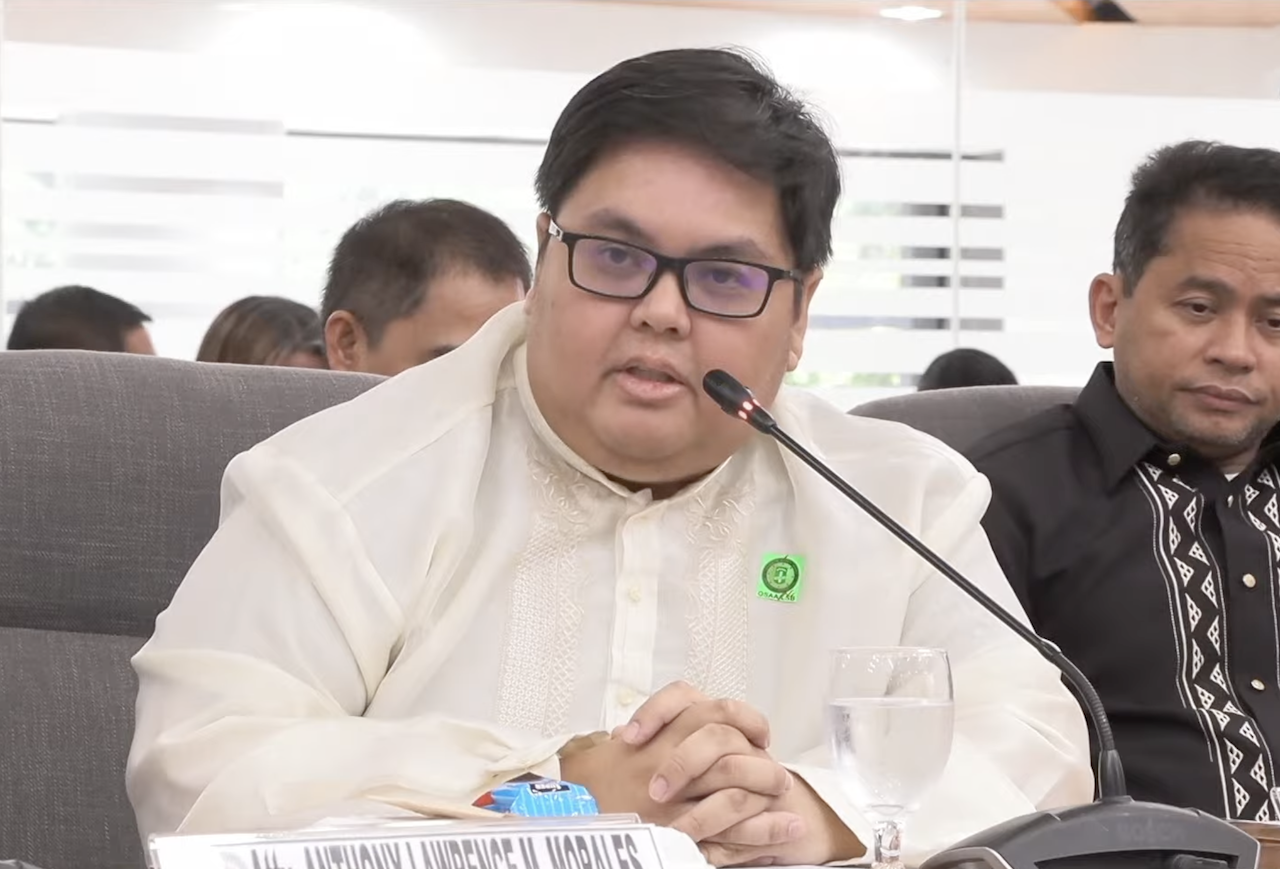
The Anti-Money Laundering Council (AMLC) reported on Wednesday that bank transactions totaling P6.7 billion—classified as covered and suspicious—were recorded under the names of Vice President Sara Duterte and her husband, lawyer Manases Carpio.
AMLC Executive Director Ronel Buenaventura disclosed this during the House committee on justice’s impeachment hearing against the Vice President.
Buenaventura appeared before the panel and submitted the AMLC report in compliance with a subpoena, as lawmakers investigate allegations that Duterte amassed unexplained wealth.
The AMLC reports submitted to the committee include:
- Covered Transaction Reports and Suspicious Transaction Reports covering the period from 2006 to 2025; and
- Financial Intelligence Reports on Vice President Duterte and her husband, Manases Carpio, among others.
Of the total amount, P3.7 billion was attributed to the Vice President, while P2.998 billion was linked to Carpio.
The report also identified P791 million in transactions as having undetermined inflows and outflows.
“Vice President Sara Duterte’s accounts generated a total of 371 large transactions and 30 suspicious transactions from Oct. 13, 2005 to Jan. 28, 2026, with transaction amounts reaching as high as P55.158 million,” Buenaventura said, reading from the report submitted to the House justice panel.
He added that transactions involving other parties’ accounts—where Vice President Sara was identified as beneficiary and/or counterparty—comprised 15 large transactions and one suspicious transaction from June 20, 2006 to April 2, 2025, with amounts reaching up to P7.44 million.
“The transaction composition is largely driven by credit memos worth P1.41 billion, debit memos worth P1.03 billion, and fund transfers of P521.86 million, followed by time deposit pre-terminations worth P218.74 million and miscellaneous transactions worth P209.29 million,” the AMLC report stated.
GMA News Online has reached out to the Office of the Vice President for its comments but it has yet to reply as of posting time. GNO will post the OVP reply once it is available.
Other notable transactions include:
- Time deposit placements amounting to P109.15 million
- Withdrawals worth P62.79 million
- Check deposits worth P48.33 million
- Insurance-related transactions, including sale of a life insurance policy worth P43.42 million
- Purchase of life insurance policies/investments worth P20 million
- Purchase of checks worth P20 million
- Loan payments amounting to P18.23 million
- Encashments amounting to P15.10 million
- Other smaller transactions, including loan pre-terminations, check clearing, loan availments, cash deposits, collections, bill payments, credit card payments, bond purchases, salary and pension credits, inward remittances, and credit card purchases.
“A review of the identified inflow transactions shows total inflows of approximately P1.51 billion, recorded only from 2006 to 2022. These inflows are largely dominated by credit memo transactions amounting to P1.41 billion, which account for the majority of recorded inflows," the report said.
"Other notable sources include check deposits totaling P48.33 million, deposit transactions amounting to P45.73 million, and cash deposits of P4.95 million,” it added.
The AMLC report also showed that Jeffrey Chew Lim and Jose Tan Sio transferred P5 million to the spouses Duterte and Carpio on April 18, 2016.
Ricsan and Sons Realty Corporation also transferred P1 million to the Duterte-Carpio spouses on March 29, 2016.
Separately, the Vice President's father, former President Rodrigo Duterte purchased a P2.5 million check that named his daughter as beneficiary in June 2006.
Individuals Samantha Jayne Yenco Uy, Samuel Cang Uy, and Yaniele Yenco Uy also purchased a check worth P14.88 million, naming the Vice President as beneficiary in transactions made in October 2011 and April 2012.
Batangas 2nd District Rep. Gerville Luistro, who chairs the panel, asked Buenaventura to confirm if the figures are accurate.
“Yes, Madam Chair,” the AMLC official replied.
House justice panel vice chair Rep. Joel Chua interjected: “Wala sa SALN ’yan.” (It is not reflected in her Statement of Assets, Liabilities and Net Worth.)
Chua was referring to Duterte’s SALN, which did not declare cash on hand or in the bank from 2019 to 2024.
Under the Anti-Money Laundering Act, a covered transaction refers to a cash or equivalent monetary transaction exceeding P500,000 within one banking day.
The law also defines suspicious transactions as dealings with covered institutions—regardless of amount—where there are indicators such as:
- lack of legal or economic basis;
- inconsistency with a client’s financial capacity;
- structuring to avoid reporting requirements;
- deviation from a client’s transaction profile, or
- links to unlawful activity.
House Deputy Speaker and Iloilo 3rd District Rep. Janette Garin also asked AMLC Executive Director Ronel Buenaventura if he was certain of the amounts, noting that these were not reflected in the Vice President’s SALN in multiple years.
Buenaventura replied, “Sure po ako, based on record. (I am certain, based on our records.)"
Quezon City 4th District Rep. Bong Suntay, however, said the AMLC disclosure appeared too broad, noting that the bank transactions presented covered the period from 2005 to 2025.
Suntay pointed out that the Vice President has only been an impeachable official since assuming office in 2022.
“Sumobra tayo (It was an overreach). It should be just from 2022 to the present. I just want to point it out,” Suntay said.
Akbayan party-list Rep. Perci Cendaña, meanwhile, quipped, “Bilyonaryo pala sila."
(They are apparently billionaires.)
AMLC records
Meanwhile, Sagip party-list Rep. Paolo Marcoleta questioned whether the House panel has the authority to compel the AMLC to submit suspicious and covered transaction reports without a court order, citing the Anti-Money Laundering Act.
“The Committee has required the submission of AMLC records without a court order. Let me reiterate that under the Anti-Money Laundering Act of 2001, as amended, suspicious and covered transaction reports are confidential and may only be disclosed upon order of a court,” Marcoleta said.
Marcoleta argued that the House Committee on Justice has no authority to compel the AMLC through a legislative subpoena.
“The House of Representatives Committee on Justice does not have the authority to direct the AMLC through a legislative subpoena and, consequently, cannot bypass the probable cause requirement of the court," he said.
"These suspicious transaction reports are intended for AMLC analysis and for its own determination of probable cause where required by the judiciary,” Marcoleta added.
Rep. Chel Diokno, however, rejected Marcoleta’s position, saying the law provides an exception in impeachment proceedings.
“We have to emphasize that the Bank Secrecy Law itself provides that all deposits are absolutely confidential, as does the AMLC Law, except in cases of impeachment," he said.
“An exception requiring a court order is different from the exception in cases of impeachment,” Diokno added.
Diokno stressed the need for full disclosure in impeachment proceedings, warning that invoking bank secrecy laws to block evidence would undermine the constitutional process and the committee’s mandate.
“I believe the reason is very clear. We are talking about the accountability of public officers. If we allow the Bank Secrecy Law to be used to withhold key evidence from the Committee on Justice, the impeachment process becomes meaningless," he said.
“We cannot fulfill our duty if our eyes are covered. To fulfill our duty under the Constitution and to the people, the Committee must exercise its power to examine all evidence, including records of covered and suspicious transactions linked to the Vice President,” Diokno added.
'Smoking gun'
In an ambush interview, Rep. Chel Diokno said Vice President Duterte needs to explain the “huge” discrepancies between her SALN and the Anti-Money Laundering Council (AMLC) reports, which he described as a “smoking gun” in establishing probable cause for the impeachment case.
“Napakalaki ng pagkakaiba ng dalawang halaga na ’yan, at either dito sa committee o kaya sa Senado, kung ’yan ang kagustuhan niya, ay dapat ipaliwanag niya,” Diokno told reporters.
(The discrepancy between those two figures is very large, and she should explain it either before this committee or in the Senate, if that is her preference.)
“Para sa akin, ito ay isang smoking gun na, at least insofar as probable cause is concerned, nandiyan na ’yan,” the lawmaker said.
(For me, this is a smoking gun that, at least insofar as establishing probable cause is concerned, is already present.)—MCG/RSJ, GMA News

