

 GMA Brandtalk
 Tracking
 Archives

SC: Forthwith in impeachment means within a reasonable time
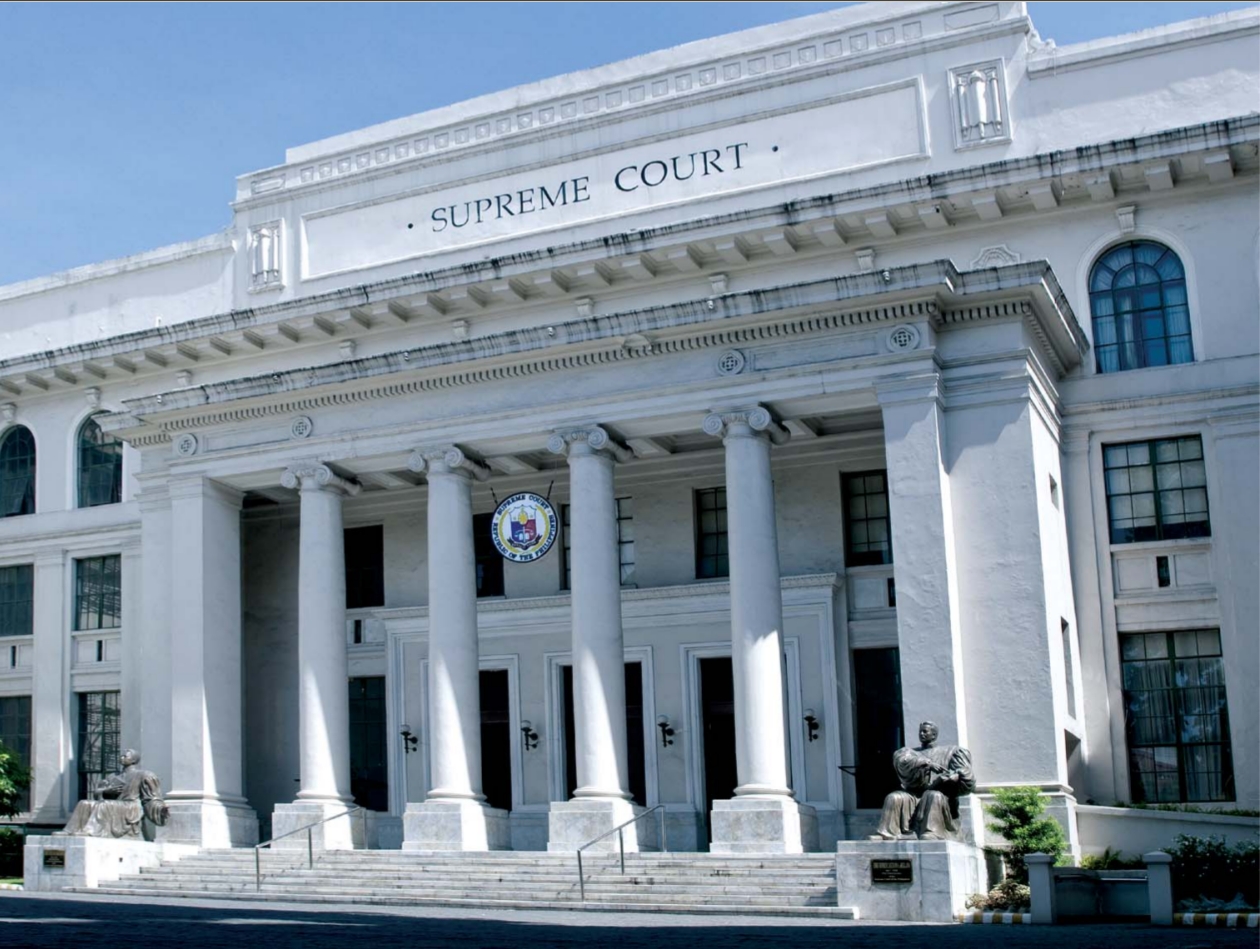
The Supreme Court on Wednesday said that the term “forthwith” as mentioned in Article 11, Section 3(4) of the 1987 Constitution meant that the Senate should hold an impeachment trial “within a reasonable time,” not necessarily immediately, as a petitioner argued.
According to a press briefer by the SC Office of the Spokesperson, the SC en banc voted 14-0-1 to dismiss the petition of lawyer Catalino Aldea Generillo Jr., which sought last year to compel the Senate to “immediately” convene as an impeachment court and begin the trial of Vice President Sara Duterte.
Contrary to the petitioner’s claim, the SC found that the Senate acted on the impeachment complaint “in a timely manner.”
“While the Constitution requires the House of Representatives to act within a certain number of session days on an impeachment complaint, it does not specify a fixed timeframe for the Senate to start an impeachment trial,” the press briefer said, citing the decision written by Associate Justice Rodil Zalameda.
“It simply provides that the trial ‘shall forthwith proceed,’ leaving the timing to the Senate’s discretion,” it added.
Article XI Section 3(4) of the 1987 Constitution states that: “In case the verified complaint or resolution of impeachment is filed by at least one-third of all the Members of the House, the same shall constitute the Articles of Impeachment, and trial by the Senate shall forthwith proceed.”
The SC clarified that the term “forthwith,” as stated, “means within a reasonable time, which may be longer or shorter, depending on the circumstances of each case.”
This then allows the Senate “to make the necessary preparations to convene as an impeachment court.”
The SC, however, stressed that the Senate must still avoid “undue delay” when it comes to the impeachment trial.
“While the Constitution does not set an exact date for the trial, the Senate must avoid undue delay to uphold the principle that public officers must at all times be accountable to the people,” the SC spokesperson's office said.
The SC said it considered the petition moot because the Senate had begun impeachment preparations, and the Articles of Impeachment against Duterte last year were nullified by the SC’s decision in July 2025 and resolution in January 2026.
“A case is moot when subsequent events remove any issues, making court rulings unnecessary. Since no Articles of Impeachment remained, the SC had no reason to order the Senate to convene as an impeachment court,” it said.
Former Senate impeachment court spokesperson Atty. Regie Tongol welcomed the SC’s decision, saying that it is a “victory for constitutional stability.”
“It protects the impeachment process from being weaponized through unrealistic timelines and reinforces the Senate's independence in fulfilling its role as a high court, proving that the institution cannot be bullied by public pressure or rushed by the misinterpretations of pundits,” Tingol said in a statement.
“I am gratified that the judiciary has provided this clarity. It validates that our measured, deliberate approach was legally sound all along, ensuring that future proceedings will be guided by reason, deliberation, and the unwavering pursuit of accountability without undue delay,” he added.
In February 2025, the House of Representatives impeached Duterte with over 200 congressmen endorsing the verified complaint against her. This was transmitted to the Senate as the articles of impeachment.
The Senate later voted to transfer to the archives the articles of impeachment against the Vice President, following the Supreme Court's decision declaring her impeachment unconstitutional.
The SC further said that the petition for mandamus filed by Generillo “was not the proper remedy.”
“[The SC] ruled that the Senate’s actions within its sphere cannot be revised or controlled by the judicial department through mandamus. As a coequal constitutional body, the Senate’s exercise of its duties is beyond the SC’s power of review, except in cases of grave abuse of discretion,” the SC spokesperson's office said.
“However, specifically for this case and in the interest of equity, the SC treated the petition as one for certiorari and proceeded to determine whether the Senate acted unlawfully or abused its discretion when it did not convene immediately as an impeachment court during its session break,” it added.
On Wednesday, the House Committee on Justice, via unanimous vote, found probable cause to impeach Duterte anew based on two impeachment complaints filed against her this year.
The two impeachment complaints filed against the Vice President accuse her of betrayal of public trust, culpable violation of the Constitution, among others, mainly over the following acts:
- alleged misuse of P612.5 million in confidential funds and using them as bribes
- threatening to kill President Marcos, Jr. and his family, including her desire to remove the head of the Chief Executive, and
- alleged accumulation of unexplained wealth.
Meanwhile, according to the SC, Senior Associate Justice Marvic Leonen, said that the Impeachment Court should have convened immediately.
The SC said Leonen believed that the Impeachment Court — not just the Senate President — should have taken charge of organizing that court.
Associate Justice Alfredo Benjamin Caguioa, meanwhile, took no part.—with a report from Joahna Lei Casilao/NB/AOL, GMA News

