

 GMA Brandtalk
 Tracking
 Archives

EXPLAINER: Why is Labor Day observed on May 1?
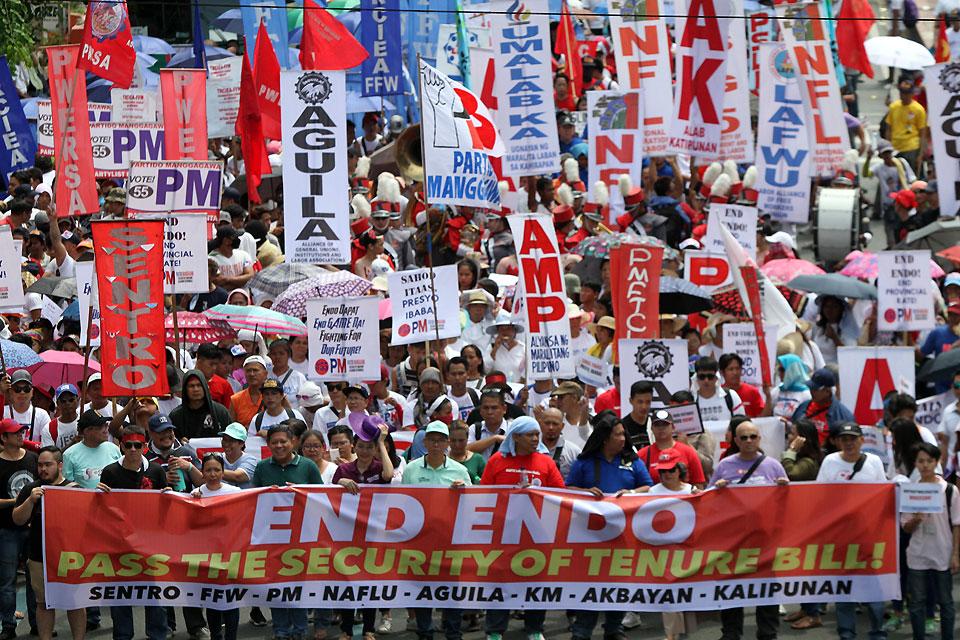
On May 1, thousands of workers will take to the streets again to issue fresh calls for fair wages and economic relief as the Philippines marks Labor Day.
Malacanang has declared May 1 as a regular holiday while the Department of Labor and Employment (DOLE) will conduct mega job fairs in 90 sites nationwide, opening opportunities for nearly 200,000 job vacancies.
As the country marks its 124th Labor Day, the commemoration traces its roots to a long history of workers' struggle for just compensation and humane working conditions.
Why is Labor Day on May 1?
The origins of Labor Day can be traced back to the late 1800s, when industrialization emerged and rapidly expanded in the United States. Workers faced harsh labor conditions at that time, enduring long working hours, low pay and unsafe workplaces.
In September 1882, around 10,000 workers in New York City took unpaid leaves to march through the streets, demanding fair wages and better working conditions. The protest, considered as the first Labor Day parade in the US, culminated with a picnic, speeches, and celebration.
Four years later on May 1, 1886, demands for an eight-hour workday in the US reached a boiling point. Thousands of workers flooded the streets of Chicago in what would later be known as the Haymarket Affair.
The peaceful demonstration took a violent turn following a standoff between the police and the protesters. The rally ended after an unidentified individual threw a bomb to the police, killing officers and civilians.
The incident became a global symbol of workers' resistance and struggle for labor rights. Years later, May 1 was declared International Workers' Day in honor of those who fought for better working conditions.
Philippines
In the Philippines, Labor Day shares the same roots in the fight for fair wages and improved working conditions.
On May 1, 1903, more than 100,000 Filipino workers—led by the Union Obrera Democratica de Filipinas (UODF)—marched from Plaza Moriones in Tondo to Malacañang Palace to call for fair wages and an end to US colonial rule.
The demonstration is widely considered as the first Labor Day protest in the country. The UODF, founded by Herminigildo Cruz, was the first modern labor federation in the Philippines.
The 'best day'
In an interview with GMA News Online, Dr. Rene Ofreneo, professor emeritus of the University of the Philippines-Diliman School of Labor and Industrial Relations (UP SOLAIR), said Labor Day remains the "best day" for workers and trade unions to air grievances on labor rights and workers' issues.
He cited Labor Day's status as a public holiday in many countries.
"Until now, for trade unions around the world, sagrado ang May 1. May 1 is the day we express fully 'yung anger, frustrations, demand ng organized at hindi organisadong laborers," Ofreneo said.
(Until now, May 1 remains a sacred day for trade unions around the world. May 1 is the day we express fully the anger, frustrations, and demands of organized and non-organized laborers.)
Labor Day protests
Over decades of struggle, workers have secured significant gains including the eight-hour workday, which now serves as the standard in many countries. Labor laws, minimum wages, and safety regulations have likewise been institutionalized, supported by global bodies like the International Labour Organization (ILO).
However, the fight for fair wages and working conditions continues. On Friday, several labor groups including SENTRO will stage protests to reiterate calls for a legislated wage hike and the imposition of a wealth tax.
The Philippine National Police earlier said it has placed all of its offices and units nationwide under full alert status starting Thursday to ensure the safety and security of Labor Day activities. — VDV, GMA News

