

 GMA Brandtalk
 Tracking
 Archives

EXPLAINER: Can senators be arrested inside the Senate premises?
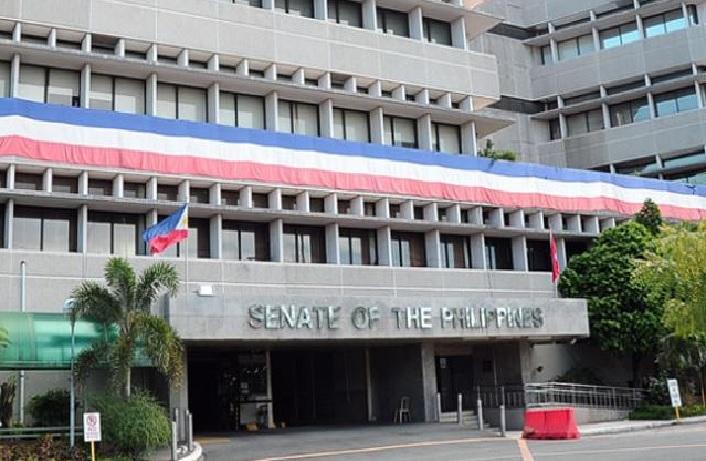
Senator Ronald “Bato” dela Rosa has been placed under the Senate's protective custody following an arrest warrant issued by the International Criminal Court (ICC) for alleged crimes against humanity.
But will this prohibit authorities from implementing the warrant against him?
For former Far Eastern University Law dean Mel Sta. Maria, the Senate cannot take custody of Dela Rosa and he may be arrested within its premises.
“Hindi. Hindi pwedeng kupkupin. Sapagkat wala naman tayong batas, whether sa Constitution o sa pangkaraniwang Statute, na nagsasabi na ang Senado ay isang fortress na kung saan ay hindi ka makakapasok kung may huhulihin,” Sta. Maria said in an interview on Super Radyo dzBB.
(No. No they cannot take custody of him. Because we don’t have any law, whether in the Constitution or a Statute, that states that the Senate is a fortress that prevents authorities from entering if there in someone to be arrested.)
“Hindi ito ‘yung— hindi kamukha ng isang embassy ito na wine-waive natin ang jurisdiction, hindi tayo makakapasok. Walang ganyan sa batas,” he added.
(This is not an embassy where jurisdiction can be waived and people can’t enter. There’s nothing like that under the law.)
According to Sta. Maria, senators may not be arrested while the Senate is in session and if the penalty of the alleged crime is below six years of imprisonment.
“Ibig sabihin, kung labas doon pwede kang hulihin kahit saan,” he said.
(This mean that outside of this, a senator can be arrested anywhere.)
To recall, Dela Rosa stopped appearing before the Senate for six months amid reports that the ICC had issued an arrest warrant against him in November 2025.
He surfaced before the upper chamber on Monday as senators voted for a change in leadership ahead of the possible transmittal of the Articles of Impeachment against Vice President Sara Duterte.
The senator said agents of the National Bureau of Investigation (NBI) attempted to block him from entering the premises. Former senator Antonio Trillanes IV later revealed that the bureau had a copy of a warrant of arrest issued by the ICC.
Following this, the Senate took custody of the senator.
Sta. Maria also said he believes that Dela Rosa may be arrested even without a warrant from a Philippine court.
“Unang-una, ang crime against humanity for murder at attempted murder ay tinatawag na universal crime. Sa international law, ibig sabihin noon ay kahit anong country pwedeng litisin ‘yun, hindi lang tayo,” he said.
(First of all, crimes against humanity for murder and attempted murder are called universal crimes. In international law, that means any country can prosecute them, not just us.)
He also cited Republic Act 9851 or the Philippine Act on Crimes Against International Humanitarian Law, Genocide, and Other Crimes Against Humanity.
“Kung ang isang tao ay pinaratangan o inakusahan ng crimes against humanity at may dumidinig na isang international tribunal, ang ating pamahalaan puwedeng paubaya na sa kanila ang pag-iimbestiga at kung kinakailangan, puwede pang dalhin ng gobyerno ‘yung tao doon sa tribunal na ‘yun,” he said.
(If a person is accused or charged with crimes against humanity and an international tribunal is hearing the case, our government can defer to them the investigation and, if necessary, the government can even bring that person to that tribunal.)
When asked if Senate President Alan Peter Cayetano may be held accountable for obstruction of justice, Sta. Maria said that this does not apply when there is good faith.
“Kung may good faith ang isang tao, kung sa tingin niya may kautusan siyang sinusundan ay… maabswelto siya,” Sta. Maria said.
(If a person acted in good faith, if he believes he was following an order, he may be acquitted.)
“So depende sa sitwasyon kung talagang merong evil motive or talagang merong ulterior na pakay. Kung wala naman, hindi naman,” he added.
(So it depends on the situation, whether there really was an evil motive or truly an ulterior motive. If there were none, then he would not be charged.)
Sta. Maria said the same applies to the NBI agents who were cited in contempt for attempting to serve the warrant. He said it resembled a hot pursuit operation.
“At isa pa, may diperensya ang paghuhuli sa isang pribadong bahay at sa pampublikong bahay. Ang pribadong bahay, kahit may warrant of arrest ka tutuktok ka muna,” he said.
“Pero ito pampubliko ito. Ano ba 'yan, nirerentahan ba ‘yan ng Senado? Ang nagbabayad niyan taumbayan. Kung pagmamay-ari naman ng gobyerno, sa atin ‘yan. 'Di ba?” he added.
Above the law?
According to University of the Philippines (UP) College of Law Professor Paolo Tamase, a Senate protective custody is not under the Constitution.
“Mayroon pong kahit papaanong tradition ‘yung mga Kongreso na pinoprotektahan nila ‘yung mga senador at kongresista nila laban sa political prosecution,” he said on the On Record segment of Unang Hirit.
(There is somehow a tradition in Congress that they protect their senators and congressmen against political prosecution.)
Tamase noted that authorities previously served an arrest warrant against former Senators Antonio Trillanes IV and Leila De Lima within Senate premises. He said their fellow senators also did not prevent the implementation of the warrant.
The late senator Juan Ponce Enrile was also arrested while the Senate was in session in 1990. However, the NBI agents, led by then Director Alfredo Lim, waited for him outside the Senate building after delivering a privilege speech.
Tamase also questioned whether the Senate believes itself to be above the law.
“Siguro ang mas mahalagang usapin diyan, ‘yung Senado ba ang tingin nila ay nasa above the law sila na para bang hindi sila kabilang doon sa batas,” he said when asked if a warrant can be served in the Senate premises.
(Maybe the more important issue there is whether the Senate thinks it is above the law, as if they are not covered by the law.)
“Kasi kahit kung sinong tao ang ma-serve-an ng warrant, obligasyon kahit papaano na sumunod doon na sumama sa pulis, sumama sa nage-enforce. Pero kung ginagamit ‘yung Senado upang iwasan ‘yung pag serve ng warrant na ‘yun, ang tingin ba ng Senado ay nasa above siya sa lahat sa atin na simiarly obliged to comply with warrants,” he added.
(Because no matter who a warrant is served on, there is somehow an obligation to comply with it and go with the police or the enforcing officers. But if the Senate is being used to avoid the service of that warrant, does the Senate think it is above all of us who are similarly obliged to comply with warrants?)
Citing the cases of Trillanes and De Lima, Tamase said it may be important for senators to show that public officials are still not above the law.
“Kung titignan natin ‘yun na template at itatali natin ito sa larger na usapin, mas malaking usapin sa pananagutan, mas mahalaga siguro para sa Senado na ipakita na baga man senador, baga man napakahalaga ng isang tao sa gobyerno, hindi siya nasa taas ng batas,” he said.
(If we look at that as a template and connect it to the larger issue, the bigger issue of accountability, it may be more important for the Senate to show that even if someone is a senator, even if a person is very important in government, they are not above the law.)
Meanwhile, Tamase said that legal academics believe that the surrender of an accused to the ICC is not prohibited under the law, even without a warrant from a Philippine court.
Meanwhile, Dela Rosa has filed a new manifestation with the Supreme Court (SC) for his immediate judicial protection. He said his camp will exhaust all means to prevent his arrest.
In a separate interview, ICC assistant to counsel Atty. Kristina Conti said she is waiting for the High Court’s decision.
“Ang tingin ko kasi wala nang kayang gawin 'yung SC. Ang inaabangan ko ay pag sasalita ng SC na may hangganan ang kanilang kapangyarihan at hindi nila kayang iwaksi o i-revoke ang warrant of arrest ng ICC,” she said.
(I think the SC can no longer do anything. What I am waiting for is for the SC to say that its power has limits and that it cannot nullify or revoke the ICC’s warrant of arrest.)
When asked about the next individual who may be the recipient of an arrest warrant, Conti said it may be former Davao City Police chief Vicente Danao or former National Capital Region Police Office director Oscar Albayalde.
“Well, kung doon sa order, ang susunod po ay si Vicente Danao. So one to eight ‘yung listahan. Una si Bato Dela Rosa doon na co-perpetrator sa crimes against humanity ni Duterte. Sunod-sunod po ‘yan,” she said.
(Well, according to the order, Vicente Danao is next. So the list is from one to eight. First there is Bato Dela Rosa as a co-perpetrator in Duterte’s crimes against humanity. Then the others follow.)
Duterte is currently under ICC custody in relation to crimes against humanity charges over alleged killings during his time as Davao mayor and as president.
In the DCC against Duterte, the ICC Prosecution named his alleged co-perpetrators in alleged killings.
These individuals were Dela Rosa, Danao, Albayalde, former PNP operations chief Camilo Cascolan, then Special Assistant to the President (SAP) and now Senator Christopher Lawrence “Bong” Go, former National Bureau of Investigation (NBI) Director Dante Gierran, lawyer and ex-Justice Secretary Vitaliano Aguirre II, and former Philippine Drug Enforcement Agency (PDEA) chief Isidro Lapeña.
Lawyer Gilbert Andres, one of the common legal representatives of victims in Duterte’s ICC case, said the families of victims are appealing for the Senate not to be a safe haven for an individual with an ICC warrant.
“Sana po huwag maging safe haven ang Senado para sa isang tao na may ICC warrant. Sana po ay respetuhin din po ng Senado ang batas natin, lalo na po ang RA 9851,” he said in a separate interview on Tuesday's Balitanghali.
(We hope the Senate will not become a safe haven for a person with an ICC warrant. We also hope that the Senate will respect our laws, especially Republic Act 9851.) —AOL/RF, GMA News

