

 GMA Brandtalk
 Tracking
 Archives

Marcos' Japan visit to focus on maritime security, energy, defense, investments
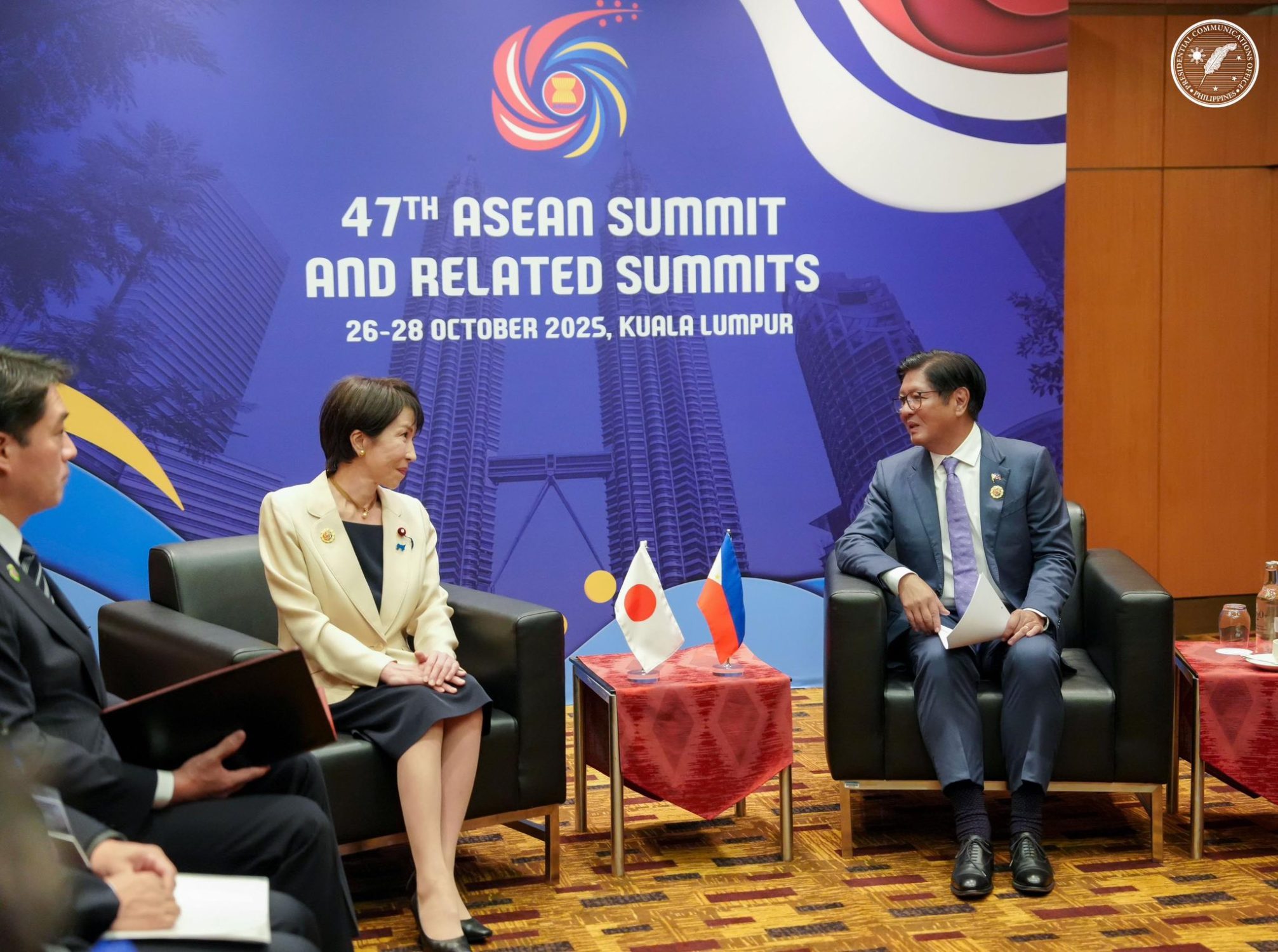
President Ferdinand Marcos Jr. and First Lady Liza Araneta-Marcos will embark on a state visit to Tokyo, Japan, from May 26 to 29, 2026, at the invitation of the Japanese government, Department of Foreign Affairs (DFA) spokesperson Analyn Ratonel said on Monday.
During a Palace briefing, Ratonel said the Philippines’ key agenda for the visit includes maritime security, defense cooperation, energy security, and investments, which will be discussed in bilateral talks between Marcos Jr. and Sanae Takaichi.
“Inaasahan din na mag-uusap ang dalawang leaders tungkol sa mga regional and global issues na nakaaapekto sa Pilipinas at Japan kagaya ng ASEAN, challenges sa Indo-Pacific region at developments in the Middle East,” Ratonel said.
(The two leaders are also expected to discuss regional and global issues affecting the Philippines and Japan, such as ASEAN, challenges in the Indo-Pacific region, and developments in the Middle East.)
On energy security, Ratonel said Marcos is expected to discuss with Takaichi the Philippines’ plans to secure oil supply and diversify energy sources amid disruptions caused by tensions in the Middle East.
Earlier this year, Japan announced plans to establish a $10-billion (about P615 billion) financial framework called the Partnership on Wide Energy and Resources Resilience Asia (POWERR Asia) to help Asian nations secure energy resources.
The DFA confirmed that while the Japanese initiative will be discussed during the state visit, no specific funding allocation for the Philippines has been identified.
In an interview with Japanese media last week, Marcos expressed gratitude for Japan’s “active role” in supporting the Philippines’ energy supply and said he intends to seek clarity on what the country could gain from the POWERR Asia initiative.
The Philippines is also expected to push for the modernization of the Armed Forces of the Philippines (AFP) through deeper collaboration with Japan’s defense agencies, including the transfer of unspecified defense equipment.
Meanwhile, the full implementation of existing defense agreements between the two countries is expected to be discussed during the visit, particularly the Reciprocal Access Agreement and the Reciprocal Provision of Supplies and Services, according to Ratonel.
The Reciprocal Provision of Supplies and Services between the AFP and Japan’s Self-Defense Forces was signed in January and provides logistical support for joint military training, operations, humanitarian assistance, and disaster response, the DFA said.
On maritime security, the DFA confirmed that the Philippines and Japan will discuss the continuing dispute in the West Philippine Sea.
The Philippines will also meet with Japanese business groups to secure potential investments, although specific industries have yet to be identified.
Marcos is likewise expected to meet with the Filipino community in Japan. According to DFA data, about 340,000 Filipinos were living and working in the country as of 2025.
The official Philippine delegation for the state visit has yet to be announced.

