

 GMA Brandtalk
 Tracking
 Archives

Palace sees no calamity to justify Senate online voting
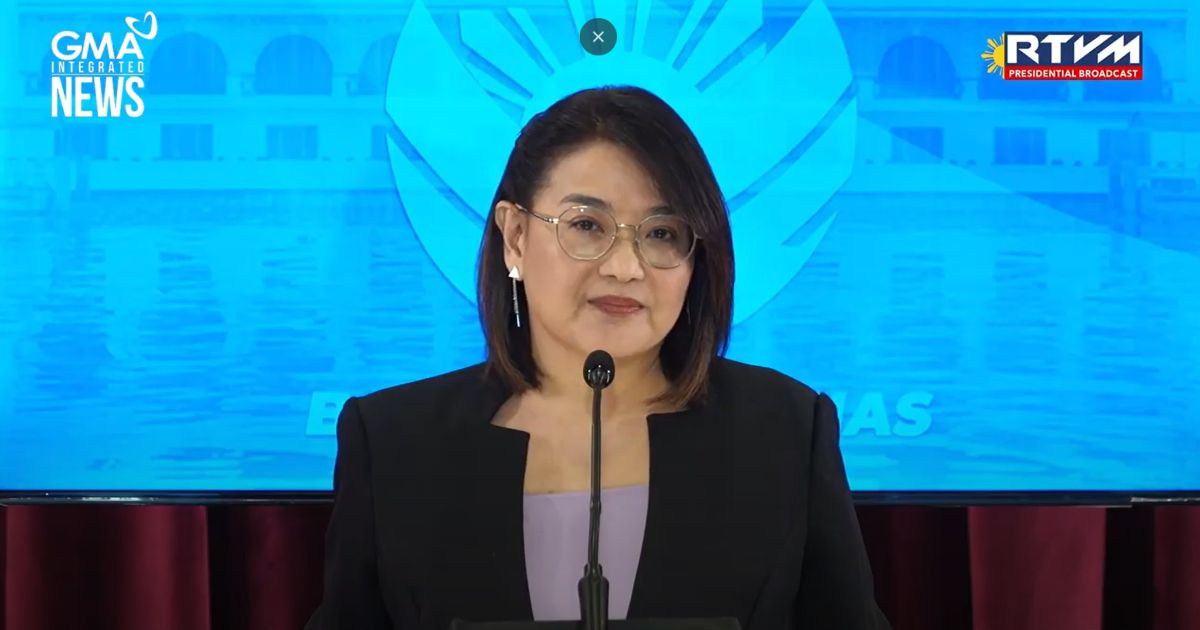
Malacañang on Wednesday said it is leaving to the Senate the decision on a proposal allowing remote voting during plenary sessions, but stressed that no force majeure or calamity exists to justify its adoption.
Palace Press Officer Undersecretary Claire Castro made the statement in reaction to the walkout staged by members of the Senate minority bloc on Tuesday in protest against a proposed amendment to Senate rules allowing senators to participate remotely in sessions.
“Dati naman ay napayagan ang online voting, mga Zoom meeting, dahil mayroong tayong kalamidad na hinaharap noon. At sa pagkakataong ito, ay wala naman tayong masasabi na anumang force majeure, calamity, na magja-justify ng mga online voting,” Castro said in an interview with reporters in Japan.
(Before, online voting and Zoom meetings were allowed because we were facing a calamity. But at present, there is no force majeure or calamity that would justify online voting.)
She also said physical presence in Senate sessions is important for meaningful debate.
“At dapat din siguro malaman nila na mahirap magkaroon ng online voting kung wala ang tao mismo sa mga pagpupulong at pagkakaroon ng diskusyon,” she added.
(And they should also understand that it is difficult to have online voting without the physical presence of members in meetings and discussions.)
Castro reiterated that President Ferdinand “Bongbong” Marcos Jr. will not interfere in Senate matters.
“Still, muli, ito ay nasa kanilang pagpapasya. Wala sa pagpapasya ng administrasyon, wala sa pagpapasya ng Pangulo,” she said.
(Again, this is up to their discretion. It is not for the administration or the President to decide.)
Rule XIV, Section 41 of the Senate Rules allows sessions to be conducted via teleconference, video conference, or other remote means due to force majeure or a national emergency, as determined by a majority of all senators, which may prevent physical attendance or the convening of the Senate.
It also states that senators who are physically present may still attend and participate in plenary sessions even during teleconference proceedings.
The debate began when acting Senate Majority Floor Leader Joel Villanueva introduced a proposal by Senator Rodante Marcoleta, a member of the majority bloc, seeking to amend Senate rules to allow teleconferencing in sessions.
Minority senators questioned the move, noting that although the proposal had been referred to the Committee on Rules, the panel has yet to be constituted after all committee posts were declared vacant following the election of Senate President Alan Peter Cayetano on May 11.
After saying both sides had already presented their arguments, Cayetano moved for the plenary to tackle and vote on the proposal, drawing strong objections from minority senators.
The minority bloc later walked out of the session, questioning whether the push to amend the rules was linked to the absence of Senator Ronald “Bato” dela Rosa and other senators facing legal cases who could potentially benefit from remote participation.
‘Bayan o sarili’
Castro said the developments in the Senate would reveal whether lawmakers are acting in the public interest or for personal gain.
“Dito makikita: ito ang magandang pagkakataon para malaman natin lahat kung ang mga liderato ba at mga leaders na ito ay nagtatrabaho para sa bayan o para sa pansarili o pang-iilan lamang,” she said.
(This is an opportunity to determine whether leaders are working for the country or for themselves or a few others.)
"Kagaya nga ng sinabi ni Heneral Luna, “Bayan o sarili? Mamili ka,”’ she added, quoting a line from a Filipino film.
(As General Luna said, ‘The nation or yourself? Choose.’)
Citing Senate President Alan Peter Cayetano, Castro said Dela Rosa’s absence was considered “justifiable” due to security concerns following an arrest warrant issued by the International Criminal Court (ICC), which could raise questions about eligibility for online voting.
“So, ito ba ay isa sa mga justifiable reasons na mababanggit para makapagboto online? So, ito ay talagang malaking katanungan,” she said.
(So, is this a justifiable reason for allowing online voting? That is a major question.)
Malacañang also distanced itself from complaints involving other majority senators, saying these issues surfaced even before the formation of the current 13-member majority bloc.
“Hindi ito issue na ang administrasyon ang nagpupukol. Sila mismo ang nagbigay ng mga impormasyon patungkol po dito. At kung may pag-iimbestigang gagawin ang Ombudsman, ito po ay hindi pakikialaman ng administrasyon,” Castro said.
(This is not an issue created by the administration. The information came from the senators themselves. And if the Ombudsman conducts an investigation, the administration will not interfere.)
The Office of the Ombudsman’s Field Investigation Bureau earlier recommended plunder and bribery charges against Marcoleta over alleged campaign donations.
The Ombudsman has also said it will file separate plunder and malversation cases against Senators Jinggoy Estrada and Joel Villanueva in connection with alleged flood control anomalies.—MCG, GMA News

