

 GMA Brandtalk
 Tracking
 Archives

EXPLAINER: What happened in Avelino v. Cuenco case on Senate leadership change?
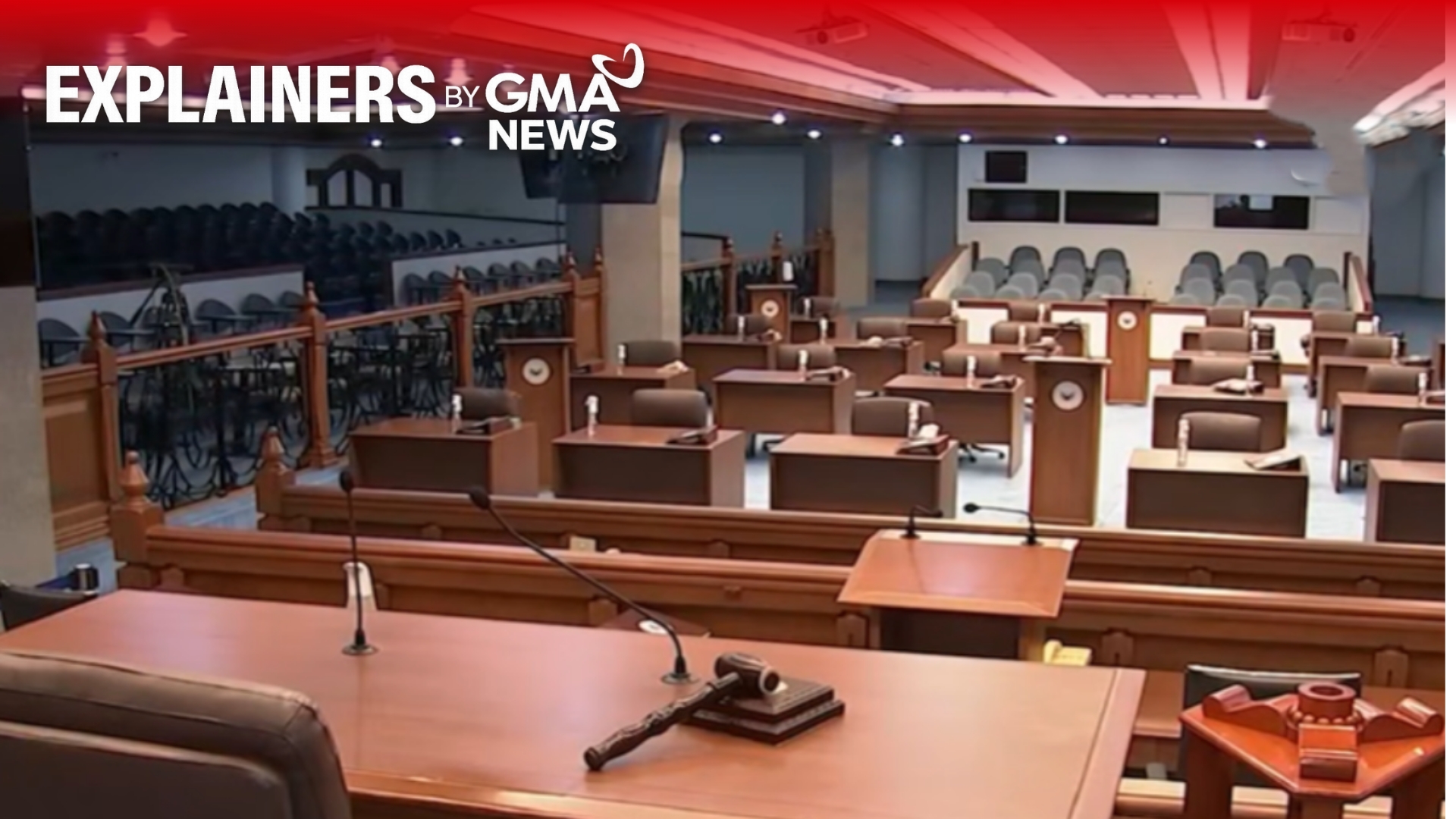
Amid the continued absence of Senate President Alan Peter Cayetano and his allies, 12 senators on Wednesday elected Senator Sherwin Gatchalian as Senate President Pro Tempore and acting Senate President.
Citing the case of Avelino v. Cuenco, Gatchalian said the Supreme Court (SC) found that an absolute majority of 12 out of 23 members could constitute a constitutional majority for quorum purposes.
What happened in 1949 that the Avelino v. Cuenco ruling upheld?
The 1949 case stemmed from then Senate President Jose Avelino’s petition asking the Supreme Court to declare him the rightful Senate President and to oust former Senate President Mariano Cuenco.
In its resolution, the SC En Banc upheld that there was a quorum at the session when Cuenco was elected as acting Senate President.
At that time, there were only 23 senators because Senator Tomas Confessor was in the United States and outside the Senate’s jurisdiction.
“Therefore, an absolute majority (12) of all the members of the Senate less one (23), constitutes constitutional majority of the Senate for the purpose of a quorum,” the High Court said.
“In fine, all the four justice agree that the Court being confronted with the practical situation that of the twenty three senators who may participate in the Senate deliberations in the days immediately after this decision, twelve senators will support Senator Cuenco and, at most, eleven will side with Senator Avelino, it would be most injudicious to declare the latter as the rightful President of the Senate, that office being essentially one that depends exclusively upon the will of the majority of the senators, the rule of the Senate about tenure of the President of that body being amenable at any time by that majority,” it added.
The SC En Banc said it made this ruling partly upon the grounds stated by former Justices Jose Feria, Gregorio Perfecto, and Manuel Briones in their separate opinions.
Feria argued that the constitutional majority should be calculated based on the actual members within the Senate’s jurisdiction.
“Therefore, as Senator Confesor was in the United States and absent from the jurisdiction of the Senate, the actual members of the Senate at its session of February 21, 1949, were twenty-three (23) and therefore 12 constituted a majority,” he stated.
Perfecto, meanwhile, said the presence of the 12 senators was enough for quorum. He stated that he was inclined to conclude that Cuenco’s designation was an emergency measure to fill the vacuum created by Avelino’s desertation of the office.
The Senate En Banc dismissed the petition, saying it will not “sally into the legitimate domain of the Senate on the plea that our refusal to intercede might lead into a crisis, even a resolution.”
Senator Panfilo “Ping” Lacson also cited this same ruling as legal basis and precedent for Wednesday’s development.
“Labing-dalawa kami, 10 sila. Ano ‘yung majority? This is not without legal basis at saka precedent, ano? Dahil ‘yung Avelino vs. Cuenco ay maliwanag,” Lacson said in an interview on 24 Oras.
(There are twelve of us, they are ten. What is the majority? This is not without legal basis and precedent, you know? Because Avelino vs. Cuenco is clear.)
“Dalawampu’t-dalawa kami ngayon dahil nga ‘yung dalawa indisposed at sinasabi doon outside the power of the Senate at hindi maco-compel ‘yung kanilang attendance,” he added.
(There are 22 of us now because the two are indisposed, and it says there that it is outside the power of the Senate and their attendance cannot be compelled.)
Aside from the Avelino v. Cuenco case, Gatchalian and Lascon also cited the May 5, 2015 plenary session of the Senate.
During the session, the Senate declared quorum with 12 senators present as four senators were out of the country and were not counted in the determination of a quorum pursuant to an SC ruling while three senators cannot physically attend as they were under detention.
Lacson said the base number of the senators then was 17.
“Ang naging majority noon, nakapag-conduct ng business at nakapag-elect, 12. So pinag-aralan namin ito,” he said.
(The majority at that time was able to conduct business and elect officials with 12 members. So we studied this.)
When asked if Cayetano is still the Senate President, Lacson said the position is now vacant.
“We’re waiting for the 13th senator para makapag-elect kami ng bagong Senate President. Now if the new minority group makaka produce naman ng 13, which I don’t, ay pwede sila mag-elect ng kanilang Senate President,” he said.
(We’re waiting for the 13th senator so that we can elect a new Senate President. Now if the new minority group can produce 13, which I don’t think they can, then they can elect their own Senate President.)
Lacson also said Cayetano’s move to declare sine die adjournment through a letter is illegal.
“Illegal ‘yun. Marami siyang illegal na ginagawa eh. Kasi unang-una, illegal ‘yung hindi sila nag a-attend ng session, nag bo-boycott,” he said.
(That is illegal. He is doing many illegal things. Because first of all, it is illegal that they are not attending the session and are boycotting.)
However, Cayetano maintained that the 1987 Constitution and the Senate’s rules are clear that key actions require at least 13 senators. He also insisted that he remains the "legitimate, legal and moral" Senate President.
“Malinaw na malinaw po ang Konstitusyon at rules po ng Senado. You cannot declare all positions vacant with a number of 12. You cannot even hold a session because walang quorum,” he said in his Facebook Live on Wednesday night.
(The Constitution and the rules of the Senate are very clear. You cannot declare all positions vacant with only 12. You cannot even hold a session because there is no quorum.)
He added that while 12 senators may be enough for some internal positions, higher thresholds apply for top leadership roles and quorum.
“Assuming may quorum (Assuming there’s a quorum), you need 12 for any position below the Senate President to remove a Senate President. But for Senate President, for quorum, and for Senate President Pro Tempore, you need 13,” he said.
For his sister Senator Pia Cayetano, however, the circumstances of the Avelino v. Cuenco case are different from what happened in the Senate plenary on Wednesday afternoon.
“They cite the case of Avelino vs. Cuenco where the Supreme Court considered 12 as the majority. But as any freshman law student knows, you can’t pull out the rationale of a case and use it to suit your needs. The specifics of the case are different,” she said.
She cited the 1987 Constitution’s provision which stated that the officers of the Senate – which should be composed of 24 senators – shall be elected by a majority vote of all its members.
“So today, when 12 senators convened and purportedly held session, how can that be valid?” the senator asked, adding: “12 is not 13. Alam ng Grade 1 student ‘yan (A Grade 1 student knows that).” —JMA/NB, GMA News

