

 GMA Brandtalk
 Tracking
 Archives

Lessons from Sapang Uwak: Aeta classroom reflects country's learning challenges
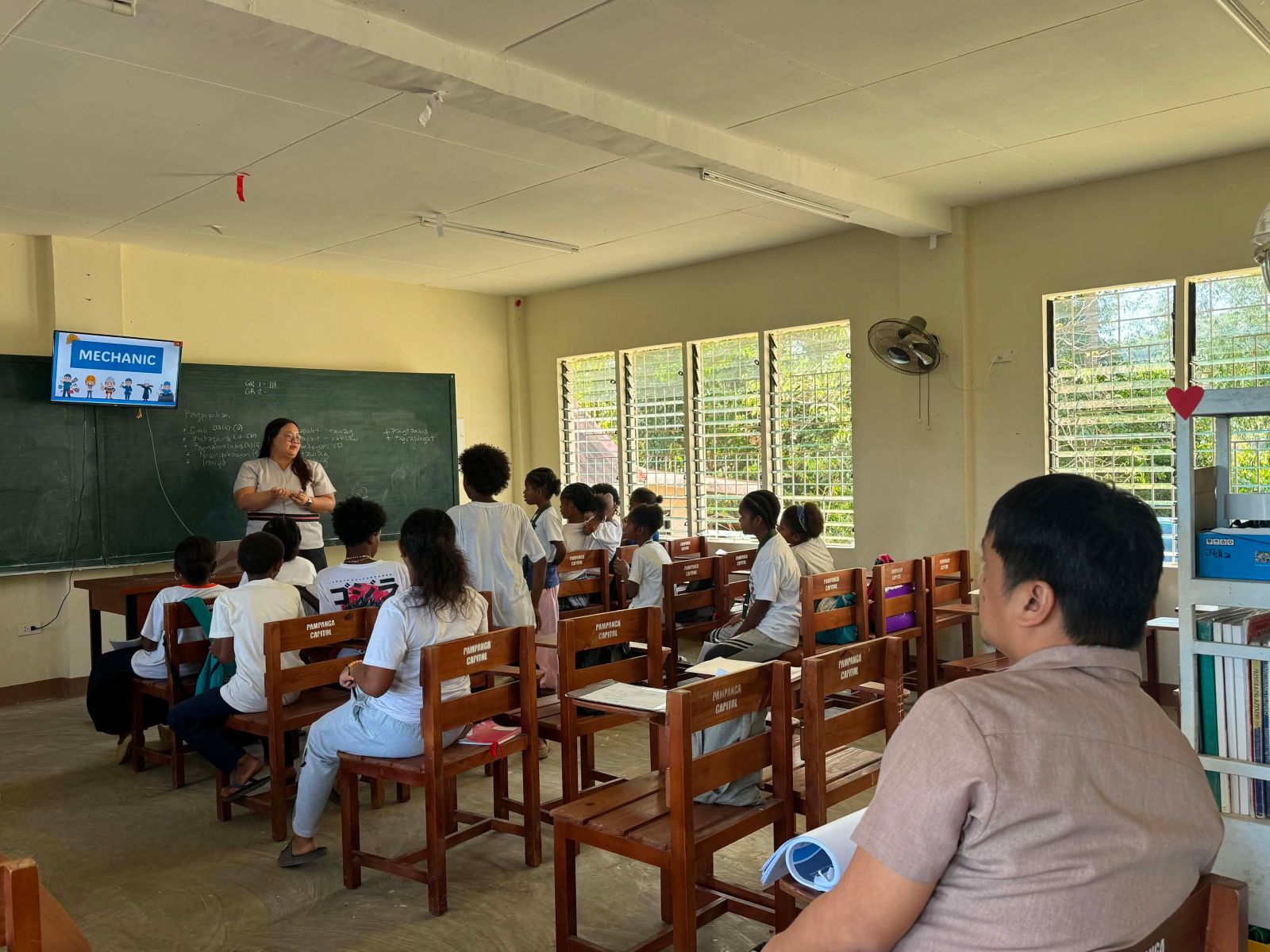
PORAC, Pampanga — When English teacher Raven Kyle Duya asks her students about a story they have just read, many can pronounce the words on the page.
Understanding what those words mean, however, is often a different matter.
"Bilang English teacher, kitang-kita ko talaga ito araw-araw. Mas lalo ko itong napansin dahil sa ARAL Program ng DepEd. Maraming bata ang nakakabasa ng mga salita pero nahihirapang ipaliwanag kung ano ang ibig sabihin ng kanilang nabasa. Kapag nagtanong ka tungkol sa isang maikling kuwento minsan hirap silang sagutin kahit nabasa naman nila ito," Duya told GMA News Online.
(As an English teacher, I see this every day. I noticed it even more through the DepEd ARAL Program. Many students can read the words but struggle to explain what they have read. When you ask them about a short story, they sometimes find it difficult to answer even if they have already read it.)
The challenge is one faced by many schools across the country. But in Sapang Uwak, an indigenous peoples community in Porac, Pampanga, the struggle is compounded by limited access to books and reading materials, poor internet connectivity, difficult terrain and the long distances some students travel just to reach school.
What Duya sees inside her classroom mirrors concerns raised by the Second Congressional Commission on Education (EDCOM 2), which recently sounded the alarm over the country's literacy crisis.
Results of a March 2026 assessment conducted by the Department of Education showed that around 1.3 million of 1.4 million Grade 11 students nationwide have difficulty understanding what they read. Only about 12 percent were classified as independent readers, while nearly six in every 10 students were found to be at the frustration level—the lowest literacy category, where comprehension is minimal or virtually absent.
Education officials have acknowledged that the problem stems from learning gaps accumulated over many years and does not begin in senior high school alone.
For Duya, a 26-year-old Junior High School English teacher who has spent the past eight months in Sapang Uwak, those statistics are reflected in the everyday realities of her students. The school serves a relatively small population, with around a hundred learners enrolled during the previous school year.
Many students, she said, are still developing foundational reading skills.
"Marami sa mga estudyante ang slow readers at mayroon pa ring hindi pa gaanong nakakabasa," she said.
(Many students are slow readers and some are still struggling with basic reading.)
As a result, Duya has had to adjust her teaching methods, slowing down lessons and devoting more time to reading activities and reinforcement.
"Kaya kinailangan kong baguhin ang paraan ng pagtuturo ko. Mas naging mabagal ang pacing ng lessons, mas marami akong activities sa pagbabasa, at mas madalas ang pag-uulit ng mga concepts para mas maintindihan nila,' she said.
(I had to change my teaching methods. The lessons became slower, there were more reading activities, and I repeated concepts more often so they could understand them better.)
The difficulties extend beyond reading.
According to Duya, many learners also struggle with writing, particularly in English. While some students can write individual words or short responses, constructing complete sentences and expressing ideas clearly remain significant challenges.
Yet despite these learning gaps, she said many students remain eager to learn.
When asked what image best captures the state of education in Sapang Uwak, Duya did not point to the lack of resources or the difficult journey to school. Instead, she thought of the students themselves.
"Siguro yung mga batang pumapasok kahit malayo ang nilalakad nila at kahit minsan kulang ang kanilang pagkain. Makikita mo talaga kung gaano nila gustong matuto kahit hindi madali ang sitwasyon nila," she said.
(Perhaps it's the children who continue going to school even when they have to walk long distances and sometimes lack enough food. You can really see how much they want to learn despite their difficult situation.)
Distance remains one of the biggest barriers to attendance.
Some students who go home for lunch are unable to return for afternoon classes because of the long walk back to school. During periods of heavy rain, the situation becomes even more challenging. Swollen rivers and unsafe roads often force the school to temporarily shift to modular learning.
Learning resources are also limited.
"Hindi pa rin sapat. May mga subjects pa rin na wala talagang libro na naibibigay kaya kailangan naming gumawa o maghanap ng ibang materials na magagamit sa pagtuturo," she said.
(They are still not enough. There are subjects for which no books are provided, so we have to create or look for alternative teaching materials.)
Most learners also have little or no access to internet services and digital devices, leaving teachers heavily reliant on printed modules, worksheets and other offline materials.
Despite these challenges, Duya believes many people hold misconceptions about IP learners.
"Madalas iniisip ng iba na hindi sila interesado sa pag-aaral o mabagal silang matuto. Pero sa karanasan ko, hindi iyon totoo," Duya said.
(Many people think they are not interested in studying or that they learn slowly. But based on my experience, that is not true.)
For her, the issue is not a lack of ability but a lack of opportunities and resources.
"Kadalasan, kulang lang sila sa resources at oportunidad. Kapag nabigyan sila ng sapat na suporta at gabay, makikita mo rin ang kanilang sipag at kakayahan," she said.
(Often, they simply lack resources and opportunities. When given enough support and guidance, you can clearly see their diligence and abilities.)
It is also the reason she continues to teach in the community.
"Yung mga batang determinado talagang matuto. Makikita mo sa kanila na interesado sila at willing silang matuto kahit nahihirapan sila," she said.
(The students who are truly determined to learn. You can see that they are interested and willing to learn even when they are struggling.)
And while national conversations on learning recovery often focus on literacy rates, assessment scores and learning gaps, Duya sees something else in her classroom every day.
She sees students who walk long distances to school. Students who struggle to understand what they read. Students who continue learning despite limited resources and difficult circumstances.
Most of all, she sees children with dreams.
"Gusto kong malaman nila na ang mga batang ito ay may mga pangarap din tulad ng ibang bata," she said.
(I want people to know that these children have dreams just like any other child.)
In Sapang Uwak, those dreams persist despite the challenges that make learning more difficult. The students have already answered one question: whether they are willing to learn.
Every day, they prove that they are. — VBL, GMA News

