

 GMA Brandtalk
 Tracking
 Archives

Building code compliance crucial amid 'constant' earthquake threat, expert says
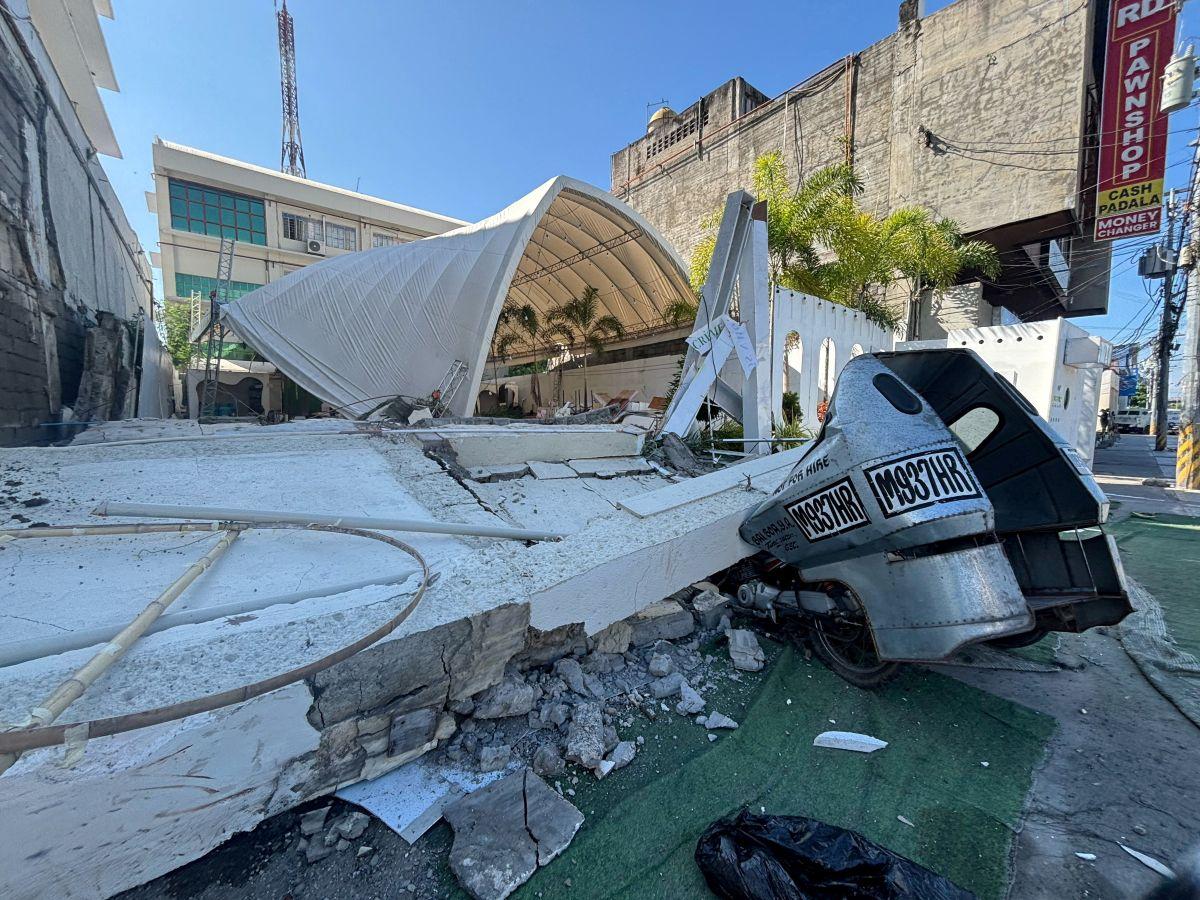
Strict compliance with structural building standards is a necessary layer of protection against earthquake hazards, according to Project NOAH Executive Director Dr. Mahar Lagmay.
In a Balitanghali interview on Tuesday, Lagmay emphasized how standard-grade buildings reduce casualties and earthquake damage.
"Karamihan diyan nasolusyunan ng pagtayo ng kabahayan, pagtayo ng building na naaayon sa building code ay malaki po ang mababawas natin sa maaaring pinsala ng malaking lindol," Lagmay said.
(Most of that can be solved by building homes and structures according to the building code. This will drastically reduce the potential damage from a major earthquake.)
Structures compliant with the building code have smaller chances of collapse, according to Lagmay.
The expert said this is also a reminder for infrastructures in Metro Manila, which is not exempt from earthquake risks due to the presence of fault lines, as confirmed by studies.
Lagmar noted that in natural phenomena such as earthquakes, it is usually hazards that kill.
“At alam naman natin, the earthquake per se, 'yung pagyanig per se does not kill. It's the hazards that kill. 'Yung hazard na 'pag yumanig ay magigiba 'yung bahay at madadaganan 'yung mga tao na nasa loob,” he said.
(And as we know, the earthquake per se, the shaking itself, does not kill. It's the hazards that kill. The hazard here is that when the ground shakes, houses collapse and trap the people inside.)
To strengthen the earthquake resilience of communities, Lagmay said that local government units and regulatory agencies should strictly check the compliance of infrastructures with structural standards.
"Ang gusto kong mga pagtibayin diyan pa ay siguro 'yung implementasyon ng ating building code, ng structural code, walang mga shortcuts dapat, sinusunod ito nang maigi," Lagmay said.
(What I would really like to see reinforced is the implementation of our building and structural codes. There should be no shortcuts, and they must be strictly followed.)
"Sana ito ay mga nakikita nila, nakikita ng ating mga LGU at tinitingnan kung ito ba ay naitayo ayon sa building code, kung ito ay compliant o hindi," he added.
(I hope our LGUs also see this and actively inspect whether these structures were built according to the building code—whether they are compliant or not.)
Lagmay said that if the national government has been preparing communities with earthquake drills, it should also prioritize efforts to ensure the construction of standard-grade infrastructure.
In earlier reports, PHIVOLCS had reminded the public that the "duck, cover, and hold" protocol is only effective for protecting against falling debris and not from building collapse.
Build up
The magnitude-7.8 earthquake that happened in Mindanao on Monday is classified as a "major earthquake," with experts investigating if it was triggered by the Cotabato Trench—the trench that caused an 8.1-magnitude earthquake in 1976.
Lagmay explained that based on historical records, seismologists had observed cycles of intervention in active faults.
“Kumbaga kapagka matagal na ang isang fault ay hindi gumagalaw, nakakapag-ipon ito ng lakas,” he said.
(In other words, when a fault hasn't moved for a long time, it accumulates strength.)
Lagmay explained that when a fault ruptures, it will release its built-up energy as an earthquake.
'Constant threat'
According to Lagmay, Metro Manila could also experience an earthquake with an intensity similar to Mindanao.
While its timing cannot be forecast, he said that people should be prepared at any time.
(We cannot say exactly when it will strike, but we do know that it can happen, and we know how strong it could be. We must always be prepared because it can happen anytime.)
“Hindi po ito ang last time, marami pa po tayong haharapin na malalaking lindol sa mga susunod na taon, sa mga susunod na araw at kailangan continuous ang preparations natin dahil constant ang threat ng paglindol dito sa Pilipinas,” he added.
(This won't be the last time. We will face more major earthquakes in the coming days and years. Our preparations must be continuous because the threat of earthquakes in the Philippines is constant.)
— VDV, GMA News

