

 GMA Brandtalk
 Tracking
 Archives

EXPLAINER: What are the warning signs that your child is being bullied?
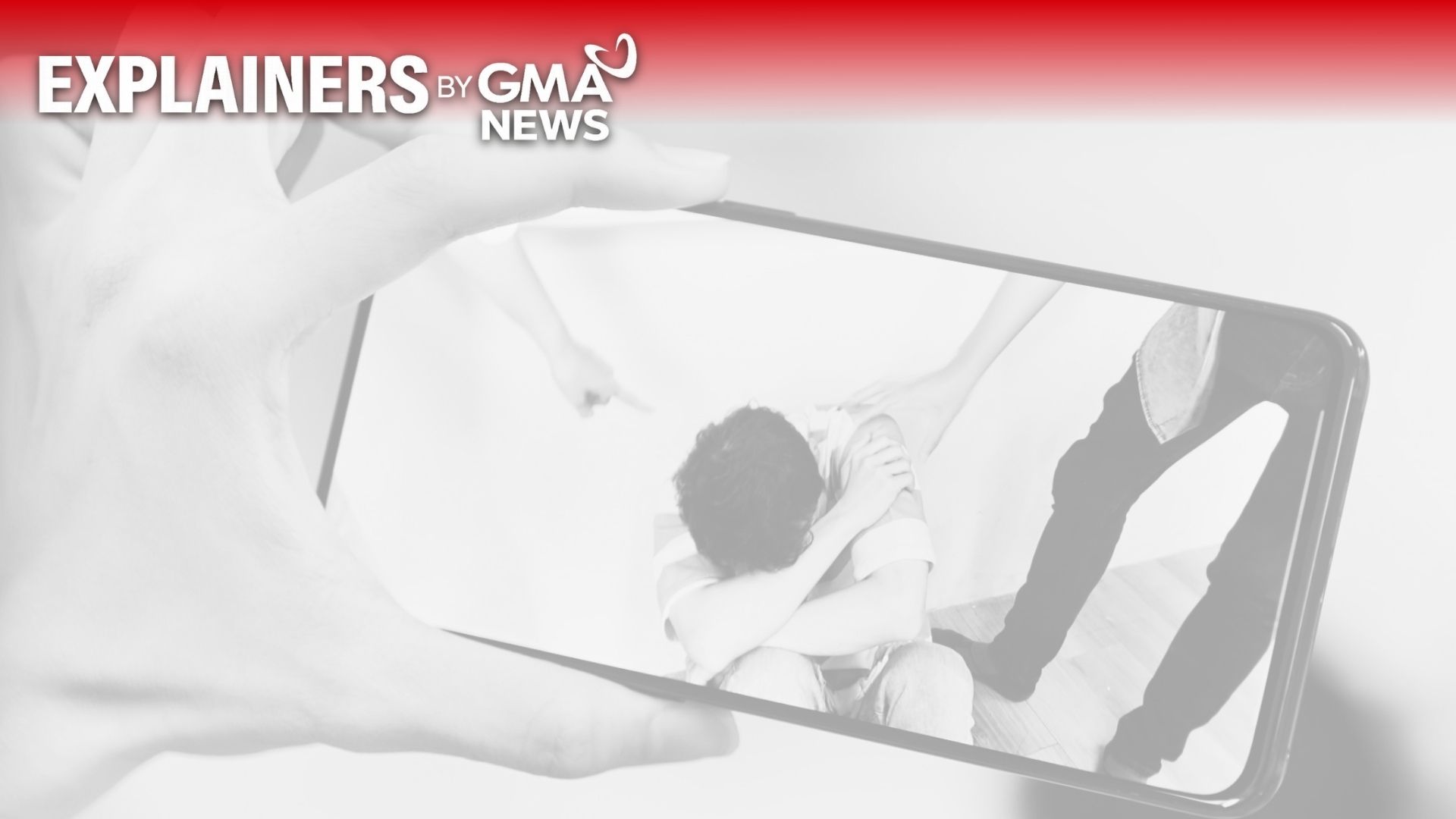
Initial investigation shows that the Tacloban school shooting on June 22 might be “premeditated” or well-planned and one possible motive investigators are looking at is bullying.
“Sinasabi po nila, ‘yung isa raw po ay pinagtatawanan ‘yung haircut niya. The other one ay siguro dahil maliit siya, pero unconfirmed po ito. Sa kanila lang po nanggaling ito,” Philippine National Police (PNP) Spokesperson P/Col. Allan Rae Co said.
(One of the children in conflict with the law said that he was being made fun of because of their haircut, while the other was supposedly targeted because of his height. But that’s still unconfirmed since it only came from them.)
What are the instances that qualify as ‘bullying’?
Bullying refers to the repetitive actions of an individual—whether physical, verbal, or electronic—that cause physical or psychological and/or emotional harm to another person, according to Republic Act 10627 or the Anti-Bullying Act of 2013.
Bullying includes any unwanted physical contact with a victim, like punching, pushing, and kicking.
The repetitive expression of slanderous statements or negative comments about a person's appearance, clothing, or body is also a form of bullying.
The law’s definition of bullying also covers any form of harm done online or cyber-bullying.
According to Clinical Psychologist Raffy Inocencio, bullying is different from “away-bata” or squabbles among children.
“Kailangan intindihin natin na hindi lahat ng away-bata ay bullying. Ang bullying kasi is merong isang pattern na ginagawa at ang goal ng pattern na ‘yun is for the bully, ‘yung nambu-bully, is magkaroon siya ng expression of power,” Inocencio said.
(We need to understand that not every childhood squabble is a case of bullying. Bullying involves a repetitive pattern of behavior and the goal of that pattern is for the bully to assert an expression of power.)
What are the signs that your child is being bullied?
Among the initial signs that parents or guardians should look out for are sudden changes in a child's behavior.
For instance, if a child who is typically expressive and excited to share about their day in school suddenly returns home displaying a negative shift in mood.
The second indicator is the behavioral changes in a child’s eating or sleeping patterns.
According to Inocencio, the changes in a child’s routine are his/her attempt to respond to a stressor.
“Kahit naman tayo bilang mga adults, kapag mayroon tayong dinadalang problem, minsan wala kang gana na kumain. So, it's the same for kids,” he added.
(Even as adults, when we are carrying a heavy burden or dealing with a problem, we sometimes lose our appetite. It is exactly the same for children.)
Inocencio said that during such situations, the attention and intervention of parents/guardians are necessary.
“It would be good for us to check in na parang, ‘Oh, sino yun? Parang ngayon ko lang narinig yung pangalan na ito,’ o ‘Bago mo ba siyang friend,’ ganyan. Kasi it just gives us a better idea of where or anong nangyayari sa buhay nung anak natin,” Inocencio added.
(It would be good for us to check in and say something like, 'Oh, who is that? I don't think I've heard that name before,' or 'Is that a new friend of yours?' This simply gives us a better idea of what is happening in our child's life.)
When it comes to physical bullying, among the signs that parents should look out for are stomach pain, headaches due to stress, or physical injuries such as bruises or abrasions.
“If a child is being physically bullied, you might see them have injuries, like bruises. Their clothes might get torn. Or their belongings might get 'lost' or be damaged,” United Nations Children’s Fund (UNICEF) said.
However, the observation of these signs should be corroborated with your child to confirm if the physical injuries are indeed caused by bullying.
How can parents deal with signs of bullying?
According to Inocencio, it is important for parents to form a good bond with their children to be immediately trusted with their difficult circumstances, such as bullying.
“Ang key lang talaga rito is hindi natin kailangan magbigay ng specific list of things to watch out for, especially if parents have a good enough relationship with their kid,” Inocencio said.(The real key here is that we don't necessarily need to provide a specific checklist of warning signs to watch out for, especially if parents already share a strong enough relationship with their child.)
“If you are present and available, and alam nila, they feel safe with you, alam nila na puwede kanilang takbukan, mabilis mong malalaman kung may problemang dinadala yun,” he added.
(If you are present and available, and they know they are safe with you and can always run to you, you will quickly notice whenever they are carrying a problem.)
When a parent observes behavioral changes in a child, these shifts should be calmly and verbally acknowledged with the child to assess if the changes are alarming.
“Acknowledge first what you are observing… Pwedeng umpisahan sa pagsabi na, ‘O anak, napansin ko, parang medyo malungkot ka ngayon or parang meron kang kinagagalitan,’” Inocencio said.
(First, acknowledge what you are observing... You can start by saying, 'Hey, I've noticed you seem a bit sad today, or like you're upset about something.')
With upfront and proper communication, aside from tuning in with the child, it lets them know that their opinion and experiences matter.
Inocencio, meawhile, reminded parents that they should also give their child "space" to determine if they are ready to share or talk about their problems.
“Lalo na roon sa mga pamilya na siguro hindi sila sanay na napag-uusapan ‘yung mga ganyan, pwede kang mag-iwan ng sabihin, ‘O sige, kung hindi ka komportable ngayon na pag-usapan ‘to, pwede nating pag-usapan kapag mas komportable ka or at a later time, pwede nating balikan,’” Inocencio said.
(Especially for families who might not be used to talking about these kinds of things, you can leave the door open by saying, 'Alright, if you aren't comfortable talking about this right now, we can discuss it whenever you're ready. We can always come back to this at a later time.)
What's next?
If a child has been confirmed as being bullied, specifically at school, parents should immediately notify school officials so the appropriate intervention and disciplinary processes can begin.
“Huwag naman natin i-take into our own hands ‘yung sitwasyon na tayo ‘yung pupuntahan natin, susugurin natin… Siyempre, again, ina-acknowledge natin na kung magulang ka ng victim, masakit ‘yun makita na ‘yung anak ko binu-bully. Pero I don't think it is helpful if we take things into our own hands also,” Inocencio said.
(We shouldn't take matters into our own hands by aggressively confronting people. Of course, again, we acknowledge that as a parent of a victim, it is incredibly painful to see your child being bullied. However, I don't think it is helpful for us to take matters into our own hands either.)
According to the psychologist, resolving the situation through a proper process is also an opportunity for the parent to set a good example to their child.
“Gusto nating matutunan na una, ang conflict resolution, hindi kailangang violent o madahas o daanin sa palakasan ng boses. Ngunit puwede tayong dumulog sa mga proseso para ma-resolve ang conflict,” Inocencio said.
(We want them to learn, first of all, that conflict resolution does not have to be violent or aggressive. Instead, we can utilize proper processes and official channels to resolve conflicts.)
“Para at the end of the day, kunyari, meron talagang pagpapapataw ng consequence dun sa nambully, makikita mo rin, malinaw. So at least makakatulong din ’yon sa iyong recovery na ‘ah okay, the system works,’” he added.
(So that at the end of the day, if consequences are ultimately imposed on the bully, you will see it clearly. At the very least, that transparency helps with your healing, allowing you to feel that, 'Okay, the system actually works.’") —VAL, GMA News

