

 GMA Brandtalk
 Tracking
 Archives

A year after SONA 2025: Improvements made, but education challenges persist
When President Ferdinand Marcos Jr. delivered his fourth State of the Nation Address (SONA) in July 2025, he acknowledged what he described as an “education emergency,” saying the country’s learning crisis demanded urgent action.
He promised to build more classrooms, hire additional teachers, reduce educators’ administrative workload, strengthen student health and nutrition programs, improve school safety, and expand access to higher education and technical-vocational training.
Nearly a year later, the administration points to thousands of newly created teaching positions, classroom construction projects, expanded student health services, and learning recovery initiatives as evidence that reforms are underway.
Yet despite these efforts, education stakeholders say the country’s most fundamental problems remain far from resolved.
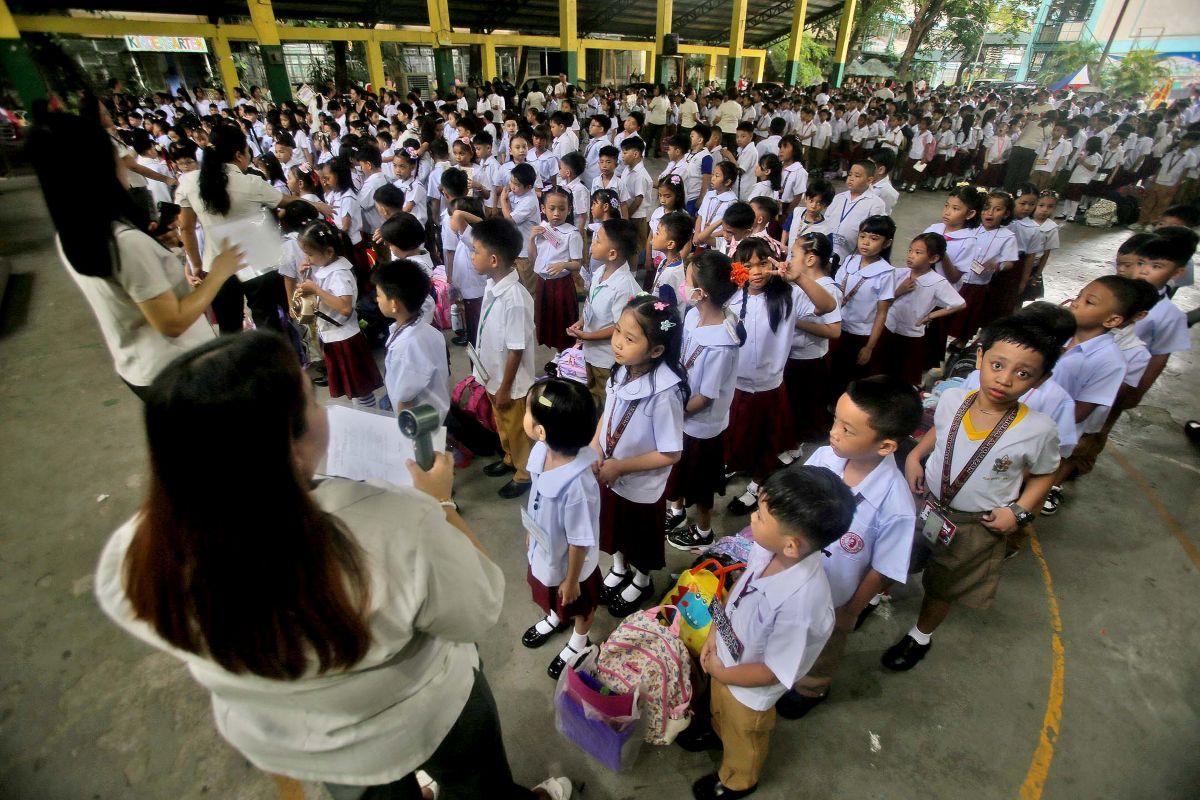
Millions of students still struggle with basic literacy, teachers continue to call for higher salaries and lighter workloads, and many schools remain overcrowded and lacking adequate facilities.
The Second Congressional Commission on Education (EDCOM II), in its continuing assessment of the education sector, has repeatedly identified learning poverty, classroom shortages, teacher shortages, governance issues, and unequal access to quality education as among the country’s biggest structural challenges.
Classroom shortage
One of Marcos’ major commitments in last year’s SONA was to accelerate classroom construction to ease overcrowding in public schools.
Since then, the government has pursued several measures to reduce the country’s classroom backlog, including increasing infrastructure funding and expanding the use of Public-Private Partnerships (PPP) for school construction.
The Department of Education (DepEd) earlier announced plans to construct around 30,000 classrooms through conventional procurement by 2028 while another 16,000 classrooms in high-congestion areas would be built under the PPP for School Infrastructure Project Phase III.
The department has also said it aims to build 40,000 classrooms before the end of the Marcos administration.
Earlier this year, Education Secretary Sonny Angara said around 3,600 classrooms had already been completed by the Department of Public Works and Highways (DPWH), while more than 8,000 classroom projects for 2024 and 2025 were being implemented simultaneously.
DepEd likewise said it continues to maintain a consolidated inventory of unfinished classroom projects from previous years while proposing funds under the 2026 national budget to complete thousands more classrooms.
Congress, however, approved P2.282 billion, enough to complete 2,067 classrooms, instead of the department’s proposed P3.192 billion, which would have funded the completion of 3,614 classrooms.
Angara has also said DepEd is preparing more flexible classroom delivery strategies beginning in 2026, including stronger partnerships with local government units and the private sector.
Despite these initiatives, education groups say classroom congestion remains widespread, particularly in highly urbanized cities and geographically isolated communities.
EDCOM II has likewise identified inadequate learning facilities as among the structural issues hampering education quality, alongside learning poverty, teacher shortages, and governance concerns.
Teacher support
The Alliance of Concerned Teachers (ACT) Philippines said the government's increased education budget has yet to translate into meaningful improvements for teachers on the ground.
In its State of the Teachers and Education Address, held a week before Marcos' fifth SONA, ACT said teachers continue to grapple with low salaries, heavy administrative workloads, and classroom shortages. The group also renewed its call to raise the entry-level salary of public school teachers to P50,000.
DepEd, meanwhile, said it has expanded its career progression system, resulting in the promotion of 16,423 teachers and school heads under the Expanded Career Progression (ECP) system in February.
The program allows teachers to receive promotions and salary increases without leaving classroom teaching. More than 40,000 additional positions are still awaiting approval from the Department of Budget and Management (DBM).
The department also announced 32,916 new teaching positions for School Year 2026–2027, along with 22,268 non-teaching positions, aimed at allowing teachers to focus more on classroom instruction instead of administrative work.
DepEd likewise increased teachers’ annual medical allowance from P500 to P7,000 and their teaching allowance from P3,500 to P10,000.
It also said it reduced teachers’ required school forms and reports from 174 to 75; expanded overtime compensation and vacation service credits; standardized hardship allowances for teachers assigned to remote areas; and increased the Teacher Salary Subsidy for private school teachers from P18,000 to P24,000.
Learning recovery
Marcos vowed last year to prioritize learning recovery following years of pandemic-related disruptions. Central to this effort is the Academic Recovery and Accessible Learning (ARAL) Program, established under Republic Act No. 12028.
The program provides free tutorial sessions and targeted interventions in reading, mathematics, and science for struggling K to 10 learners. Initial results have shown encouraging signs.
Based on the 2025-2026 Middle of School Year assessments, EDCOM II identified several “Most Improved Schools” across the country, where significant gains in learner proficiency were recorded after implementing ARAL interventions.
Among them was Malanday Elementary School in Marikina City, where the proportion of Grade 1 to 3 learners classified as developing, transitioning, or grade-ready increased from 57.26% to 94.03%. Other schools in Zamboanga City, Laguna, Antipolo City, Quezon City, and Cavite likewise posted substantial improvements.
DepEd also reported nationwide gains in reading proficiency.
According to the department, reading readiness scores increased by around five points among Grades 3 to 6 learners, benefiting around 3.42 million students.
Among Grades 7 to 10 learners, scores improved by six to nine points, bringing 1.72 million students closer to grade-level proficiency. For School Year 2026-2027, DepEd aims to expand the program to 6.7 million learners, more than double the approximately three million students reached in its initial implementation.
More than 440,000 tutors, including DepEd personnel and community volunteers, are expected to support the expanded rollout.
Despite these gains, EDCOM II cautioned that the country’s learning crisis remains severe. Data presented by the commission based on DepEd’s March 2026 literacy assessment showed that 1.3 million of the country’s 1.4 million Grade 11 students struggle to understand what they read.
Nearly six in every ten were classified under the “frustration level,” where learners are unable to comprehend texts independently, while nearly three in ten remained at the “instructional level,” requiring teacher assistance to understand reading materials.
EDCOM II Executive Director Dr. Karol Mark Yee said the initial gains demonstrate that learning recovery is possible but stressed that sustained investments and urgent action are needed to reverse years of learning loss.
Higher education, Tech-Voc
The administration also maintained funding for free tuition in state universities and colleges while expanding technical-vocational education through closer coordination between DepEd, the Commission on Higher Education (CHED), and the Technical Education and Skills Development Authority (TESDA).
The strengthened Senior High School curriculum now offers more opportunities for students to earn national certifications before graduation as part of the government’s effort to improve employability.
In recognition of high school graduates with high honors, Marcos vowed to give them the Presidential Merit Scholarship.
In the first month of 2026, the government announced the rollout of the Presidential Merit Scholarship Program for top-performing senior high school graduates pursuing higher education. It is projected to reach around 490,000 students from 4Ps households, who Marcos mentioned in his 2025 SONA “will receive the highest priority.”
However, despite the pledge to support more students there were still shortcomings— the Department of Science and Technology’s Science Education Institute’s (DOST Science Education Institute) undergraduate scholars was capped to 8,500 due to budget constraints.
The limited number of slots has resulted in an estimated 8.3% acceptance rate, the lowest in the history of the DOST Undergraduate Scholarship, as applicant numbers continue to rise.
School safety
In his 2025 SONA, Marcos vowed to protect children from bullying and make schools safer learning environments. Acknowledging the lack of school counselors to support students' well-being, Marcos ordered the hiring of more counselors in public schools.
Since then, however, a series of reported incidents—including campus violence, alleged bullying cases, and attacks involving students—has renewed public concern over safety in schools.
In June, a fatal school shooting incident in Barangay San Jose, Tacloban City on Monday left three students dead and 15 others wounded. The shooters were identified as students of the school aged 14 and 15.
Authorities initially looked into allegations of bullying as a possible motive, but the victims' families denied the claims.
In Negros Occidental, just seven days after the Tacloban incident, a Grade 8 student sustained injuries after he was stabbed by a Grade 7 student outside their school.
More threats of school violence also surfaced online, which forced schools to disrupt face-to-face classes and shift to alternative learning mode—in Pangasinan, Negros Occidental, Cebu, and Quezon City.
The incidents prompted Marcos to order the DepEd and other concerned agencies to strengthen measures to prevent violence in schools, while DepEd announced additional interventions such as expanding mental health services, strengthening child protection mechanisms, and increasing the deployment of School Counselor Associates.
DepEd Undersecretary Malcolm Garma admitted the challenges in hiring full-fledged counselors, adding that the department has decided to add guidance counselor associates instead to fill the gap.
Garma said public schools should have at least one guidance counselor, while larger schools should have three to five.
Meanwhile, the Civil Service Commission has approved the qualification standards for new school counselor positions, paving the way for the hiring of 10,000 school counselor associates in public schools beginning School Year 2026–2027.
DepEd has launched its pilot active threat simulation drills in public schools nationwide, as part of efforts to strengthen campus security and emergency preparedness following recent incidents of school violence.
Angara directed all public schools to develop active threat response plans tailored to their specific environments rather than adopt a one-size-fits-all approach.
DepEd also said it plans to seek additional funding to deploy more security guards to public schools. —VBL, GMA News

