

 GMA Brandtalk
 Tracking
 Archives

Marcos: PH honored as 4 European countries join ASEAN Treaty of Amity and Cooperation
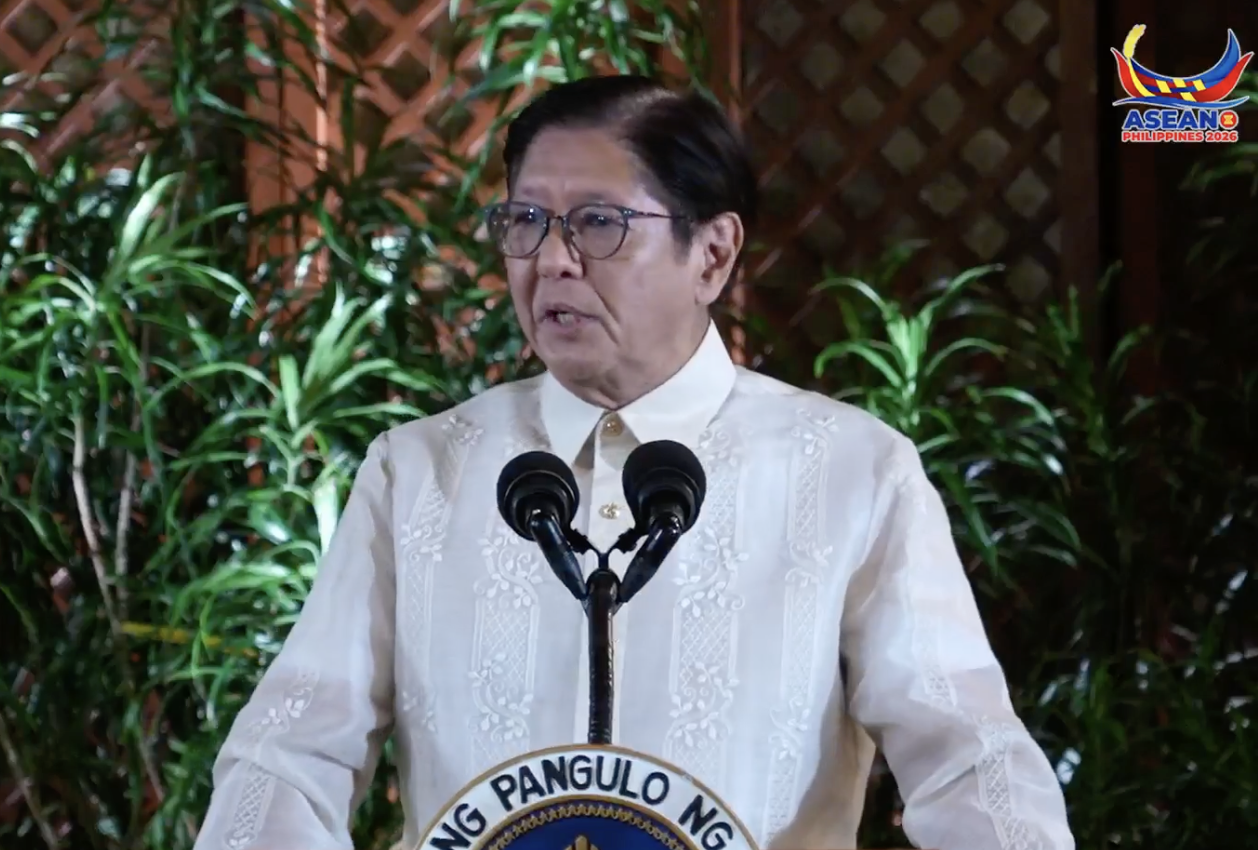
President Ferdinand "Bongbong" Marcos, Jr., said it was an honor for the Philippines to host the first High-Level Conference of the High Contracting Parties (HCPs) as four European countries – Sweden, Poland, Romania, and Lithuania – acceded to the ASEAN Treaty of Amity and Cooperation (TAC).
Marcos delivered his speech during the 50th anniversary of the TAC, which was first signed in 1976. In attendance were Senate President Sherwin Gatchalian, House Speaker Faustino Dy III, foreign ministers, and members of the Cabinet.
The TAC is regarded as the “guiding code” of ASEAN in reaching and maintaining stability in the region.
“Manila also served as the venue for the signing of the Protocol that opened the Treaty to states outside of Southeast Asia, allowing its principles to echo even further beyond the founding nations,” Marcos said.
“Today, as ASEAN Chair, the Philippines is once again honored to host another historic first— the convening of the inaugural High-Level Conference of the High Contracting Parties (HCPs),” he added.
The four countries' accession brings the number of High Contracting Parties (HCPs) to the TAC to 62, further expanding the treaty’s global reach beyond Southeast Asia.
In an earlier statement by Foreign Affairs Secretary Ma. Theresa Lazaro, the inaugural High-Level Conference is envisioned to discuss and address conflict prevention and preventive diplomacy, maritime security and cooperation, and emerging regional threats and challenges.
“This result teaches us one lesson. Neighborhood is not defined by geographic distance. It is defined by shared values and common aspirations. When you view one another through the lens of “kapwa,” physical distance evaporates. We become true neighbors in a shared world,” Lazaro said during the ascension of the treaty’s new signatories.
Full circle moment
Calling it a “full circle moment,” President Marcos reflected on being just a child when the Philippines first joined the ASEAN treaty during the presidency of his late father.
“This commemoration is also deeply personal. Fifty years ago, one of the leaders seated at that historic table in Bali was the 10th President of the Republic of the Philippines — my father, Ferdinand Edralin Marcos,” Marcos said.
“I was very young at that time. I could not have imagined what that document would one day mean for the Philippines and even for the wider world,” he added.
The Philippines signed the treaty in 1976 in Bali, where the country was represented by former president Ferdinand Marcos Sr.
Marcos made a parallel of the gathering as a hapag-kainan, or dining table, where "partnerships are forged, communities are strengthened, and diplomacy has always found its place."
“Across generations, they have served as a marketplace of ideas for diplomats and policymakers. They have borne witness to exchanges of national statements, observed how consensus is reached, and have been among the first to witness landmark documents being signed,” the President said.
“Upon these tables rest the agreements that shape economies, bolster relations among nations, deepen cultural understanding, and, ultimately, preserve peace,” he added.
The treaty's spirit, Marcos said, can be linked to the Filipino value of bayanihan, in which people help one another and celebrate together after the work is done.
The Philippines unveiled a commemorative postage stamp and a Sampaguita-inspired anniversary emblem, symbolizing 50 years of peace across five continents.
In closing the event, President Marcos called on leaders to continue upholding the treaty's values.
"May this evening remind us that every enduring partnership begins with a conversation, every lasting friendship with mutual trust, and every meaningful cooperation with the simple willingness to sit together, listen to one another, and seek common ground," he said. – NB, GMA News

