

 GMA Brandtalk
 Tracking
 Archives

ADVERTISEMENT
Filtered By: Topstories
News
Fertility hut of days past
 Taking a respite from the coverage of the Supreme Court's summer session my team decided to go to Tam-awan Village in Baguio City to take some culture as Baguio is known for. It's my third or fourth time to visit the place, and each time there's always a surprise. Originally established as an exclusive artists' village in 1996, it was opened to the public in 1999 and it offers various things for the restless traveler: from exhibits to cultural shows, to sketching sessions and some good ole Cordillera tapuy (rice wine). Tam-awan is Ibaloi for "vantage point" as tanawan is in Tagalog. And it lives up to its name offering various perspectives on history and culture. On this particular visit, I decided to focus my attention on the tradition of married life in the Cordilleras.
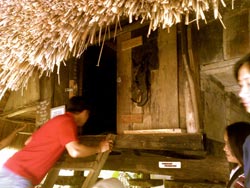
 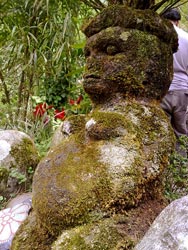 Nestled amongst a rich greenery, a fertility hut sits. A typical A-type Ifugao house, it measures half a classroom. Devoid of any decorations, it is as simple as a house could be. But its simplicity defies the grand purpose it serves. A curious tourist looks into what's inside the fertility hut in one of several Ifugao and Kalinga houses in Tam-awan Village in Baguio City. We were toured in the area by Jubeile Dumasig, one of Sir Chit's staff in the village. Jubiele explains that the fertility hut in Tam-awan is one of two fertility huts in the whole of Cordillera, surely a sign of a fast-vanishing part of a culture. The fertility hut played a crucial role in the marriage of couples back in the old days. Jubiele says, as tradition dictates, couples who couldn't have a baby for a year resort to living in a fertility hut. There, a shaman would perform rituals to aid the couple in conceiving a child. The couple is to stay in the hut for a month, where they would try to have a child. But prior to entering the hut, the wife, with husband in tow, must rub the belly of a fertility bulol – a pregnant stone-figure.
  After a month, and the effort is fruitless, a painful decision must be made. Both the husband and the wife have the right now to choose a new partner. Jubiele explains that children were considered treasures in a family, hence the importance accorded to having them. Tourists, upon knowing this, are surprised. Marlo Espinueva, a tourist, said half-jokingly that it was more convenient (and favorable) that way. Each can find a partner who could bore him/her a child. But he turned serious and said that not having kids nowadays is not a reason to break up the family. "Syempre, mahal ko asawa ko, kahit walang anak," he said – his wife in the vicinity, smiling. I know of many other couples who waited for years to have a child. My cousin, Ate Leah, waited for six or seven years before Den-den (my inaanak) was born. A colleague in the media Arlene Farol waited for years before their firstborn. Hazel Recheta, a dear friend, had to wait several years too for Sacha.
  Waiting is such a sweet period for an awesome gift as a kid. But for those who were not successful in conceiving a child, like perhaps the many couples who had to go through the fertility hut period before – there are far more many reasons to stay together, foremost is the love for each other. The challenge of not having a child is only a metaphor of the problems (and sometimes, the crises) in a relationship. It is a test that love can overcome. So it goes with all the other relationships in our lives. Challenges will come and test us. But they are there to distill us into what we are: strong individuals bound by love. Having each other's hand to hold is more than enough.
