

 GMA Brandtalk
 Tracking
 Archives

Amid Mtn. Province's isolation, village holds indigenous burial for landslide victims
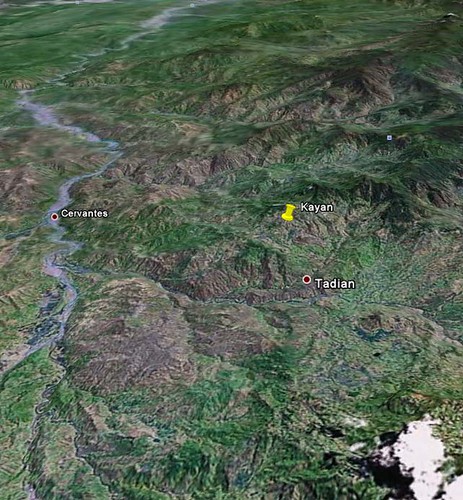
BAGUIO CITY – After holding an indigenous ritual, the people of Kayan laid to rest in a community cemetery on Wednesday the last seven bodies retrieved from the landslides in Tadian town, Mountain Province, amid the province's continuing isolation after typhoon "Pepeng." The seven were among the total 35 casualties (not 38, as earlier reported) from sitio Bulala, barangay Kayan East, an official of the Cordillera Peoples Alliance (CPA) and resident of Kayan told GMANews.TV in a phone interview. The last bodies were recovered Tuesday after seven days of binnadang (community-based volunteer mobilization) to dig out the landslide victims and look for possible survivors, said Xavier Akien, a vice chairperson of the CPA. “We need to bury them immediately as based on our tradition," he said. Akien explained that when death comes suddenly to the community and not from natural causes, the customary practice is for the victims to be buried after a very short indigenous ritual and church rites. Community mobilization Right after the landslide, Kayan elders declared a customary “community holiday" where all villagers mobilized for the rescue and retrieval effort, including the preparations for burying the dead. Almost all residents of Kayan are related to each other by blood or marriage.

Olive Luces, regional director of the Office of Civil Defense (OCD) and executive officer of the Cordillera Regional Disaster Coordinating Council (CRDCC), said 38 roads in the region remain closed, but they are tapping the resources of the DPWH and private firms. “They are doing their job well, the repair of roads can be done, but it is just the magnitude of the damage (that slows down the work)," Luces said. He pegged the regionwide damage in CAR to reach P770.9 million in both infrastructure and agriculture, while the death toll has reached 255, with 144 injured and 36 missing. Luces said a meeting with all provincial and local officials is set next week to realistically assess total damages. Mountain Province Gov. Maximo Dalog has requested the OCD for sleeping mats, kitchenware, and construction materials for residents who need to rebuild their homes. An independent umbrella group, the Serve the People Brigade Cordillera Disaster Response Network (SPB CDRN) appealed for urgent relief "as some towns and communities (in the Cordillera) are now confronted with hunger." The SPB CDRN said it has been undertaking rescue, relief and medical missions in Baguio-Benguet and Mountain Province in the past week, "but a greater number still needs our help."– GMANews.TV, with reports from Maria Elena Gonzales and Arthur Allad-iw

