

 GMA Brandtalk
 Tracking
 Archives

ADVERTISEMENT
Filtered By: Topstories
News
Learning from Bali, post-quake Bohol 'rebranding' local tours
+
Make this your preferred source to get more updates from this publisher on Google.
LOBOC, Bohol – On a sweltering noon at the start of the holiday season, the festive boats moored at the dock are starting to fill up with guests for the popular luncheon tour along the serene Loboc River.
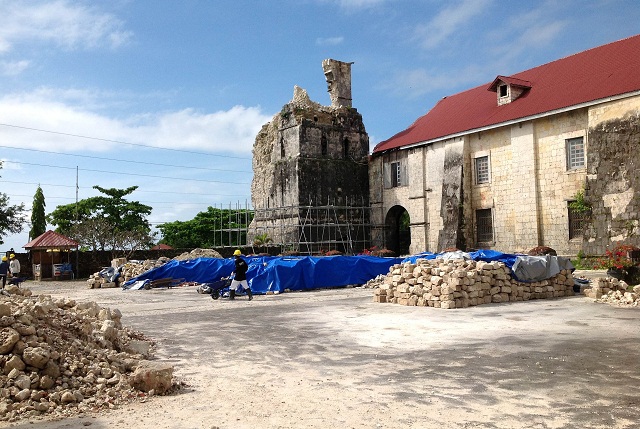
It’s a cheerful sight amid the stark reminders of the powerful 7.2 magnitude earthquake that jolted Bohol in October. At the docking area, half of the roof was gone and the supports were askew. Across the river, what remained of the crumbled Loboc Church lay in ruins.
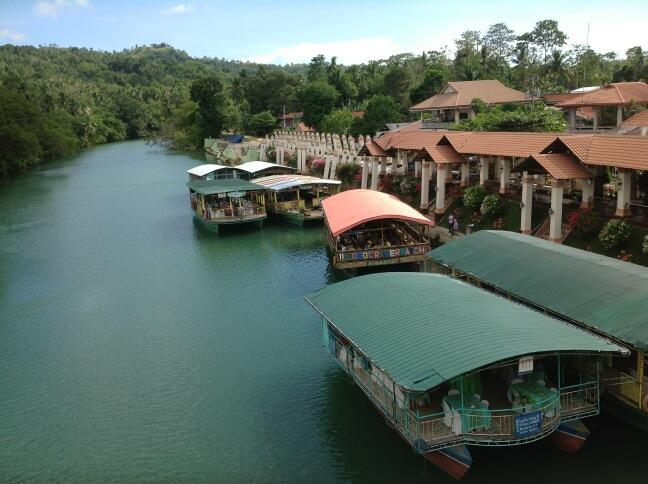
A cool afternoon breeze fanned the tourists on the deck as the boat made its way along the tree-lined river, which showed few signs of the disaster. Sections of the riverbank had collapsed in some places, and landslides had created an ugly gash on some hills but, overall, the tour was still a pleasant holiday experience.
At the New Corella tarsier sanctuary, tourists had also started coming back to take a peek at the wide-eyed creatures hidden among the trees in a one-hectare enclosure. Four tarsiers were visible at the time of our media group’s visit, and Spanish volunteer Marian Navarro Fernandez gave a briefing about the territorial and solitary habits of the tarsiers, now in their mating season until April.
With travelers trickling in just two months after the disastrous quake, Bohol Gov. Edgar Chatto is bullish about the recovery of the province, which counts tourism as a major component of its rehabilitation program.
“When I was chairman of the tourism committee in Congress, we went to Bali one month after the infamous Bali bombing and we studied their recovery. Also after the Phuket tsunami, so there’s really a period of recovery and we know the industry rebounds very quickly,” said Chatto, who previously served as Bohol congressman.
Lucas Nunag, President of the Provincial Tourism Council, is also optimistic about their prospects. This month, international consultants will be arriving to assist in Bohol’s tourism recovery plan that will "focus on communication, rebranding, and new attractions," he said.
The province is also getting help in the planning process from the USAID-assisted Compete project, which has been inviting media groups to check on Bohol’s progress. GMA News Online was among the agencies invited last month.
Environmental and heritage considerations are part of the reconstruction plan, Nunag said. “Maraming gumagawa ng development, walang ka-theme theme ‘di ba? May mukhang Bali, may mukhang Thailand, may mukhang Germany when we have our own architecture dito,” he noted.
Geoscience tours
Turning tragedy into an opportunity, the province plans to offer geoscience tours showcasing changes in the landscape and seascape.
Landslides in some of Bohol’s iconic Chocolate Hills, for instance, have exposed what the locals jokingly describe as “white chocolates” – actually high-grade limestone – after the swaying grasses that normally cover the mounds got scraped off.
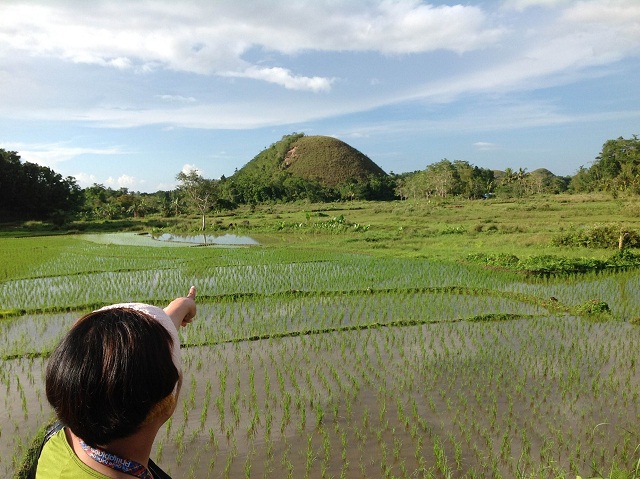
“You have evidence of sea life like shells, and meron syang parts of the ocean that you will not find in these hills if not for the fact na Bohol was under water millions of years ago so it’s a good thing for geological study,” Chatto said.
There’s also the Great Wall of Bohol, the newly discovered reverse fault spanning up to six kilometers in the remote northwestern municipality of Inabanga where Japanese geologists have suggested a covered structure, Nunag said.
“We want to have a Bohol fault museum that will showcase the story, the destruction, new images that arose out of the earthquake,” Chatto added.
Closer to the capital city of Tagbilaran, said Nunag, is a popular destination called Punta Cruz tower that locals often used as a platform for jumping straight to the sea. “Pagkalindol, umangat ang lupa at ‘yung dagat malayo na. Nawala yung shallow part, naging lupa na and instantly, nagkaroon ng reclamation na 18 hectares,” he related.
“People who go there, especially the geologists, they find it interesting kasi lumalabas doon yung mga shells, corals in various forms,” observed Chatto. “They are studying the corals kasi nakalabas na in the vast tract of dry land.”
He said they are planting mangroves in the new shoreline to replace the trees in the former shoreline, which are expected to wither away after the sea receded, and also to restore the marine life.
Lesson for Leyte
As the province’s chief executive, Chatto stressed the importance of quick thinking and awareness about legal procedures during calamities.
In the case of Bohol, he recounted how the provincial board held an emergency session right after the quake at the Governor’s Mansion instead of the capitol, which had sustained some damage. Even though not all towns were affected, the provincial government decided to declare a province-wide state of calamity so that the most devastated towns would have a state of calamity order immediately.
“’Pag munisipyo pa asahan mo e di kanya-kanyang meeting. Hindi mo alam kung ang mga SB (Sangguniang Bayan) members e na-trap din o wala so ang inisip namin, let’s declare it,” Chatto reasoned out, avoiding the state of calamity dilemma faced by Tacloban during the Yolanda crisis.
Officials were also able to assess the extent of destruction quickly through status messages and images posted on social media networks. “The internet was providing us information through our cell phones after charging sa gabi, kasi mahirap pang puntahan ‘yung mga areas dahil sa broken bridges, landslides,” Chatto recalled.
After meeting the legal requirements, the province was able to purchase relief goods and mobilize volunteers so that by the time national officials arrived, the local government had already deployed 52,000 packs to stricken residents, he said.
Jokes and nervous chatter
Two months on, much remains to be done, especially to address the psychological impact of the quake on a nervous populace.
During our daylong trip around Bohol’s most famous attractions, tourist guide Alison Sarah Malayo regaled the media group with colorful accounts from survivors, including coping mechanisms like taking a shower more quickly for fear of getting trapped in the bathroom during a strong aftershock.
Boholano humor also shines through when they are asked what happened to the tarsiers after the quake. “Lumaki lang yung mata, kasi nagulat,” jokes Nunag.
If not for Typhoon Yolanda, which necessitated the dismantling of tent cities, evacuees would still be a problem, the governor said. “After Yolanda, karamihan hindi na bumalik sa tent. They decided to stay in their homes, or, they decided to put the tent beside their homes” in case of aftershocks, Chatto said.
Only a few towns like Tubigon, Loon, and Maribojoc, where subsidence was noted or residents are vulnerable to flash floods, still have evacuees, he said. Temporary bunkhouses and relocation sites are now being prepared for them.
In the hard-hit town of Antiquiera, known as the handicrafts center of Bohol, the local joke is that the state and the church have become one because they are sharing the municipal gymnasium's space: the Mayor’s office is on one side, while the church pews and statues of the saints were placed in the other half of the hall.
“’Yung pari kamuntik masama sa list of casualties kasi he was in the bathroom when the convent collapsed during the quake. Injured siya,” Chatto relates.
Nunag, who grew up in Antiquiera, said they didn’t know there was a fault line in their town. The earthquake swallowed one house, but left two others on either side of it intact, and created a crack that resembled a lightning bolt, he said.
Back in business
A resort proprietor in the relatively untouched Panglao island, Nunag said it helped that a large part of Bohol was not destroyed by the quake so they were able to assist the devastated areas.
Among the tourist attractions, the Danao Adventure Park, which had been a favorite destination of adrenaline junkies, is still in dire need to repair. The private Chocolate Hills Adventure Park, some 600 meters away from the damaged tourism complex and view deck, opened its doors to tourists prematurely after the quake.
With half of the hospitals in Bohol partially or totally damaged, a Singaporean donor is providing an operating room while other facilities provide health services in huge outside tents, Chatto said.
Australia is helping repair the roads, while USAID is assisting in the rebuilding of schools damaged by the quake.
“Each one has an ability to adjust to new situations but the basic requirements of food, water, shelter, and accessibility to services are very important,” the governor notes. “At least all these are already very much in place, kaya we are very bold in saying Bohol is back in business.”
Chatto is optimistic about the quick recovery of the province after they were able to fast-track the restoration of power in the wake of super typhoon Yolanda, and repair the bridges connecting the towns in a short span of time.
“Our dream is to make Bohol a more beautiful, more progressive province than what it was before the earthquake,” he concluded. — KDM GMA News

