

 GMA Brandtalk
 Tracking
 Archives

Australian pelican draws bird watchers, brings livelihood to GenSan village
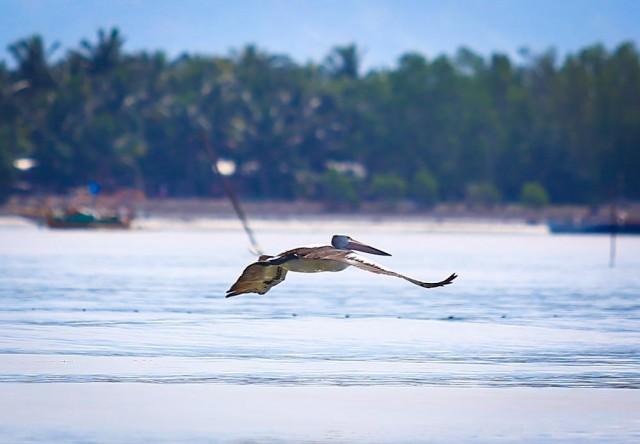
GENERAL SANTOS CITY— A lone Australian pelican—a huge one compared to the other migratory birds in the city's coastal areas—appears to be drawing tourists and bird watchers to the sub-village of Minanga in Buayan for weeks now.
And with the good vibes that fishermen get whenever it hovers over them in the early morning after a night spent fishing in the General Santos Bay, residents believe the rare migratory bird is a blessing to the community.
“What caught our attention were local birds, we call ‘agit-it,’ flocking in the air and chasing a bigger bird,” 62-year-old Levy Discamento said.
“There appeared to be a dog fight similar to what we see on TV when planes trade rockets," he added.
Discamento said residents are used to seeing birds catching fish in the waters but the huge bird caught their attention.
The Australian pelican is now helping the community as it attracts bird lovers and bird watchers—both Filipinos and foreigners.
“Now, this Australian pelican is a tourist attraction and provides a source of livelihood for fisherfolks,” said Discante's wife Bebing.
“Visitors come, rent a boat from fishermen to get close to the big bird as it glides over and over above Gensan Bay,” she added.
"“Others, buy fresh fish that fishermen take home from overnight trip on high seas,” Bebing said.
The Australian pelican (Pelecanus conspicillatus) is a big bird with a long bill that runs up to 45 to 47 centimeters in length.
The bill is distinctive, elongated and with a hooked tip.
Mostly white, the adult Australian Pelican has a short grey crest on its head.
Locals noticed that the pelican in Minanga usually appears in mid-morning and emanate from a private fishpond off the bay.
Jimmy Poja, 40, said fishermen like him are happy just to see the pelican.
“We see the bird almost every morning hovering over us as we arrived from overnight fishing expedition, it must be a blessing so nobody hurts the big bird, we feel it is a blessing, bringing good vibes to people, we are happy for the bird’s presence,” Poja said.
Poja is hoping experts would educate the residents, especially on how they should react to something like the Australian pelican.
According to Birdlife Australia, Australian pelicans are found throughout Australia, Papua New Guinea, Western Indonesia and occasional reports in New Zealand and Western Pacific Islands.
Some bird experts say it could have been lost or caught off by a storm that brought it to southern Philippines.
Members of Bird Club of the Philippines appealed to bird watchers to leave the Australian pelican alone as it was a "vagrant," a bird that lost its way and must be very tired and confused.
They advised locals who wanted to film the migratory bird to avoid getting closer or offer food “so better photos can be taken.”
Philippine bird enthusiasts said a “spot-billed” pelican was seen in Philippine waters in 1972.
The Wild Bird Club of the Philippines also recorded in 2009 a sighting of a “Dalmatian pelican” in Leyte but it died a few days later.
Oscar Auckhs Enhaynes, a priest and a wildlife photographer, is hoping the beautiful images he took of the bird would communicate the importance of wildlife and how it can co-exist with humans.
“I was happy that a bird settles here. I wanted to know how come they are here, to learn about their purpose of being here. Well based on the news, was it the food resources or how the people were to migrant bird?” Enchaynes said.
“Maybe the bird found a good space where he can freely fly here,” he added.
“So it came to my mind (that) we can also host avian visitors because we are capable and it says something good about ourselves,” Enhaynes said. —NB, GMA News

