

 GMA Brandtalk
 Tracking
 Archives

Task Force Kanlaon aims to strengthen Negros disaster response
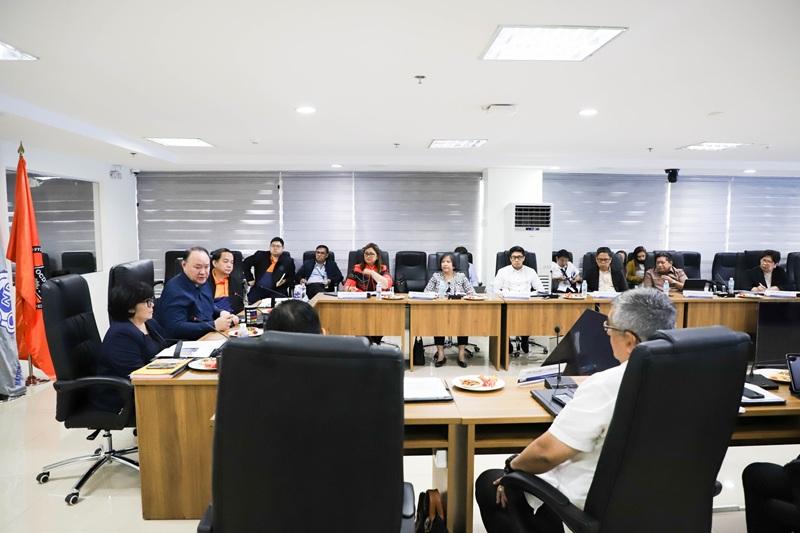
The National Task Force Kanlaon (NTFK) discussed steps to strengthen disaster management efforts on Negros Island following an explosive eruption of Mt. Kanlaon on Tuesday.
According to a statement issued on Friday, the task force conducted their inaugural meeting at Camp General Emilio Aguinaldo on May 8, under the leadership of Secretary of National Defense Gilberto C. Teodoro Jr.
Teodoro noted in the meeting that many agencies lacked regional offices or operational sites in the Negros Island Region (NIR), and urged concerned agencies to accelerate establishment of said offices by submitting their 2026 budget requests for said operations.
The meeting also tackled the Kanlaon Recovery and Development Plan (KRDP), which the group aimed to finalize by July 31, 2025 in time for the FY-2026 budget process and the designation of Primary and Alternate Representatives of concerned agencies to create an Inter-Agency Coordinating Cell (IACC) and Technical Working Groups (TWGs).
Meanwhile, officials in the meeting emphasized the importance of regional infrastructure development.
“As natural hazards continue to threaten the Philippines, the formation of the National Task Force Kanlaon signals a move toward more localized and responsive disaster management — aimed at addressing immediate needs while supporting long-term recovery efforts in vulnerable communities,” the statement read.
Among the meeting attendees were representatives from the Department of Environment and Natural Resources (DENR), Office of Civil Defense (OCD), Department of Science and Technology (DOST), Department of Public Works and Highways (DPWH), Department of Social Welfare and Development (DSWD), Department of Labor and Employment (DOLE), Department of Health (DOH), Department of Agrarian Reform (DAR), and the Department of the Interior and Local Government (DILG).
The NTFK was created under Administrative Order No. 32, signed by President Ferdinand Marcos Jr. on April 25 to address volcanic threats and protect communities in the Negros Island Region. — Jiselle Anne Casucian/BAP, GMA Integrated News

