

 GMA Brandtalk
 Tracking
 Archives

PHIVOLCS: Cebu earthquake aftershocks hit 6,311
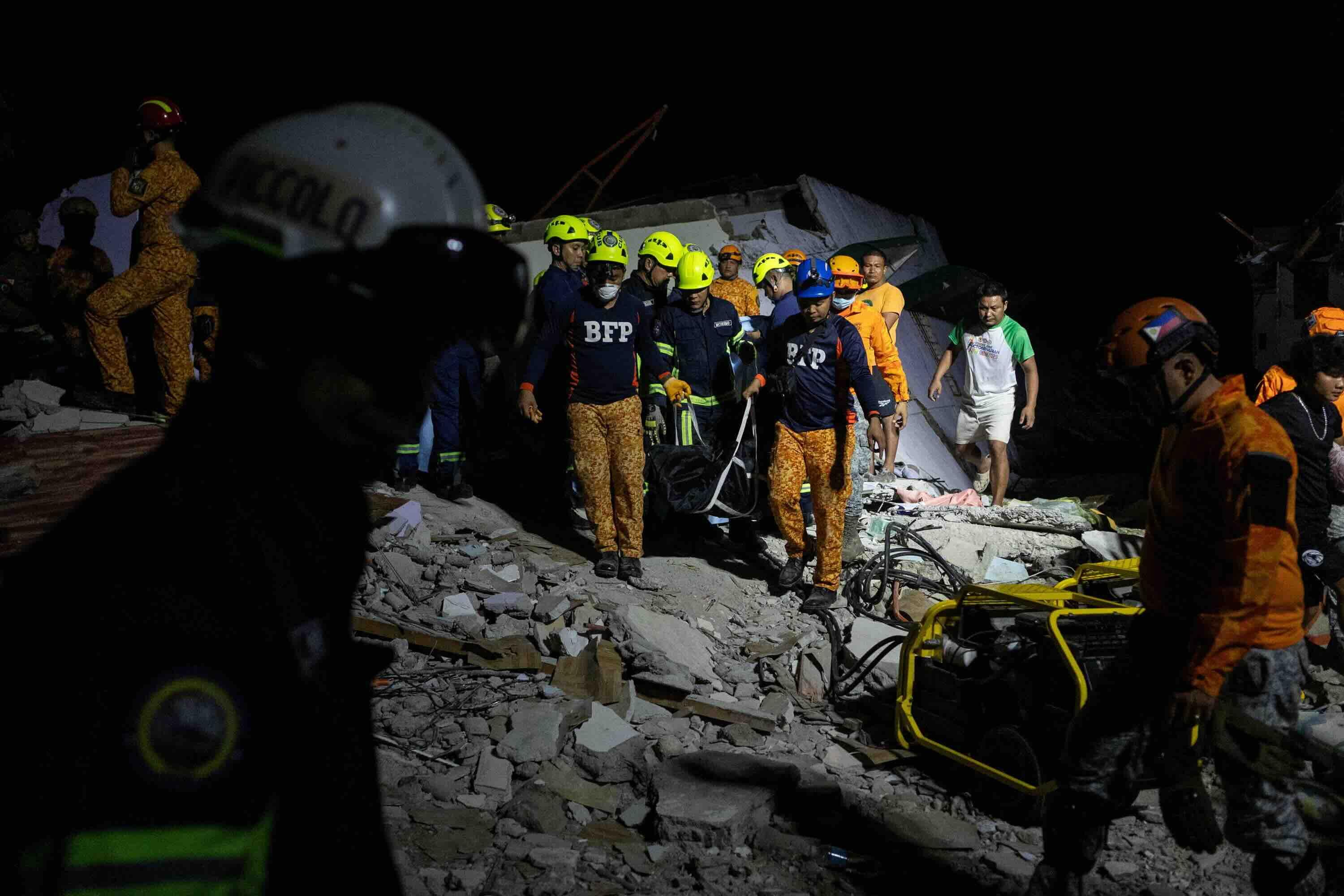
Aftershocks from the devastating magnitude 6.9 earthquake that hit Cebu last week have reached 6,311 as of Sunday afternoon, the Philippine Institute of Volcanology and Seismology said.
In its 3 p.m. update, PHIVOLCS said the aftershocks ranged between magnitude 1.0 to magnitude 5.1.
Of the 6,311 aftershocks, 28 were felt while the others were detected by the agency's seismic instruments.
On Sunday morning, PHIVOLCS director Dr. Teresito Bacolcol told Super Radyo dzBB that they have detected 5,897 aftershocks as of 6 a.m., of which 25 were felt.
He advised Cebu residents to expect and be prepared for more aftershocks in the coming days.
“Yung magnitude ay would range from magnitude 1.0 to magnitude 5.0, and so we would expect aftershocks in the next few days or even few weeks. Yung number na ito most likely tataas ito,” he said on Sunday morning.
(The magnitude of the aftershocks would range from magnitude 1.0 to magnitude 5.0, and so we would expect aftershocks in the next few days or even few weeks. This number will most likely rise.)
Bacolcol noted that of the 5,897 aftershocks recorded, only 25 were felt and that the rest were detected by their instruments.
In its 2 p.m. update on Saturday, PHIVOLCS said it recorded 5,336 aftershocks since the devastating tremor on Tuesday evening, of which 22 aftershocks were felt.
Bacolcol advised residents in Cebu, particularly in hard-hit Bogo City, to be always prepared for aftershocks and to follow the “drop, cover, and hold” protocol for earthquakes.
He also recommended that residents seek opinion or clearance from their municipal or city engineers if they have doubts about the structural integrity of their homes or buildings.
“If they notice na may visible cracks or yung structure or yung bahay nila are visibly weakened by the main shock of the magnitude 6.9, huwag muna sila pumasok kasi po kung hindi man ito nag collapse or totally collapse during the main shock, baka mag collapse ito during a strong aftershock,” he said.
(If they notice any visible cracks or if their house was visibly weakened by the main shock of the magnitude 6.9 earthquake, they should not go back because it might collapse during a strong aftershock, even if it did not collapse or totally collapse during the main shock.)
Bacolcol stressed that structurally compromised buildings should not be reoccupied unless structural engineers have declared or certified it as structurally safe or sound.
“So ang gagawin nila, magtanong sila sa municipal or city engineers para mag hingi ng opinion as to the integrity of their houses or structures kung saan man sila palaging nakatira or saan sila palaging nandoon,” the PHIVOLCS chief said.
(They should ask their municipal or city engineers for an opinion as to the integrity of their houses or structures where they usually reside or stay.)
As of Sunday, the death toll in the Sept. 30 earthquake has reached 71.
The National Disaster Risk Reduction and Management Council said it has received reports of 559 injured. The said figures are still for validation. — JMA, GMA Integrated News

