

 GMA Brandtalk
 Tracking
 Archives

Kanlaon Volcano showing increased seismic activity
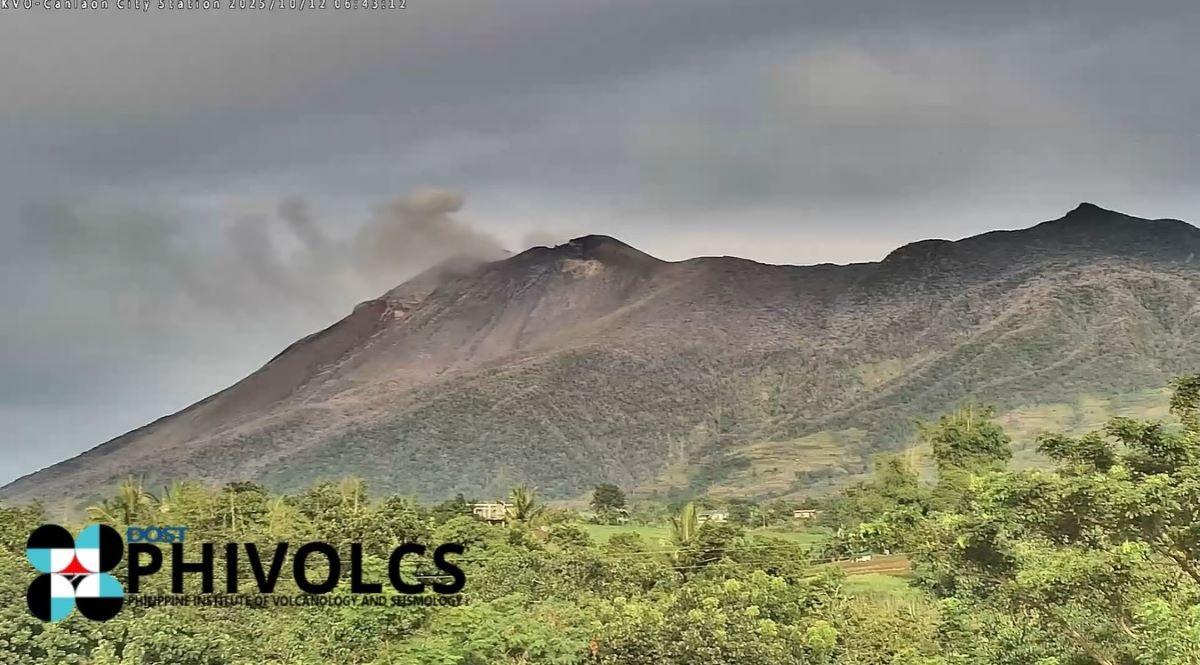
More earthquakes have been recorded over Kanlaon Volcano on Thursday morning, according to the Philippine Institute of Volcanology and Seismology (PHIVOLCS).
“This is a notice of increased seismic activity at Kanlaon Volcano,” PHIVOLCS said in an advisory released at 10:15 a.m.
“A total of eighty-one (81) volcano-tectonic or VT earthquakes have been recorded by the Kanlaon Volcano Network between 12:00 AM of 16 October 2025 and 10:00 AM today, 16 October 2025,” it added.
PHIVOLCS said the strength of the seismic events ranged from magnitude 0.1 to 2.9, which were generated at zero to six kilometers depths beneath the northwestern flanks of the volcanic edifice.
“VTs are generated by rock fracturing processes and the increase in VT activity strongly indicates progressive rock-fracturing beneath the volcano as rising magma or magmatic gas drives a path towards the surface,” PHIVOLCS said.
Aside from this, PHIVOLCS said the sulfur dioxide (SO2) gas emissions from the volcano averaged at 1,879 tonnes on Wednesday. This is near the medium-term average of 1,830 tonnes per day since January 1.
PHIVOLCS warned that these developments may lead to moderate explosive eruption of Kanlaon Volcano.
“These parameters indicate that the blockage of volcanic gas emission (or closed-system degassing) may result in pressurization and swelling of the edifice potentially leading to moderately explosive eruption,” PHIVOLCS said.
Alert Level 2 remains over Kanlaon Volcano, which means there is an increased unrest.
PHIVOLCS said possible steam-driven or phreatic eruptions or short-lived weak to moderately explosive eruptions could generate life-threatening volcanic hazards such as pyroclastic density currents or PDCs, ballistic projectiles, ashfall, rockfall, among others.
Communities within the four-kilometer Permanent Danger Zone or PDZ are advised to remain evacuated and those within the six-kilometer radius from the summit crater should be vigilant and ready in case the unrest worsens.
PHIVOLCS also warned of potential syn-eruption lahars and sediment-laden streamflows during intense rains.
Civil aviation authorities must advise pilots to avoid flying close to the volcano’s summit as ash from any sudden eruption can be hazardous to aircraft, according to PHIVOLCS. —VAL, GMA Integrated News

