

 GMA Brandtalk
 Tracking
 Archives

PH calls for multilateral alliances anchored on rule of law
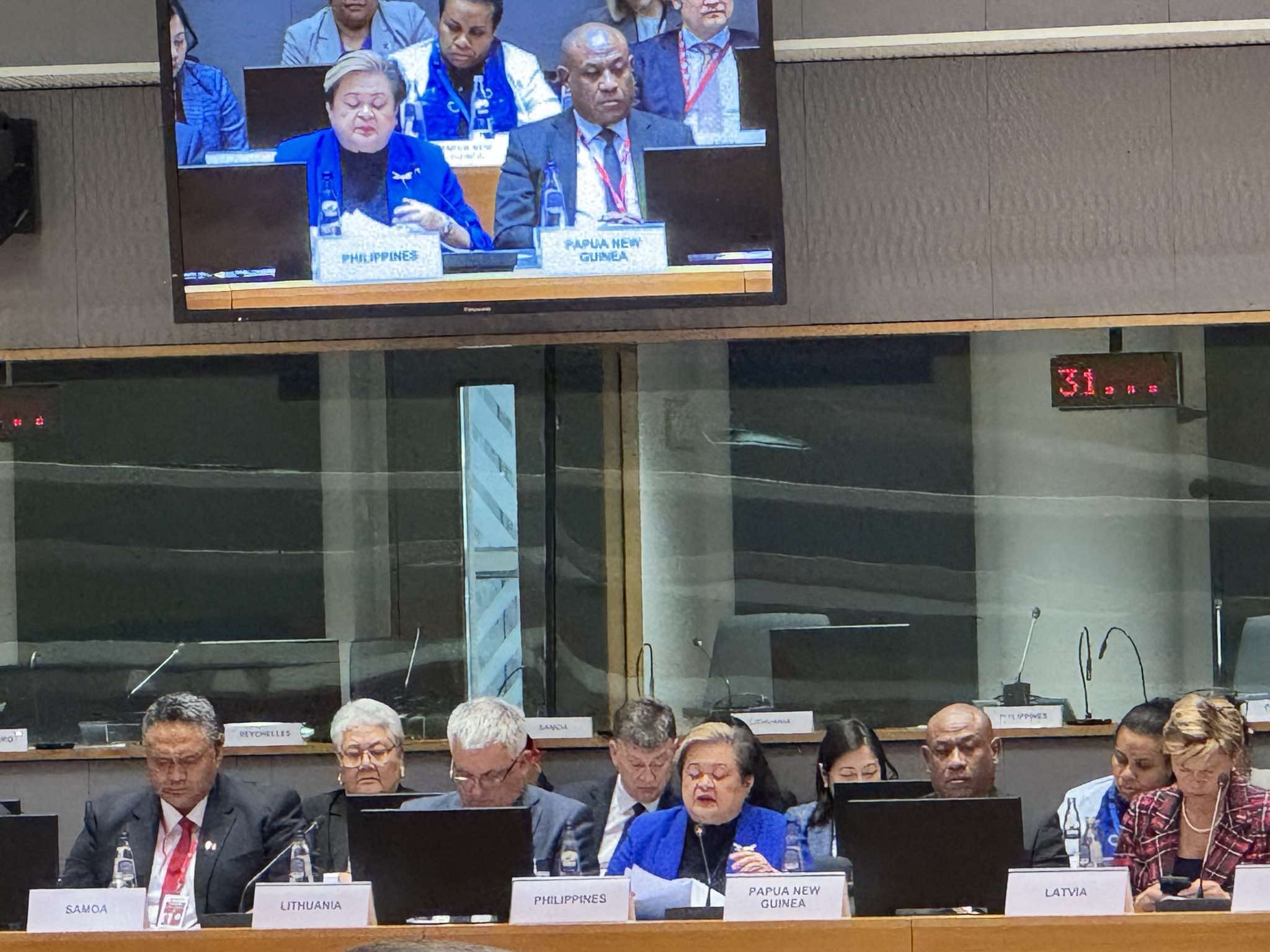
The Philippines has called for a strong multilateral system anchored on international law as top diplomats from around the world gathered in Brussels, Belgium, where they tackled current global threats ranging from maritime security to cyberattacks.
Philippine Foreign Secretary Theresa Lazaro said “faithful implementation” of international law is “crucial to reducing conflicts,” especially in the maritime domain, a core issue for Manila due to China’s aggressive actions in its territories in the West Philippine Sea.
“The UN Convention on the Law of the Sea remains the legal framework within which all activities in the oceans and seas must be carried out,” said Lazaro in a meeting she co-hosted with EU’s High Representative for Foreign Affairs and Security Policy and Vice President of the European Commission Kaja Kallas.
“UNCLOS, as reaffirmed through legally-binding rulings, such as the 2016 Arbitral Award in the South China Sea, should be observed,” Lazaro said of the landmark ruling largely won by the Philippines against China.
The fourth Indo-Pacific Ministerial Forum of the European Union brought together around 70 top diplomats and government officials from the EU institutions and its 27 Member States, 11 ASEAN members, Indo-Pacific countries, and regional organizations from across the Indo-Pacific region from the East coast of Africa to the Pacific island states.
This year's theme, "Building together a resilient, prosperous and secure future,” highlights how the futures of the two regions are closely linked through economic interdependence and the need to address shared global challenges.
As the Philippines takes on the leadership of the Association of South East Asian Nations in 2026, Lazaro emphasized that its theme, “Navigating our future, together,” envisions an ASEAN “steering and shaping the geopolitical landscape towards a rules-based, stable and prosperous future.”
President Ferdinand Marcos Jr. has nurtured closer military and defense ties with the United States, Japan, Australia, Canada, and has expanded it to include other like-minded nations, including those from the EU, to strengthen the country's external defense, such as in the West Philippine Sea, that part of the South China Sea that is nearest to the Philippine archipelago.
Chinese Coast Guard, Navy and suspected maritime militia ships have used high-pressure water cannons and dangerous sea maneuvers against Philippine ships or vessels, which China has accused of encroaching into what it claims as its territorial waters.
At the forum’s ministerial meeting on the protection of critical maritime infrastructure, Lazaro said addressing various threats from illegal and coercive actions at sea to critical marine resources and infrastructure is crucial.
Countries must “strengthen…defenses against hybrid threats, which combine physical, cyber, and informational tactics,” she noted.
Lazaro said the Philippines is committed to pursuing deeper cooperation on cybersecurity, data protection, and technical assistance to ensure the security of maritime infrastructure from induced risks. —AOL, GMA Integrated News

