

 GMA Brandtalk
 Tracking
 Archives

PHIVOLCS: 101 volcano-tectonic quakes logged at Bulusan Volcano
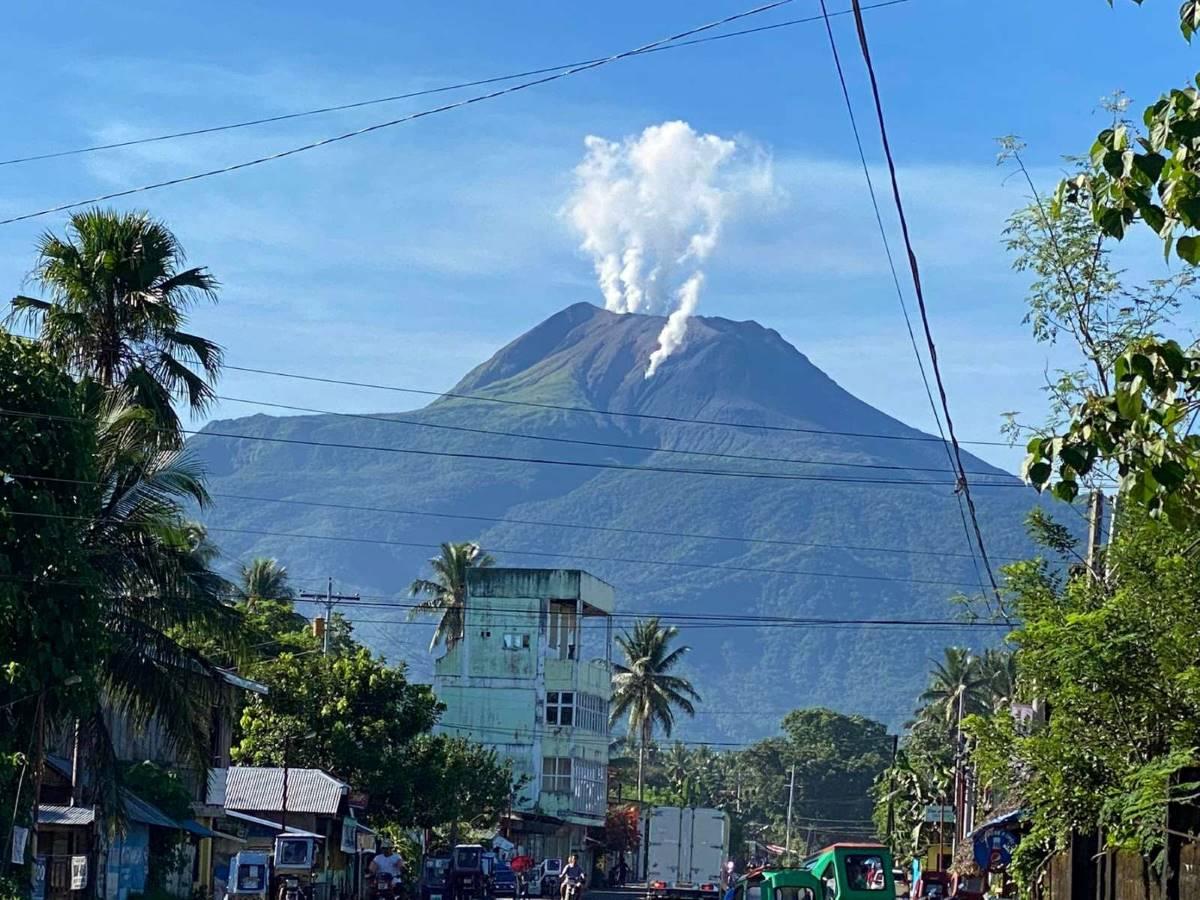
There is increased seismic activity at Bulusan Volcano in Sorsogon anew with over 100 volcano-tectonic (VT) earthquakes recorded since early Wednesday morning, as state volcanologists also warned of its increased chances of phreatic eruptions.
In a notice of increased seismic activity issued on Wednesday afternoon, the Philippine Institute of Volcanology and Seismology (PHIVOLCS) said 101 VT earthquakes have been logged since 4:50 a.m. of April 22.
“These VT events are generated by rock fracturing and with most originated within 2.5 kilometers depth beneath the northern edifice of Bulusan Volcano,” PHIVOLCS said in its advisory.
It noted that in contrast, “degassing activity from the summit crater and active vents has been very weak to moderate.”
Volcanic sulfur dioxide emission also remained at low levels and averaged 75 tonnes a day on April 9.
“The increase in volcanic earthquake activity could indicate shallow hydrothermal processes beneath the volcano which could lead to steam-driven or phreatic eruptions at any of its summit vents,” the advisory said.
PHIVOLCS reminded the public that Alert Level 1 or low-level unrest is in effect over Bulusan Volcano.
It added that “increased seismicity warns of increased chances of phreatic eruptions from any of its summit vents.”
State volcanologists advised local government units (LGUs) to strictly prohibit entry into the volcano’s four-kilometer radius permanent danger zone (PDZ).
LGUs were also told to “exercise vigilance in the two-kilometer extended danger zone (EDZ) on the southeast sector of Bulusan Volcano.
This is because of “possible impacts of volcanic hazards such as pyroclastic density currents or PDCs, ballistic projectiles, rockfall, avalanches, ashfall and others on these danger areas.”
In addition, communities west and downwind of the volcano should also prepare for ashfall in case of a phreatic eruption.
Pilots were also advised to avoid flying close to the volcano’s summit, since ash from any sudden phreatic eruption can be hazardous to aircraft.
“Furthermore, people living within valleys and along river/stream channels especially on the western sectors of the edifice should be vigilant against sediment-laden stream flows and lahars in the event of heavy and prolonged rainfall should phreatic eruption occur,” PHIVOLCS added. — JMA, GMA News

