

 GMA Brandtalk
 Tracking
 Archives

LOOK: 'Uson' goes down Mayon Volcano slopes
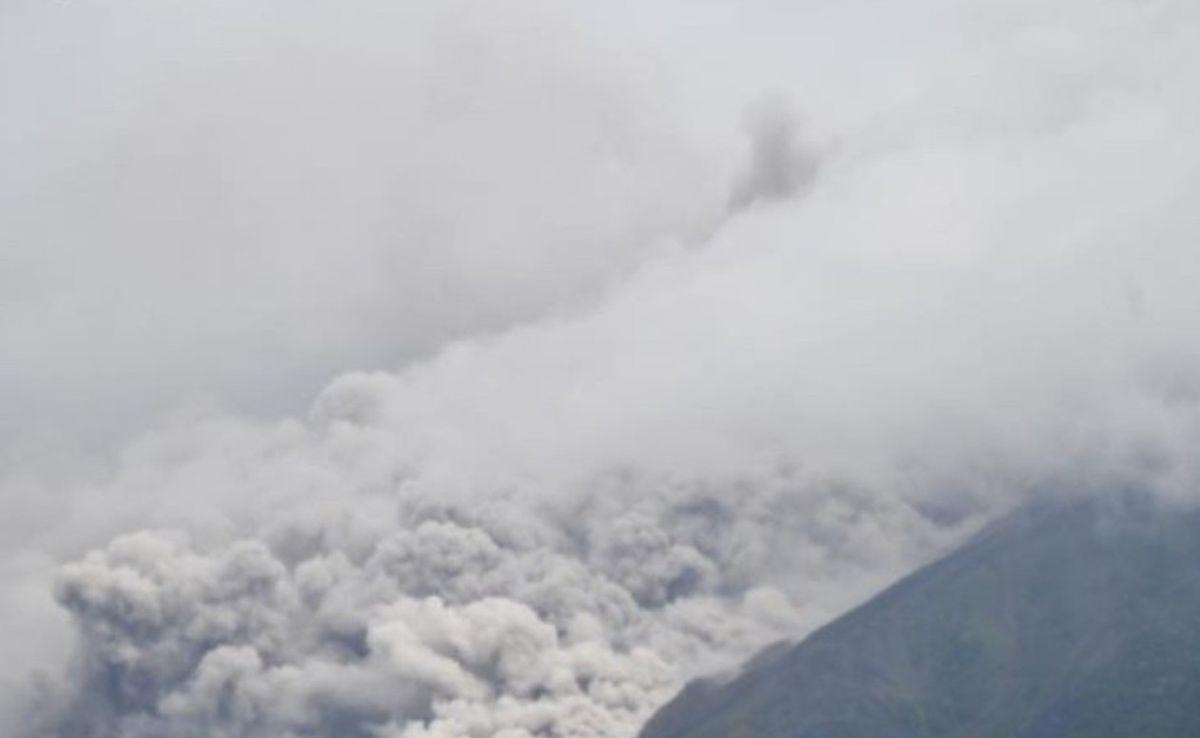
Pyroclastic density currents (PDCs) or 'uson' were observed going down the slopes of Mayon Volcano in Albay on Tuesday morning, according to the Philippine Institute of Volcanology and Seismology (PHIVOLCS).
The PDCs, which were due to lava flow collapse, went down the volcano's southwestern slopes, it added.
The Mayon Volcano Observatory and PHIVOLCS Quick Response Team were able to record the events on video between 7:19 a.m. and 7:26 a.m.
"Alert Level 3 remains in effect over Mayon Volcano," PHIVOLCS said.
It added that the 6-km Permanent Danger Zone should be off-limits.
Meanwhile, in its bulletin on Tuesday, PHIVOLCS said Mayon Volcano had lava effusion with lava flow on the Basud (3.8 km), Bonga (3.2 km), and Mi-isi (1.6 km) gullies on Monday.
Lava flow and collapse along the Mi-isi Gully of Mayon Volcano was observed late Monday evening, PHIVOLCS also said.
PHIVOLCS recorded the lava effusion and collapse at 11:13 PM and 11:21 p.m. on Monday, May 4, 2026 and posted the sped-up camera footage online.
Fourteen volcanic earthquakes were also recorded Monday, which included five volcanic tremors lasting two to eight minutes).
A total of 336 rockfall events and three PDC signals occurred from 12 a.m. Monday to 12 a.m. Tuesday, PHIVOLCS said.
A crater glow could still be seen with the naked eye.
Moderate plumes rising up to 1,000 meters above the crater were also observed Monday. These drifted in the west-northwest direction.
PHIVOLCS reiterated that flying aircraft close to the volcano should not be allowed.
It added that Mayon Volcano continues to pose hazards such as:
- rockfalls or landslides or avalanches;
- ballistic fragments;
- lava flows and lava fountaining;
- PDCs;
- moderate-sized exxplosions; and
- lahars during heavy and prolonged rainfall.
The unrest of Mayon Volcano could last for several more weeks, although several factors must still be considered before raising its alert status to Level 4, PHIVOLCS said on Monday. —KG, GMA News

