

 GMA Brandtalk
 Tracking
 Archives

ADVERTISEMENT
Filtered By: Topstories
News
The Pestaño case: Re-enacting his last voyage
When human rights lawyer Arno Sanidad agreed to take on the accused navy men as his clients, he asked the crew of BRP Bacolod City to recall the last leg of their trip leading up to the discovery of the body of young ensign Phillip Pestaño. In the last of this 3-part series, a retelling of the climactic scene shows how the officers’ military training may have become their own undoing. A forensic pathologist who was among the first to investigate the case of Ensign Phillip Pestaño in the aftermath had confirmed what the police, the constabulary, and the National Bureau of Investigation had earlier concluded in their original reports: that the young officer had put a single bullet through his head, leaving a folded, hand-written suicide note that tells of his anguish. Dr. Raquel Fortun of the College of medicine of the University of the Philippines had just returned from training in the United States when this case was brought to her in 1995. It would be her first and most sensational, and it has, until now, not yet been laid to rest. Timeline of Pestaño case Having built her reputation in the field of forensics, she has not changed her findings since then, based on the photographs, sworn statements of witnesses, letters, and an inspection of the scene that she has kept in a file all these years to show she has “extensively studied it.” She has been derided by the dead ensign’s father, Don Felipe Pestaño, as a “fake,” although he was the first to have hired her. Subsequently, Don Pepe hired others he claimed were forensics experts, whose testimonies combined have muddled a story that may just have been simple to begin with. Among other things, he has sought to prove that the suicide note allegedly written by Phillip was not genuine and that the trajectory of the bullet did not indicate a suicide. Since 1995, delays and wide press coverage notwithstanding, the Ombudsman has twice dismissed the case for lack of evidence. A revival at this time on presumptive evidence that can stand alone was based on the conspiracy theory that the Pestaño family’s lawyers have put forward. The timing also lent some political color in the thick of the country’s crisis in the judiciary, yet no arraignment has been set since the Ombudsman opened the case in mid-January; it was subsequently withdrawn from the Sandiganbayan after the realization that it could not try active-duty officers below the rank of captain (equivalent to a colonel in the Army) – as all the accused fall under the category. As it is, the accused officers are left on a limb, their jobs gone and facing possible discharge from the service without a trial yet. The Ombudsman might send this case to a lower trial court, but delays and uncertainty on how to proceed are hounding the judiciary as well as the defendants. Tainted evidence Much of the crucial evidence had been tampered with, unwittingly or not, and this clearly made it open to varied suppositions and suspicions: the gun’s ammunition chamber was unloaded by one of the officers who first saw the body, which was washed down with a water hose by one of Pestaño’s classmates to clean him up. In hindsight, Fortun said she should have accepted Felipe Pestaño’s idea of exhuming the body of his son. “I would recommend exhumation if I were to do it over again,” to close this case once and for all. “I think the family up to now simply refuses to accept the death of their son and that he [Phillip] really could have killed himself,” she added. “If I see evidence not in support of suicide, I would say so, but there’s none.” Her approach, she said, was to see the “totality of evidence” and draw her theories from there, not the other way around, and to gather what she could despite the sub-standard methods of the police and constabulary. She cited, for example, the crude drawings and lack of extensive details to go by from the autopsy. Arno Sanidad, a prominent human rights lawyer, remembered how this case was brought under the full glare of the Senate in 1997, roughly two years after the incident. His client had been the Navy, and back then he thought of filing a case of “perpetuation of testimony” to preserve the evidence and testimonies they already had on hand. He feared the case might erupt again, as it has now, and that the evidence gathered would be intact and useful in case the officers might meet possible danger in the course of their military duty. With a “perpetuation of testimony,” everything that had been presented before could be used in the current effort to resolve it, an unusual remedy of jurisprudence. But Pestaño’s father had refused Sanidad’s suggestion, said the lawyer, who is no longer handling the case this time around. “All that is here is physical evidence and the problem is, it’s no longer reliable. Time has erased everything,” said Sanidad. “It has been altered, tainted, it is not in its original pristine state,” alluding to the state of the scene when discovered, while the rest of the evidence remained circumstantial. Back to the scene 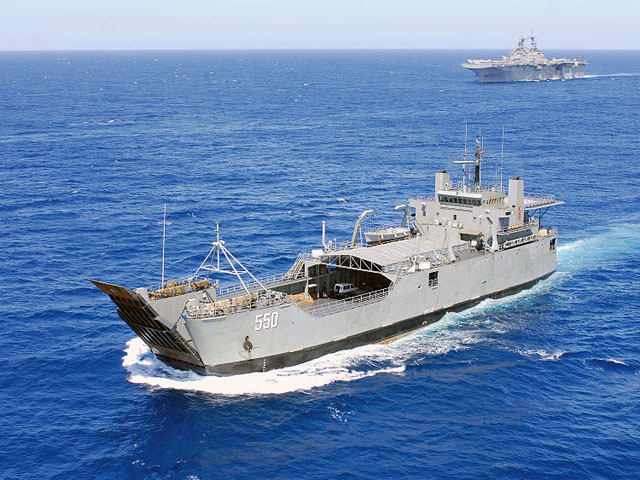 To satisfy his conscience, and as part of preparations for the Senate hearings in 1997, Sanidad had asked the succeeding Navy chief, Eduardo Santos, to call in the BRP Bacolod City and its original crew from their different sites of deployment, to carry out a re-enactment. It had been a tedious and difficult request to ask of the Navy, but they all came together in a week’s time, going back to the scene of what happened that morning in September 1995 when Pestaño was found dead in his cabin. “What if I find out he was shot by a Navy personnel?” Sanidad asked Santos, who told him, “I also would like to know, I should know. These are my men and I don’t want an officer doing this.” They came to an agreement that if Sanidad were to find out that one or any other of the men could be guilty, the Navy chief would be the first to know of his findings and Sanidad would be free to decide what to do with evidence he gathered, whether to reveal it to the press or push the matter in court. In the re-enactment, Sanidad had each of the officers and men fill out a form beforehand, stating their original location and making them go through the motion, every minute or so, of where they were and who they saw around them at that given moment half an hour before and until the ship called for “Special Sea Detail” – when the bell rang and the microphone blared out the names of men in their proper positions, a required routine when a ship is about to leave or dock. He found that the corridor on Ensign Pestaño’s cabin, which was roughly below the bridge, had been empty. The re-enactment had been tight and methodical, he said, and it was easy to tell if anyone changed location on the ship. “My conclusion was,” recalled Sanidad, “you have to have the entire ship in cahoots if one had to kill him and that means all are in a conspiracy. This would have been highly impossible to keep the lid on.” Missing from his post Ensign Pestaño was not in his position, in the forward forecastle, the left side of the bow, when the Special Sea Detail was called. They were about to pull into the Manila Bay and twice he was nowhere to be found. Reynaldo Lopez was then the operations officer on the bridge. His classmate Luidegar Casis was next to him in command, the damage control officer. Alfrederick Alba was the supply officer, and Joselito Colico was the mess officer whom Lopez had ordered to search the boat for Pestaño. From their accounts, the crew of officers was fairly stable and they were considerably on good terms, since they came from the early 1990s batch of the Philippine Military Academy (PMA). There had been a source of tension earlier in the voyage, however, and that had to do with the lumber that the retiring navy chief had asked to be delivered on board for his personal purposes. The ship’s captain, now retired Captain Ricardo Ordoñez, said it was Lopez who got into a tiff with him about allowing such things to take place; but seeing that it had the order stamped by the navy chief himself, Lopez had to relent. Pestaño, according to the officers, took the side of Lopez, who was beginning to train the young ensign in running a ship. Commander Lopez now would have in his memory of more than 16 years ago the look on Colico’s face after searching for Pestaño, seeing that he was not in position on the bow. Colico was pale when he went back to the bridge and expelled the words, “Sir, si Sir Phillip, duguan.” Blood, there’s blood. Pestaño was slouched on his bed, wearing his khaki uniform trousers and a white tee-shirt. Colico saw a .45 Colt pistol on the floor. He held the weapon and removed its chamber, taking precautionary steps, he said, based on what he’d been taught in the PMA: if there’s a shooting or an accident, prevent the gun from being fired again. That single act borne out of military training made Colico a suspect in the investigation, as well as the others whose lives would change years on. – YA, GMA News See also: Part 1 - His death haunts them still Part 2 - A love affair gone sour Criselda Yabes is a veteran journalist specializing in military and defense reporting. She is the author of the books Boys from the Barracks and Peace Warriors: On The Trail with Filipino Soldiers.
1995 – Ensign Phillip Pestaño found dead on board BRP Bacolod City 1997 – Senate Committee on Justice and Human Rights conducted a hearing and concluded after one year that Pestaño did not kill himself, based on the evidence presented by his family; however, the report did not name any suspects 2000 – Ombudsman concludes that the evidence has been tampered with and investigation is no longer warranted on a case filed by the Pestaño family 2005 – Pestaño family files a motion for reconsideration with Ombudsman 2009 – Ombudsman dismisses the case, on the grounds that all the circumstantial evidence presented were not substantial enough to reach a reasonable conclusion that Phillip Pestaño was murdered 2012 – Ombudsman reverses the previous decision and re-opens the case, saying it had “mistakenly discounted” its assessment of evidentiary facts
File photo of BRP Bacolod City by Chief Mass Communication Specialist Ty Swartz of the U.S. Navy

