

 GMA Brandtalk
 Tracking
 Archives

ADVERTISEMENT
Filtered By: Topstories
News
To cope with kinder demands of K+12, schools borrow day care centers and teachers
In Part 1 of this series on K+12, the Deparment of Education's ambitious plan to catch up with the rest of the world, GMA News Online examines the readiness of kindergarten schools to cope with the expected influx of young children who will be required to attend pre-elementary classes starting this June. The kindergarten teachers at Em’s Signal Village Elementary School are rushing. There are only three months to get everything done in time for school opening in June. Their dilemma: how to fit the almost 700 children that they are expecting to enroll in kindergarten into their five kindergarten classrooms. 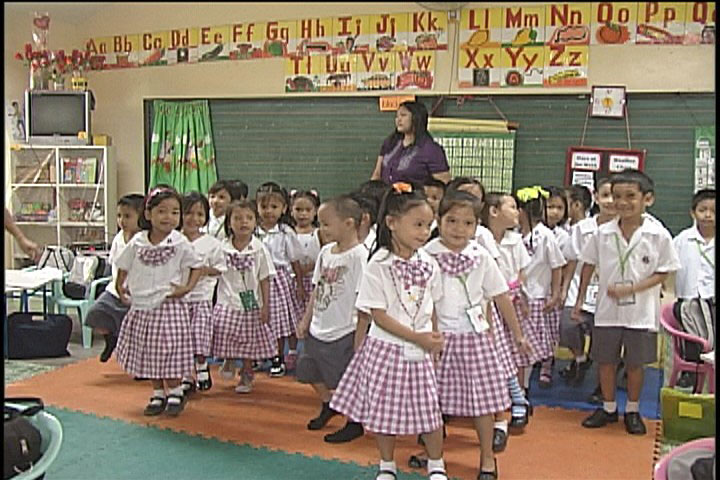 School principal Remedios Antonio says they are doing the best they can under the circumstances. “Wala kaming sapat na classrooms. Gawa namin, nagti-three shifts kami, para magkasya ang mga bata. As of now we have prepared 22 classes.” But 22 classes are not enough for their expected number of enrollees. Antonio estimates they would need at least 40 classes to accommodate all the children. Their temporary solution? Borrowing day care centers and day care teachers from the local government of Taguig to meet the needs of new kindergarteners. We chanced upon one of their kindergarten classes a few weeks ago, and saw one teacher in charge of around 30 to 40 children. Antonio admits that the ideal ratio should be around 20-25 children per teacher, but they’re forced to admit more than that. Aside from not having enough classrooms, the school lacks teachers. Right now there's only one kindergarten teacher, so teachers from grades 1 to 3 are also being recruited to teach the younger kids.
 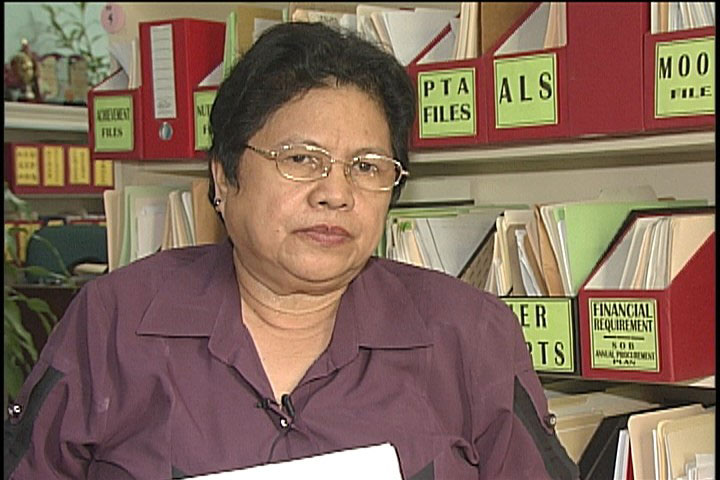 “Meron kaming training para sa kanila,” Antonio assures parents. “Hindi namin pinapayagang magturo ang isang teacher ng kinder na walang training. So yung aming division kinder coordinator na in-charge dyan, nagbibigay sya ng training sa magiging kinder teachers.” All these preparations are being done because in June, all public elementary schools in the country will be required to offer kindergarten to all five-year-olds. This is part of the Department of Education’s (DepEd) K-12 program, where all Filipino children have to take kindergarten, plus six years of elementary, four years of junior high school and then another two years of senior high school to finish basic education. As of 2010, public kindergarten schools nationwide were short of 14,924 classrooms and 27,852 teachers, according to statistics dug up by GMA News Research. The K-12 program aims to provide better quality education, especially for those in public schools, by keeping the youth in school longer. Before the K-12 mandate, the Philippines was the only remaining country in Asia and one of only three countries in the world with a 10-year basic education cycle. This meant that Filipino students typically spent less time in school than nearly anyone else on the globe. The DepEd believes the country’s educational system needs to adopt international standards, which prescribe 12 years of basic education for university admission or professional practice. For school year 2012 -2013, universal kindergarten classes, the new curriculum for Grade 1, and the new curriculum for Grade 7 will be phased in. What was previously taught in first year high school will now be taken up by the first batch of Grade Seven students in public schools. However, some schools already offered kindergarten in school year 2011-2012.
 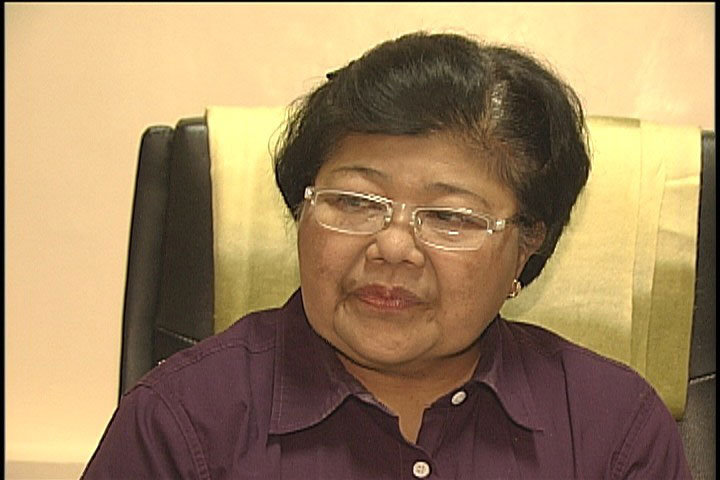 This is the reason why the principal of Pinaglabanan Elementary School is not as worried about the expected influx of kindergarten pupils. Dr. Lydia Abeja says they’ve had more than enough time to prepare, such as converting empty function rooms into kindergarten classrooms. “There is also what we call scheduling, where we can have our regular classes in the morning, for specific grade levels, and then in the afternoon we make use of the rooms to accommodate also preschoolers,” explained Abeja. Right now they only have one official kindergarten classroom, which was built using funds from the DepEd. It is well-equipped with books, toys, and various learning materials. It also helps that they have a relatively smaller school population compared to other public schools. Abeja said that prior to the universalization of kindergarten, Pinaglabanan only had 50 kindergarten pupils. This school year 2011-12, they had around 150 enrollees. Abeja expects this number to increase to around 200 by June. But she is confident that they still have enough room to accommodate the children. “At least this time naka-ready kami, kumpara nung nakaraang taon. There is also the help of the DepEd, you know, constructing preschool classrooms. Nakita mo naman yun di ba, you went around. Most of the schools here in San Juan have this constructed preschool classroom, and so we were able to coordinate with the local government,” said Abeja. Abeja also serves as the officer-in-charge of the Office of the Schools Division Superintendent of San Juan. She says the support of the local government for the programs of the Deped has been a tremendous help in their effort to educate the children. As far as the teachers are concerned, Abeja says they are deploying their Grade 1 teachers to help teach kindergarten. “After teaching their regular classes, we give them the chance to teach also the preschool. Actually it also serves as an augmentation on their part. Di ba? Dagdag kita rin yun sa kanila,” explained Abeja. DepEd Undersecretary Yolanda Quijano says they started to address the lack of classrooms, teachers, and facilites as early as two years ago. “Nagsimula na kaming magbigay ng mga tile materials, mga toys dun sa mga kindergarten classes. Itong year na ito, kailangan na lang naming kumpletuhin lahat ng schools. Mayroon na kaming mga 19,000 schools na binigyan ng mga materials tsaka toys, atsaka tactile materials na magagamit ng mga bata. Kumpletuhin lang namin yung kakulangan sa ibang schools,” said Quijano. However, she admits that the shortages cannot be solved by the government alone, but rather, by a partnership with the private sector and the local government units. -- OMD/HS, GMA News
Kindergarten pupils at Em’s Signal Village Elementary School learn their lessons through dance.
Remedios Antonio, principal, Em’s Signal Village Elementary School.
Dr. Lydia Abeja, Pinaglabanan Elementary School.

