

 GMA Brandtalk
 Tracking
 Archives

ADVERTISEMENT
Filtered By: Topstories
News
Infographic: What a police checkpoint should look like
+
Make this your preferred source to get more updates from this publisher on Google.
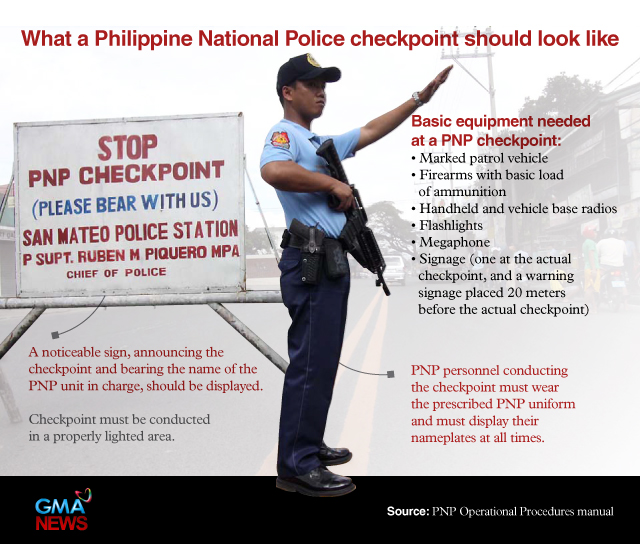 Initial findings on the bloody encounter in Atimonan, Quezon last January 6 showed that the checkpoint, where a two-vehicle convoy was riddled with bullets, violated basic Philippine National Police rules governing police checkpoints.
 Based on a police investigation, a sign announcing a checkpoint was placed 500 meters away from the actual checkpoint, but there was no signage at the actual checkpoint, where the supposed shootout (or rubout) took place.
In addition, only one policeman at the checkpoint was wearing the prescribed PNP uniform, another violation of the PNP's guidelines on conducting checkpoints. (Click here to read full PNP guidelines on conducting checkpoints)
As the May elections draw near and with the Comelec gun ban now in place, more checkpoints will be installed around the country, creating numerous interactions between police and citizens. The carnage in Atimonan at a dubious checkpoint does not inspire confidence that all police checkpoints are set up to protect the public. The above infographic describes what a PNP checkpoint should look like.
According to the PNP operational procedures manual, vehicle inspections at checkpoints are limited to a visual search. Passengers are not obliged to open the trunk, glove compartment, or bags inside the vehicle. Body searches are not allowed.
The PNP also encourages local government units, civic groups, media and other stakeholders to act as observers and participate in the conduct of checkpoints.
The public is encouraged to report checkpoints that do not follow the PNP requirements by calling the following numbers:
Text PNP to 2920
I-text mo kay Tsip — 09178475757
PNP hotline — 7230401
Emergency hotline — 117 — Candice Montenegro/Infographic by Den Fajardo/HS, GMA News

