

 GMA Brandtalk
 Tracking
 Archives

Duterte’s first SONA, one year later: Whistleblowers, PBC take a back seat
Every State of the Nation Address is both a look back and a look ahead—to the President's accomplishments the previous year, and to what he or she plans to do next.
When President Rodrigo Duterte delivered his first SONA on July 25, 2016, he had only been in office for less than a month. However, many of the issues he talked about were already familiar to Filipinos as being close to his heart, thanks to the presidential campaign and his long tenure as Davao City mayor.
GMA News Online looks at some of the issues he discussed in his first SONA, and what the administration is doing to address them.
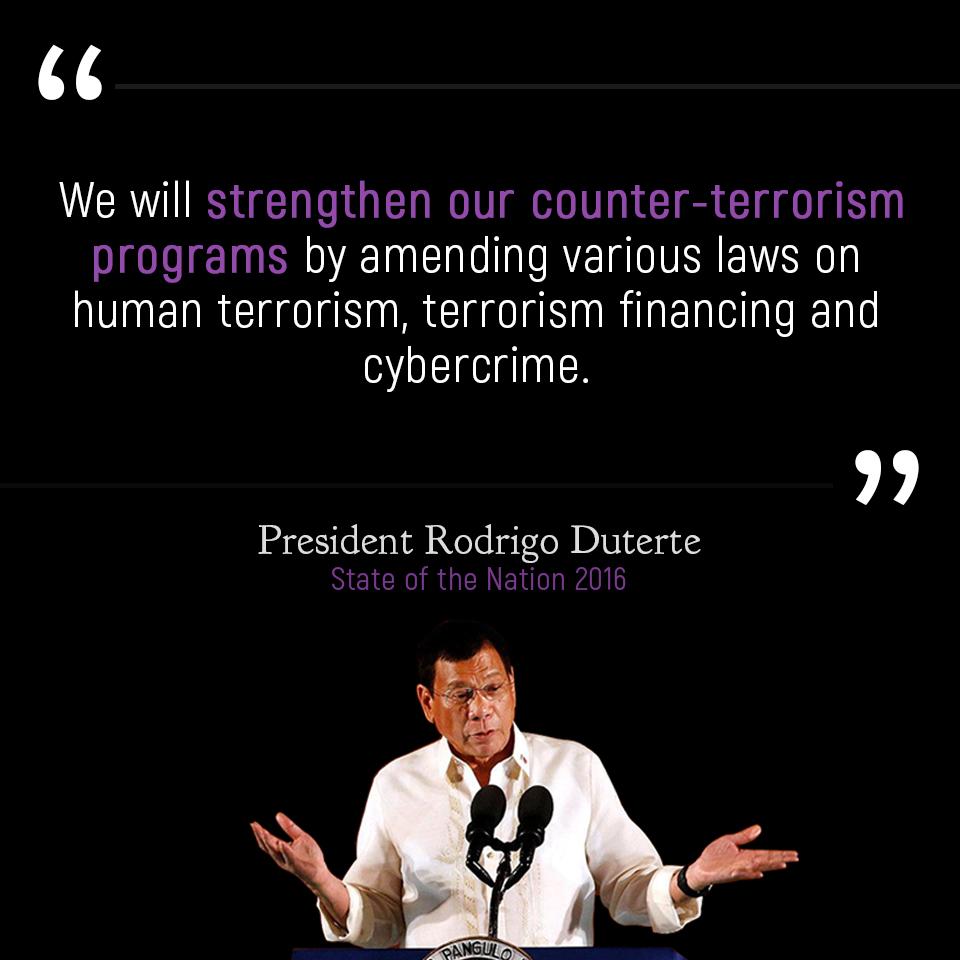
In his first SONA, Duterte vowed not only to “crush” the terrorist group Abu Sayyaf, but also to “strengthen our counter-terrorism programs by amending various laws on human terrorism, terrorism financing, and cybercrime.”
No such laws were passed during the first regular session of Congress.
In fact, the Senate and House of Representatives were jointly able to pass only four laws: the postponement of the 2016 barangay elections; the national budget for 2017; and franchise extensions for a telecommunications company and a television network.
Magdalo party-list Rep. Gary Alejano, who previously filed a failed impeachment bid against the President, earlier called on Congress to immediately convene the Joint Oversight Committee on the Human Security Act of 2007 “to effectively provide better security and protection for our people from acts of terrorism.”
The resolution has been pending with the House committee on public order and safety since July 26, 2016.
A proposal filed by Davao City Rep. Karlo Nograles to “strengthen capabilities of local communities to fight terrorism” also remains pending with the same committee.
Just last week, the Department of Interior and Local Government (DILG) and the Philippine National Police (PNP) met with a group of senators and sought their help to combat terrorism.
Senate President Aquilino “Koko” Pimentel III then asked intelligence agencies to submit proposals on how to increase their capabilities to deal with terrorist activities.
“I want them to be given all that they need to do their jobs. Then they will not have any excuse when called to account for what the Filipino people have spent on them if they fail,” Pimentel said on July 14.
Suffice it to say that the attack in Marawi City, which prompted a declaration of martial law in Mindanao, had put pressure on Congress to step up and do its part in the fight against terrorism. But whether this will be a priority when session opens on July 24 is yet to be committed by both houses of Congress.
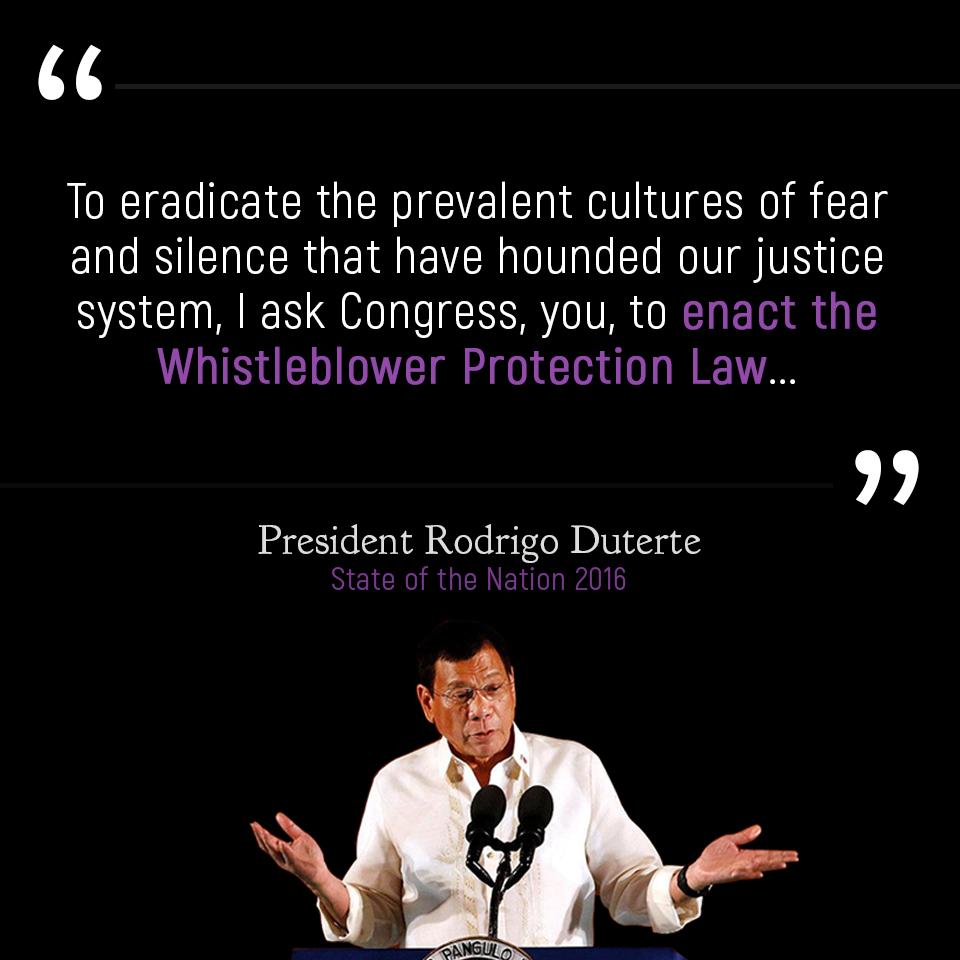
Duterte had also appealed to Congress to enact the Whistleblower Protection Law, which would extend protection over citizens who come forward to report wrongdoing. Several proposals calling for the same, however, remain in the justice committees of both the House of Representatives and the Senate.
Oriental Mindoro Rep. Reynaldo Umali, chairman of the House panel, said in a text message that a subcommittee is working on the proposals. “It is just awaiting submission of substitute bill for deliberations of sub/mother committee on justice,” Umali said.
Kabayan party-list Harry Roque, one of the authors, said Duterte “should reiterate that it is an administration bill.”
Besides, such a law, according to Quezon City Rep. Winston Castelo, would “complement the campaign platform of the President’s anti-crime stand and drug-free society.”
Senator Joel Villanueva, an author at the Senate, called on the President to certify the proposal as urgent.
“We’ve put more attention obviously the past 12 months on more pressing issues like EJK [extrajudicial killing] but I am confident that this bill will pass this year,” Villanueva said.
“Rest assured, the Senate is, and has always been, committed to ensuring that laws are in place to address graft and corruption,” he added.
Congress under the present administration still has a long five years to make the Whistleblower Protection Act a reality, a promise also made during the Aquino government.
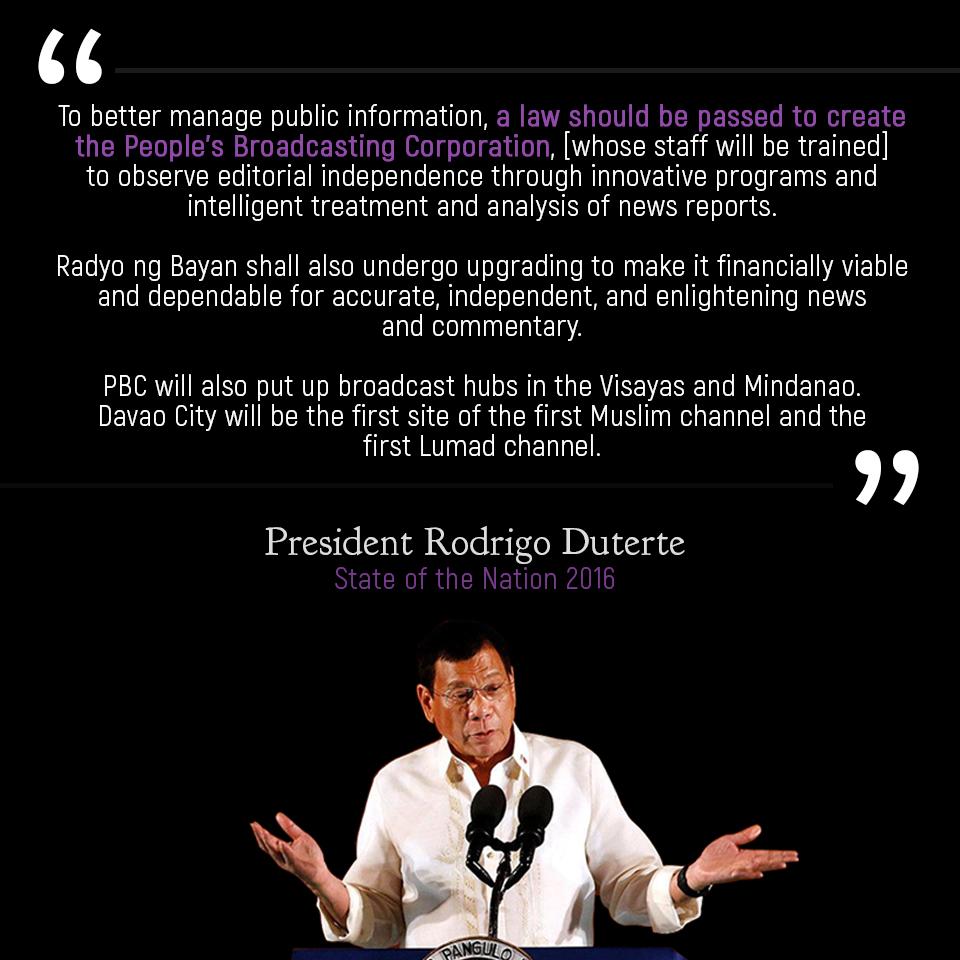
In promising the creation of the PBC—which would replace replacing state-run PTV-4—Duterte said that teams from international news agencies such as the BBC would visit the country to train the people who would staff the government-run channels.
The proposal to create the PBC was filed in August last year by Senator Loren Legarda. It remains in the public services committee up to this date.
In a text message, Communications Secretary Martin Andanar said the creation of the PBC remains a priority for the Executive.
“We are awaiting for Congress to enact the PBC. The law is important to integrate the operations of PTV and Radyo Pilipinas, just like BBC where radio and TV are integrated,” Andanar said.
PCOO Assistant Secretary for Policy and Legislative Affairs Kris Ablan said the government’s communication office is “sorting out the feasibility study to support its creation.”
Congress is scheduled to open its second regular session before Duterte delivers his second SONA. With several priorities like the tax reform program, federalism, and the proposed Bangsamoro Basic Law, will the above promises continue to take a back seat? — BM, GMA News

