

 GMA Brandtalk
 Tracking
 Archives

Duterte’s first SONA, one year later: Aid for the poorest families
Every State of the Nation Address is both a look back and a look ahead—to the President's accomplishments the previous year, and to what he or she plans to do next.
When President Rodrigo Duterte delivered his first SONA on July 25, 2016, he had only been in office for less than a month. However, many of the issues he talked about were already familiar to Filipinos as being close to his heart, thanks to the presidential campaign and his long tenure as Davao City mayor.
GMA News Online looks at some of the issues he discussed in his first SONA, and what the administration is doing to address them.
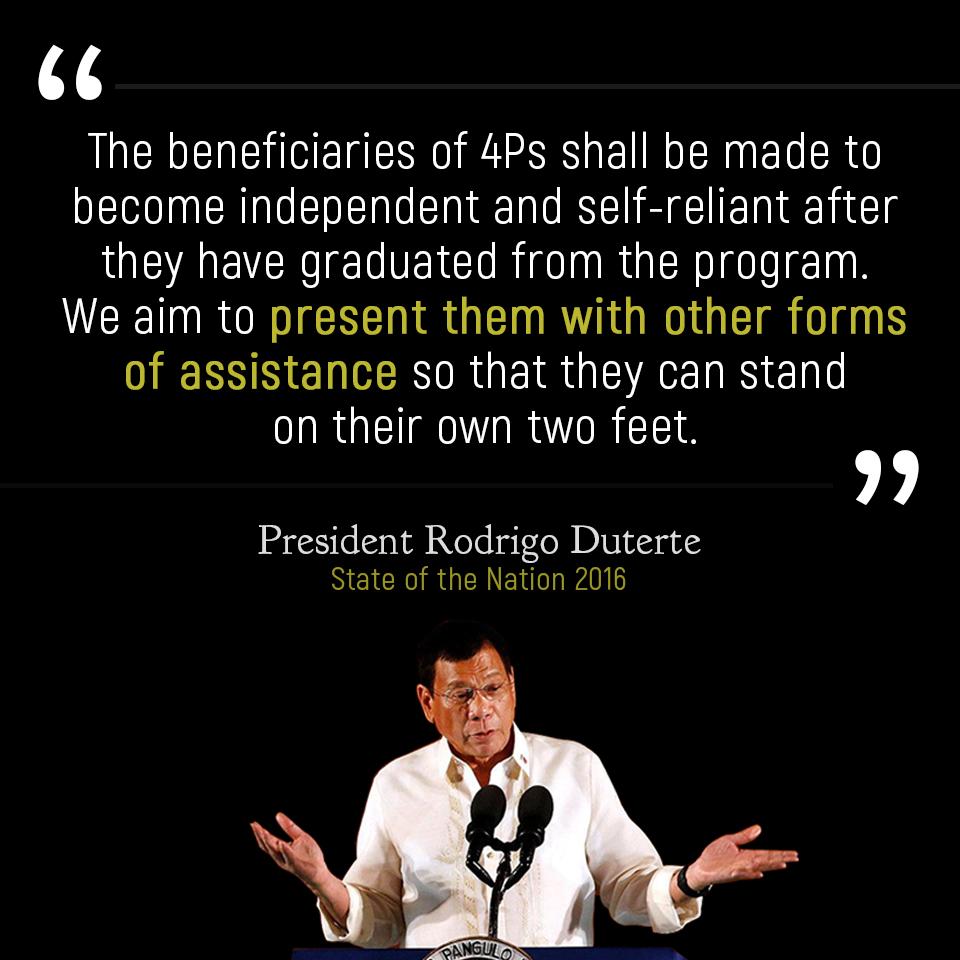
The Department of Social Welfare and Development (DSWD) admitted that the monetary aid the government extends to the poorest families is not enough.
"Siyempre hindi. Napakaliit naman ng CCT [conditional cash transfer] na binibigay," information officer Ina Silverio said in a text message to GMA News Online.
"Secretary Judy Taguiwalo is firm in her stand to not institutionalize the 4Ps program. It is a program that seeks to somehow help poor cope with their poverty, but the impact it creates is very minor, financially speaking," she added.
"4Ps" stands for the Pantawid Pamilyang Pilipino Program, the government's key anti-poverty program that provides conditional cash transfers to the poorest families. It was established during the Arroyo administration and currently covers around 4.4 million households.
_2017_07_19_21_40_40.jpg)
According to the DSWD, as of March 31, 2017, the program covers 41,605 barangays in all 144 cities and 1,483 municipalities in 80 provinces. This year the program targets a reach of 4,402,253 households. Currently, 4,384,638 households or 99.6 percent of the target are part of the program.
Of the total number of active households, 1,780,141 (40.6 percent) are from Luzon, 1,713,015 (39.07 percent) are from Mindanao, and 891,482 (20.33 percent) are from the Visayas.
The 4Ps has two types of cash grants that are given out to household beneficiaries:
- Health grant: P500 per household each month or a total of P6,000 every year
- Educational grant: P300 per child every month for ten months, or a total of P3,000 every year. For a household with three children, the family may receive P1,400 every month or a total of P15,000 every year for five years.
The program grants financial aid to its beneficiaries as long as members comply with certain conditions, such as undergoing regular medical check-ups and sending children to school.
"None of the DSWD programs are enough to help Filipinos end their poverty, but they are there to somehow help lessen their economic burdens," Silverio said.
She added, "To genuinely make a dent on poverty, job creation, job regularization, genuine agrarian reform are needed."
Unwithdrawn budget
At present, DSWD also admitted that the program has its own weaknesses due to lack of clear policies.
"We have seen ways in which the program can be manipulated sans clear guidelines and tight monitoring. The problems concerning unliquidated amounts and unclaimed grants are among these," said DSWD chief Judy Taguiwalo in a separate press release.
"The present DSWD is crafting new financial management policies and procedures to intently address lapses in procedure and documentation especially so that the Program involves billions upon billions of borrowed funds that will be paid by the Filipino people,” she added.
Taguiwalo made the statement after the Commission on Audit (COA) reported that the DSWD has up to P1.4 billion worth of unwithdrawn budget for 4Ps. In its report, the commission also said that the department should improve its vetting process, as some of its beneficiaries do not really need financial aid.
Livelihood programs
Asked whether the 4Ps beneficiaries are being presented with other forms of assistance after they leave the program, the DSWD directed GMA News Online to its website, which lists projects such as the Sustainable Livelihood Program.
The SLP aims to improve the standard of living of poor households "by facilitating opportunities for development and management of resources viable for micro-enterprises, community empowerment through skills training and employment facilitation."
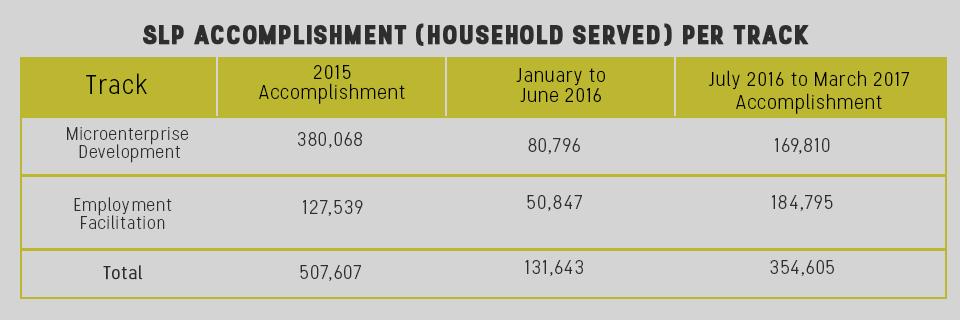
"From July 2016 to March 2017, 354,605 households benefited [from] the program: 169,810 for micro-enterprise development, and 184,795 were facilitated for employment," the DSWD said.
The SLP's page on the DSWD website does not seem to have been updated since the last days of the Aquino administration, but does list some success stories.
On Wednesday evening, Taguiwalo posted a statement on her Facebook page in which she addressed many of the concerns about the 4Ps—from the eligibility of its beneficiaries to funding issues.
She also mentioned a program called Kamustahan, "kung saan inaalam ang status ng mga members ng 4Ps sa layuning malaman din kung may mga dapat na bang maka-gradweyt sa program para may mga pwedeng ipasok na bagong member.
"May binubuo na ring EXIT STRATEGY para matiyak na ang mga matagal nang member ng program ay magabayan pa rin para hindi bumalik sa dating antas ng kahirapan," she said.
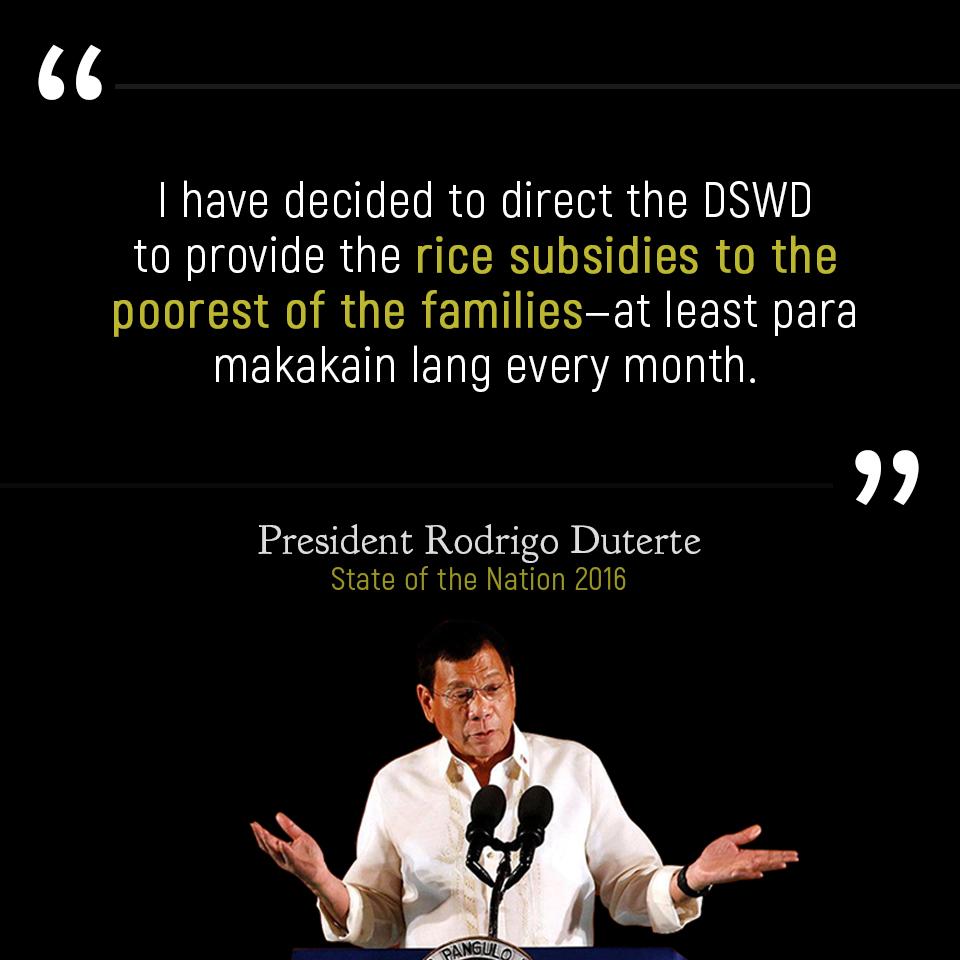
According to the DSWD, the 4Ps budget increased to P78 billion in 2017 to include the provision of rice allowances to all active and compliant 4Ps beneficiaries.
They are entitled to a P600 rice subsidy per month, equivalent to around 18 kilos of rice at P32 per kilo.
As of March 31, a total of P2.58 billion in additional rice allowances was distributed among the beneficiaries.
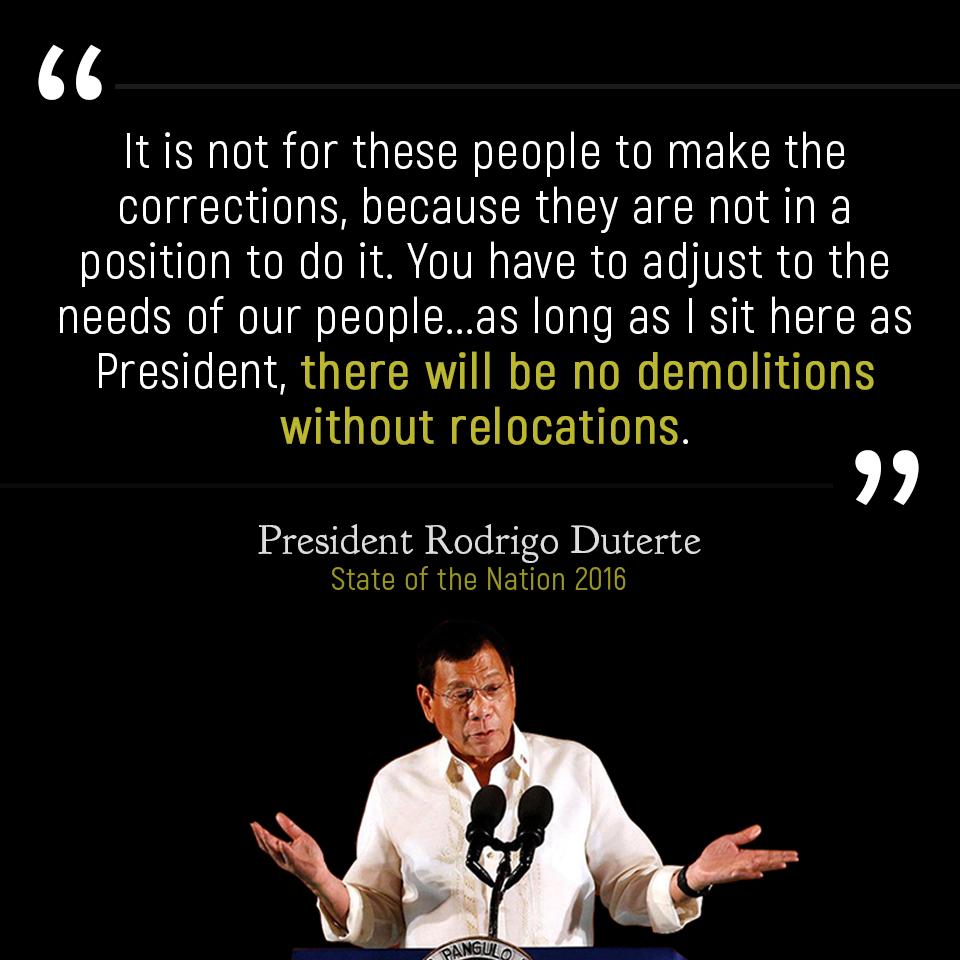
Duterte made an earlier pronouncement that there would be no demolitions of houses if there will be no relocation for informal settlers.
When asked for update if this was followed, the National Housing Authority said it will release data on July 24, the day of Duterte's second SONA. — BM, GMA News

