

 GMA Brandtalk
 Tracking
 Archives


Kenyan cult leader sentenced to 200 years in prison for mass starvation murders of children
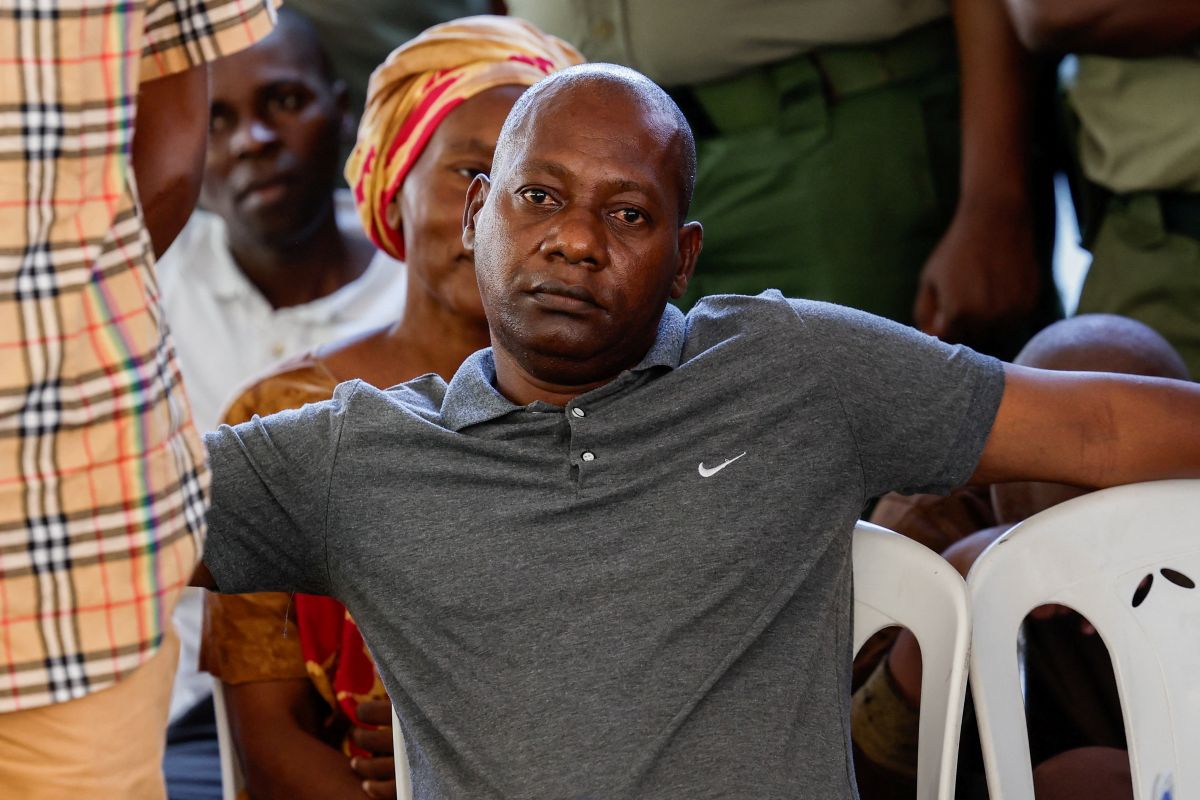
MOMBASA, Kenya - A Kenyan court sentenced cult leader Paul Mackenzie on Friday to 200 years in prison for the murders of 190 children starved to death on his orders and buried in a forest, among 500 suspected victims of one of the deadliest cult-related mass killings of modern times.
The sentence comprised 100 years for murder by starvation and 100 years for direct homicide, Justice Diana Kavedza said, reading out the judgement.
Prosecutors said Mackenzie, who led an apocalyptic Christian church in a forest near eastern Kenya's Indian Ocean coast, had told his followers to starve themselves to death, along with their children, to reach heaven before the end of the world.
His accomplices threatened and beat victims to ensure they followed his orders. The emaciated bodies were found scattered in shallow graves and dumped in latrines. Some had been buried alive.
Mackenzie, wearing a grey polo shirt and black trousers, did not react as the judge read out his sentence in a tent set up outside the court where the hearing was held.
He had denied murder charges, saying he did not force the victims to starve. The court rejected his defense.
Twenty-eight accomplices received sentences ranging from 10 to 160 years. All were found guilty at a trial last month.
Defense lawyer Lawrence Obonyo, who represents Mackenzie and almost all of the others convicted, said he would appeal the ruling.
Mackenzie, who broadcast sermons on a YouTube channel that had thousands of subscribers, won the trust of his victims through his charismatic media presence and then targeted defenseless, vulnerable followers, particularly children, Kavedza said.
"Children observed as their siblings dropped dead after enduring hunger for days," she said. "Those who stole food or water were beaten, their hands tied and locked up in houses, turned into fasting bays to die."
The case shocked Kenya in April 2023, when police began uncovering bodies in Shakahola Forest near the coastal town of Malindi.
Although only the cases of 190 children and one adult victim were covered by the trial, the Kenya National Commission on Human Rights says 448 bodies were ultimately found in the forest.
Mackenzie is also accused of ordering the deaths of 52 people found at a separate location in a village 30 km (18 miles) away, bringing the suspected total toll to 500. He has pleaded not guilty in that case.
The scale of the killing is comparable to that of a doomsday cult that killed more than 700 people in Uganda in 2000, and the 1978 Jonestown massacre in Guyana, when an American cult leader killed more than 900 people by ordering them to drink poison.
Stephen Mwiti, 48, father of six of Mackenzie's child victims and husband of one of his convicted accomplices, said his wife had taken the children to Shakahola, where they were starved to death.
Even if the adults had agreed to fast, "what about the children?" Mwiti told Reuters ahead of the sentencing.
Suleiman Zero, whose wife and six children are still missing, wept outside court after the sentencing. "I am happy but where is my family?" he said. "The one thing that I request from the government is that they help find my family. If they are dead, then let me have the bodies to bury."
Dan Mackenzie, one of Paul Mackenzie's sons, said he fled the group in his early teens after he stopped believing its promises of heaven, and lost friends and his younger brother there.
"It's justice to the people who we lost over there in Shakahola," he said.
Mackenzie had been on the radar of the authorities since 2017, when police searched his premises. In 2019, authorities shut down Mackenzie's church in Malindi and he relocated to the nearby Shakahola Forest.
The discoveries prompted calls for tighter oversight of religious groups, but government-backed and Senate proposals have yet to become law.
Ojiro Odhiambo, head of rapid response at the Kenya Human Rights Commission, said the conviction was an important step but accountability should go further as local administrators, police, intelligence officers and religious leaders bore responsibility for failing to act on repeated warning signs.
"All these people have failed the people," he said.
Kavedza agreed that Kenyan institutions had failed and she called for parliament to take steps to prevent it from happening again.
In 2023, William Ruto said he took responsibility as president for the government having failed to prevent the deaths. — Reuters

