

 GMA Brandtalk
 Tracking
 Archives

Emperor Akihito pays last homage at Japan’s holiest Shinto shrine before abdication
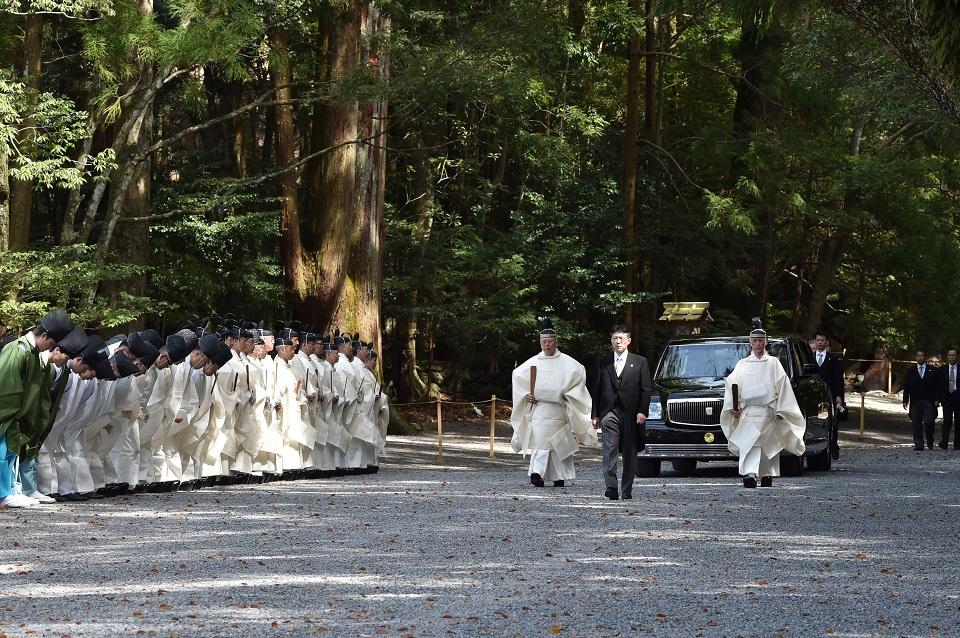
TOKYO — Japanese Emperor Akihito made his last pilgrimage to the country's holiest Shinto shrine on Thursday, as people lined the route to catch a glimpse of the 85-year-old ahead of his abdication this month.
Akihito and his wife Michiko's last trip as emperor and empress to the Ise Jingu shrine in central Japan is part of a series of abdication ceremonies ahead of his retirement on April 30, to make way for his son Crown Prince Naruhito.
Cheering wellwishers waved national flags as the royal couple's motorcade headed to the shrine, dedicated to sun goddess Amaterasu Omikami—the emperor's mythical ancestor.
"I'm touched. I'm very happy to have seen them," a beaming woman told public broadcaster NHK.
The couple are making a three-day tour through Friday with a legendary sword and a jewel, encased in black boxes and carried by chamberlains.
The two items, together with an ancient mirror, are known as "the three sacred treasures"—imperial regalia said to date back more than a millennium bequeathed to the imperial line by Amaterasu.
On Thursday, Akihito brought the two treasures with him to the shrine to use them as part of the day's rituals of reporting his abdication to his ancestors, according to the Imperial Household Agency. — Agence France-Presse

