

 GMA Brandtalk
 Tracking
 Archives

Tropical cyclones outside PH landmass more responsible for heavy rainfall during Habagat season – study
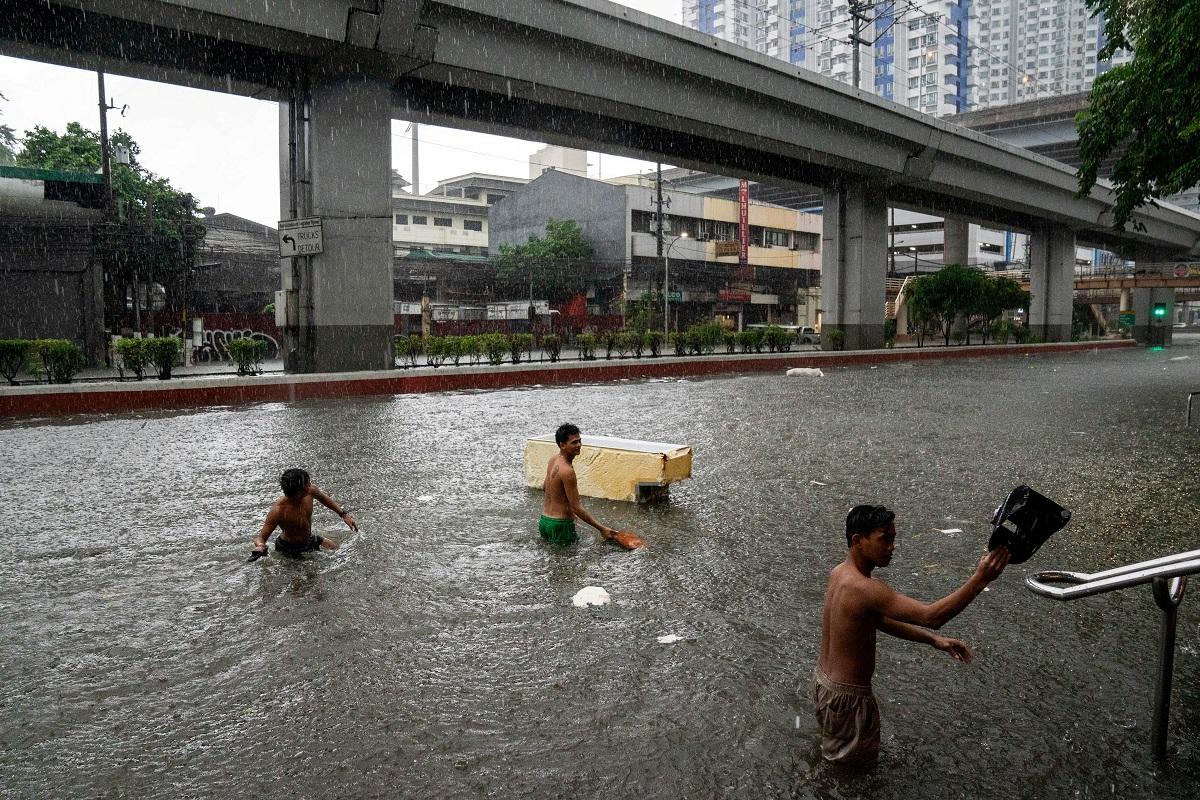
Heavy rainfall is more likely to be caused by tropical cyclones that do not make landfall than by those that do during the peak Southwest Monsoon (Habagat) season from July to September, according to a new study.
After examining 62 years of weather data (1961 to 2022), researchers from Ateneo de Manila University, the Manila Observatory, PAGASA, and Japanese partner institutions found that the indirect effect of tropical cyclones accounts for 33.1% of rainfall, more than twice as much as the direct effect (15.4%).
The remaining 51.5% is attributed to the monsoon itself, without tropical cyclone influence.
The rainfall measurements were taken from 11 stations along the western coast of the Philippines (Laoag, Baguio, Dagupan, Iba, Science Garden-Quezon City, Port Area-Manila, Sangley Point, Ambulong, Coron, Cuyo, and Iloilo).
''The peak of the typhoon season coincides with the peak SWM [Southwest Monsoon] months. This leads to the interaction between the two weather systems. In some cases, TCs [tropical cyclones] are able to 'enhance' the SWM. This usually happens when a TC is located to the northeast of the Philippines during the peak SWM months, bringing heavy rainfall especially over the western coast of the Philippines,'' the study said.
''The most recent example is Typhoon Gaemi (Carina) in 2024, which did not make landfall in the Philippines but still brought about extremely high amounts of rain over the country due to its enhancement of the SWM,'' it added.
''Two other examples of this phenomenon are the 'enhanced Habagat' cases of 2012 and 2013, which occurred from 6–10 August 2012 and 18–22 August 2013, respectively.''
The study also found that in the four rainiest years on record—1962, 1972, 2012, and 2018—rainfall totals soared above 2,000 millimeters during the Habagat season, with indirect effects of tropical cyclones accounting for 41.5 percent of total rainfall.
''By distinguishing between rainfall caused by the monsoon as well as the direct and indirect effects of tropical cyclones, the researchers hope to improve the way we anticipate extreme weather,'' Ateneo said.
''Understanding these distinctions is crucial for local governments and disaster response agencies, especially as climate change increases the unpredictability of both tropical cyclones and seasonal rainfall.''
Ateneo published the study on June 11. —GMA Integrated News

