

 GMA Brandtalk
 Tracking
 Archives

EXPLAINER: How thunderstorms form
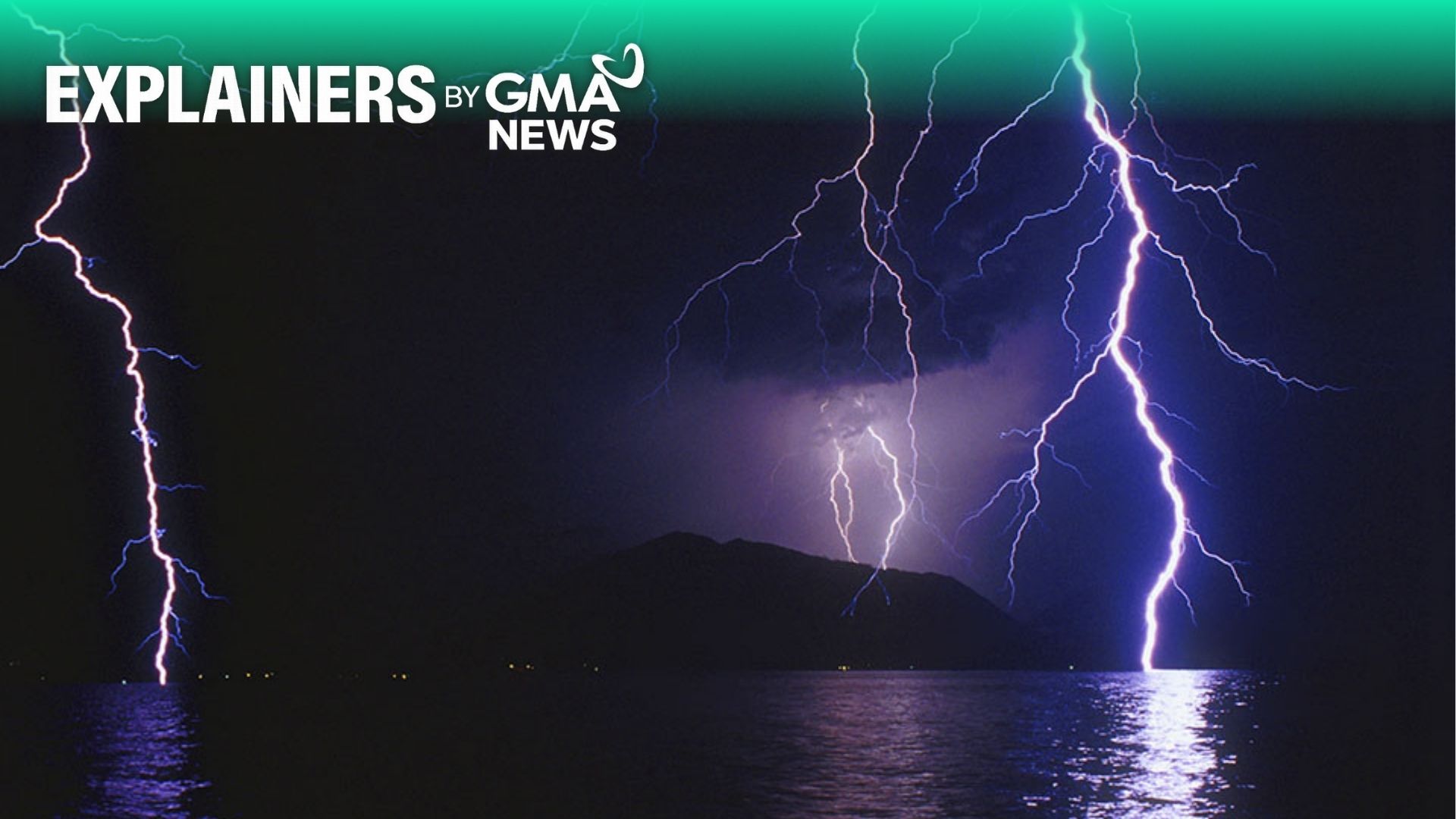
As the rainy season sets in, thunderstorms are becoming more frequent, especially during the afternoon and evening, bringing heavy rain that may cause flooding.
But what exactly is a thunderstorm, and how does it form?
In an episode of “Kuya Kim, Ano Na?”, Kim Atienza explained that a thunderstorm is a weather system that develops in a specific area and can bring intense rainfall, strong winds, thunder, lightning, and hailstones.
Thunderstorms typically last only one to two hours.
According to Atienza, thunderstorms form when warm, moist air near the ground rises rapidly in a process known as an updraft.
As the air ascends, it cools, causing water vapor to condense and form clouds. As this process continues, a cumulonimbus cloud develops. This towering cloud is associated with thunderstorms.
Inside the cloud, water droplets continue to grow until they become too heavy. The droplets eventually fall to the ground as rain.
At the same time, cooler air descends in what meteorologists call a downdraft. This downward movement of air carries rain and wind gusts toward the surface.
The continuous movement of air upward and downward within the cumulonimbus cloud generates the heavy rainfall, thunder, and lightning that characterize a thunderstorm.
Meteorologists classify thunderstorms into several types.
Single-cell thunderstorms are relatively weak and short-lived. Multi-cell thunderstorms, which are common, consist of several storm cells grouped together.
Another type is the squall line, a group of thunderstorms that can stretch for hundreds of miles.
The most dangerous type is the supercell, which has the potential to produce tornadoes.
A thunderstorm is considered severe when it produces large hail, winds exceeding 57 miles per hour, or tornadoes.
Worldwide, more than 16 million thunderstorms occur each year. About 2,000 thunderstorms are happening simultaneously across different parts of the globe.
Atienza reminded the public to stay alert and monitor thunderstorm warnings issued by PAGASA. —VBL, GMA News

