

 GMA Brandtalk
 Tracking
 Archives


WTO chief urges PH, ASEAN to diversify trade beyond US, China
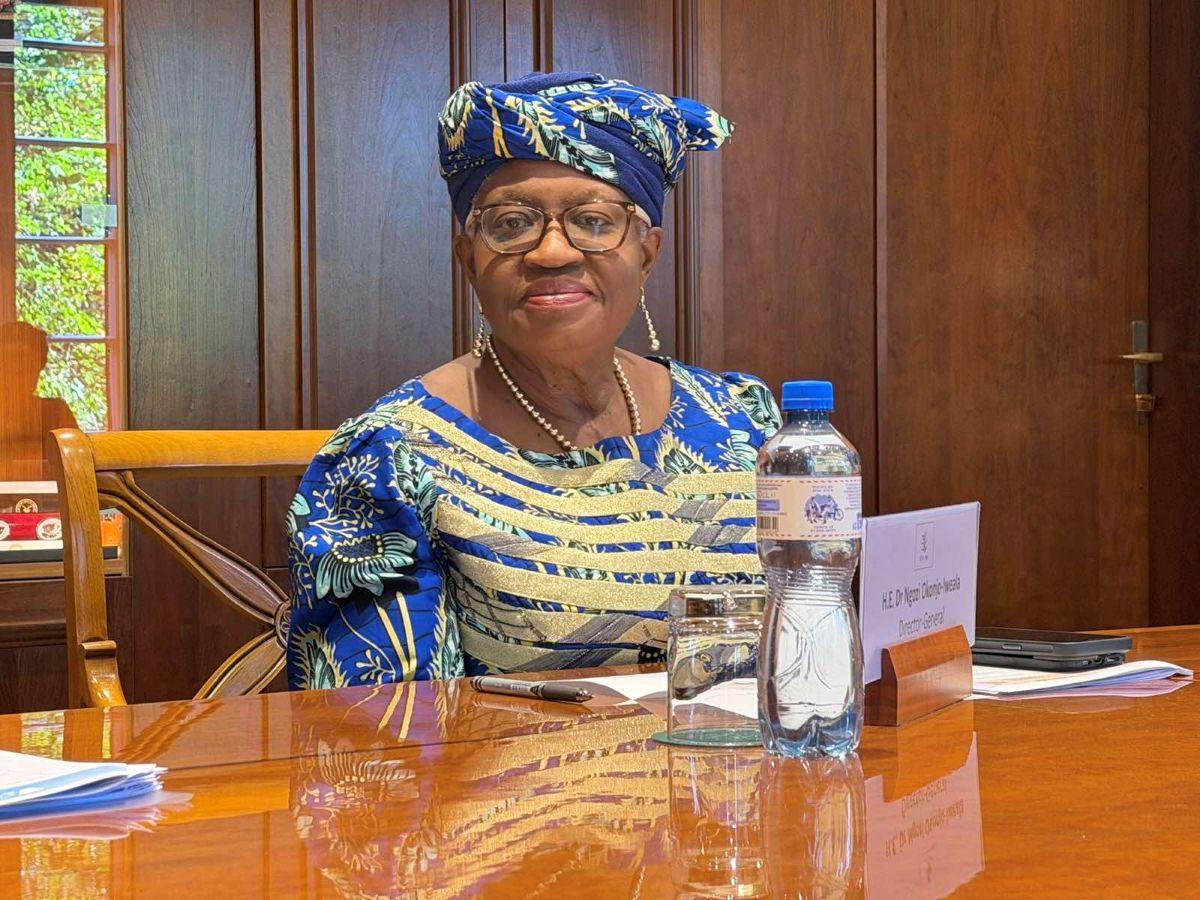
GENEVA, Switzerland — The Philippines and the Association of Southeast Asian Nations (ASEAN) should diversify their trade markets and shift away from heavy reliance on the United States for exports and China for supplies, a top official of the World Trade Organization (WTO) said.
According to WTO director-general Ngozi Okonjo-Iweala, the Philippines and its Southeast Asian neighbors should explore trading opportunities beyond traditional partners, including Africa, Central Asia, and Latin America, to broaden their trading relationships.
“The problem, the issue with ASEAN is they are highly dependent on the US market. Highly. So my message to ASEAN is diversify, diversify, diversify,” she told reporters in a briefing at the WTO headquarters.
“You know, you have many Asians who are in Latin America. You have a huge Japanese population in Brazil and in Peru. You have Filipinos everywhere, so why are you not (diversifying?)” she added.
Okonjo-Iweala also cited trading opportunities in Africa, which Thailand has included in its long-term plans because of the continent’s growing labor force, as well as in resource-rich Central Asian countries such as Kazakhstan and Uzbekistan in Central Asia, and Armenia, and Azerbaijan in South Caucasus.
The Philippines’ reliance on major trading partners is seen in the latest trade figures, as the United States accounted for more than a quarter or 26.6% of exports in September, while South Korea and China together accounted for nearly half or 48.4% of imports, according to the Philippine Statistics Authority (PSA).
Total trade in goods for the month reached $24.903 billion in September, with imports exceeding exports by $5.154 billion. The latest trade gap compares with the $4.293-billion deficit in August, and the $4.672-billion deficit in September 2025.
The areas cited by Okonjo-Iweala — Africa, Central Asia, and Latin America — were not among the Philippines’ leading trade partners in September, highlighting the potential to expand into such markets.
“My message to them (ASEAN) is to diversify your market supplies because you’re very dependent on China. Diversify your market for your goods because you’re very dependent on the US,” she said.
Her remarks come a month before the Philippines is set to host the 49th ASEAN Summit, with US President Donald Trump confirmed to attend.
The WTO has upgraded its outlook for Asian trade this year, based on its Global Trade Outlook and Statistics report in October. It expects Asia’s merchandise export volume to grow by 9.9% this year, up from its March forecast of 3.5%.
Should this be realized, it will mark the third straight year of acceleration after the 8.3% in 2024, and 9.6% in 2025.
“With our forecast in March, we had seen record growth in AI (artificial intelligence) deals on goods trade in 2025, and we though that the pace of investment might moderate in 2026. It hasn’t only not moderated, it’s accelerated,” WTO chief of forecasting Coleman Nee said at a separate briefing.
“Growth in AI-enabling goods has been even stronger than expected, and that’s the main impetus behind that. The other thing is economies have been more resilient to rising energy prices than perhaps many expected,” he added.
For 2027, however, the WTO expects Asian merchandise trade volume growth to decelerate to 5.2%, but still faster than the 3.2% forecast made in March.
“When you have above-average growth in one year, it tends to be somewhat weaker the next year. There’s a lot of uncertainty about 2027 generally, just because of energy prices and the durability of the AI investment boom,” Nee said.
“It could go on for several years. The Middle East conflict could be resolved tomorrow. We don’t have a crystal ball. These are probabilistic estimates based on data available at the moment,” he added.
The Philippines is looking to capitalize on the AI boom, as it is set to host the US-led Pax Silica hub in a 1,600-hectare site within the 9,450-hecyare New Clark City. It is in line with efforts to build a network of allied supply chains for critical technologies and minerals.
The country is also eyeing Bulacan as a gateway for consolidating components sourced from across the region, assembling them into AI compute hardware, including server racks, and shipping the finished products to global markets. — RSJ, GMA News

