

 GMA Brandtalk
 Tracking
 Archives


WTO flags high trade costs, regulatory hurdles in PH
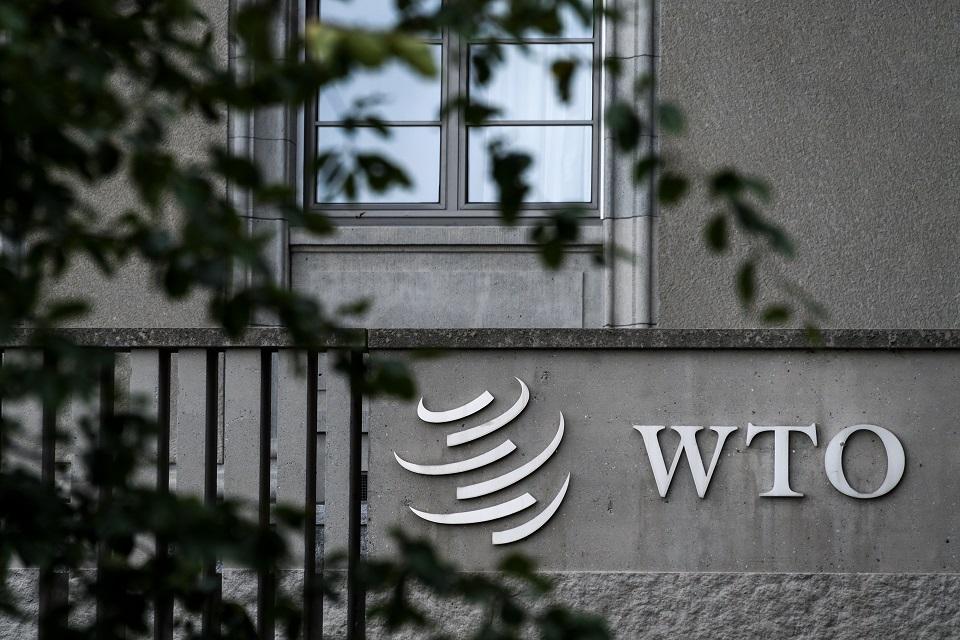
GENEVA, SWITZERLAND — The Philippines needs to address non-tariff barriers to reduce trade costs and strengthen its competitiveness in global supply chains, including the semiconductor industry, World Trade Organization (WTO) Secretariat officials said.
Asked which reforms the Philippines should prioritize, a WTO official identified non-tariff barriers, such as import licensing and labeling requirements, which can increase the cost of trade and doing business in the country.
“Non-tariff barriers, I would say,” the official said, noting, however, that the Philippines had already made progress in investment and tariff reforms.
The official added that the Philippine government would ultimately decide which reforms to prioritize.
The recommendation comes as the WTO Secretariat’s 2026 Trade Policy Review: Philippines cited estimates showing that the country's trade costs are 20% higher than the ASEAN average.
WTO data show that the country's simple average most-favored-nation (MFN) applied tariff rate stood at 5.9% in 2025, with only 13.6% of imports entering duty-free under MFN terms. Its trade-weighted MFN average was 6% in 2024.
Other measures that add to trade costs include pre-border technical verification, cross-border electronic invoicing and a national single window that has yet to become fully operational, according to the officials.
They also cited fragmented regulations and logistics pass-through fees, partly attributable to the country's geography and 7,641 islands, as factors that could drive up trade costs. However, they cautioned against interpreting the figures as an indication that the Philippines was falling behind its regional peers.
“Lowering costs and making the economy more attractive to do business with is work for any country,” another official, who spoke on condition of anonymity, said in an interview at WTO headquarters.
The official also said the Philippines could benefit from strengthening industry clusters and training workers for semiconductor-related jobs to deepen its participation in global value chains.
The country could also capitalize on its strength in services exports, particularly business process management services.
“You need to specialize, so you specialize in what you're good at. The Philippines is good at providing services, and definitely that's how you earn your money. But at the same time, the Philippines has definitely more than services,” the official said.
For his part, Philippine Ambassador and Permanent Representative to the WTO Manuel Antonio Teehankee said the country should address infrastructure and logistics concerns to help reduce trade costs.
“Improved infrastructure for inter-island transport and rail is very important for moving goods inside the country because import-export is also dependent on internal logistics and warehousing. So that's the other big area of infrastructure that we should develop,” he said in a separate interview.
Latest data from the Bangko Sentral ng Pilipinas (BSP) show that net inflows of foreign direct investments (FDI) stood at US$689 million in July, down 44.1% from US$1.23 billion in the same month last year but up 54.1% from the US$447 million recorded in June.
Meanwhile, the Board of Investments (BOI) approved P900.06 billion worth of investments from January to September, up 53.05% from the same period last year and equivalent to 90% of its P1-trillion target for the year.
Domestic investors accounted for 89.88%, or P808.96 billion, of the approved investments, while foreign investors accounted for P90.40 billion.
The Philippines is also seeking to capitalize on the artificial intelligence (AI) boom, with the country set to host the US-led Pax Silica hub on a 1,600-hectare site within the 9,450-hectare New Clark City in Tarlac. The initiative is part of efforts to build an allied supply-chain network for critical technologies and minerals.
The country is also eyeing Bulacan as a gateway to consolidate components sourced from across the region, assemble them into AI computing hardware, including server racks, and ship the finished products to global markets. — MCG, GMA News
Follow GMA News Online on Facebook for real-time news and developments in the Philippines and around the world.

