

 GMA Brandtalk
 Tracking
 Archives

Recent typhoons to shed P90 billion from full-year GDP —NEDA
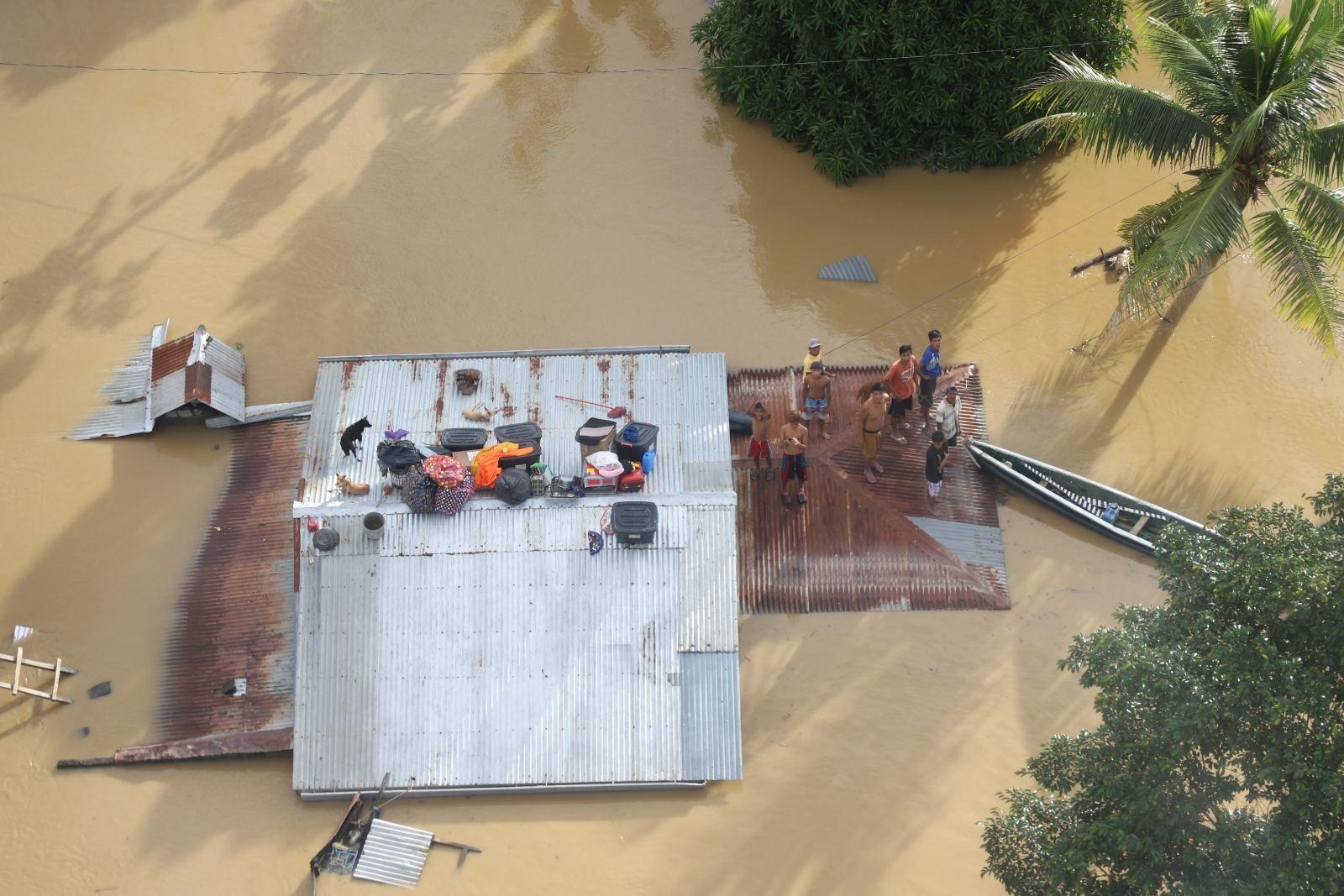
The widespread havoc wrought on Luzon and some parts of Visayas by strong typhoons in the last quarter of 2020 could further weigh on the economy, which is already reeling from the impact of COVID-19 pandemic.
In a virtual press conference, National Economic and Development Authority (NEDA) Undersecretary Rosemarie Edillon said initial estimates suggest that the recent typhoons—particularly Quinta, Rolly, and Ulysses—could “shed off .15 percentage points to the full-year [gross domestic product].”
“In peso terms... I don’t have the exact amount but it will be something like P90 billion,” she said.
The NEDA official noted that the figures could still change since data is still being collated on the ground.
Latest data available from the National Disaster Risk Reduction and Management Council showed Typhoon Quinta caused P1,561,935,343.72 worth of damage to infrastructure and P2,660,730,962 to agriculture.
Super Typhoon Rolly, on the other hand, caused P12,867,014,693.78 damage to infrastructure and P5,008,430,180.00 to agriculture.
As for Typhoon Ulysses, the cost of damage to infrastructure stood at P5,256,272,751.28.
For the damage to agriculture, latest data from the Department of Agriculture showed Ulysses caused P3.84 billion in damage to rice, corn, livestock, high-value crops, irrigation and agricultural infrastructures.
The Philippine economy remained in the negative territory during the third quarter, clocking in at -11.5% as the country continues to reel from the COVID-19 pandemic’s economic fallout.
The figure, however, is a slight improvement from the revised record-low of -16.9% in the second quarter, but still a turn around from the 6.0% growth in the same period last year.
The year-to-date economic growth averaged -10%, making it difficult for the country to achieve the government’s forecast of a modest -5.5% contraction for the entire 2020.
Nevertheless, economic managers are expecting that the economy will bounce back by 6.5 to 7.5% in 2021.
Edillon said such expectation has already factored in the possibility that a COVID-19 vaccine is already available in the latter part of next year.
Further, the unemployment rate could further decline as more businesses are gradually allowed to reopen, she said.
In July, the unemployment rate eased to 10% equivalent to 4.6 million jobless adults from 17.7% in April or around 7.3 million unemployed individuals.
The Philippine economy was in a standstill during the latter part of the first quarter due to the implementation of strict quarantine measures — enhanced community quarantine (ECQ) in Metro Manila and other high-risk areas from March 17 to May 15, followed by a modified enhanced community quarantine (MECQ) until May 31.
Lighter restrictions were then implemented under the general community quarantine (GCQ) starting June 1. Metro Manila and four other nearby provinces, however, were reverted to the stricter MECQ on August 4 that lasted until August 18. — BM, GMA News

