

 GMA Brandtalk
 Tracking
 Archives

Marcos economic outlook meets mixed reality, a year after SONA 2025
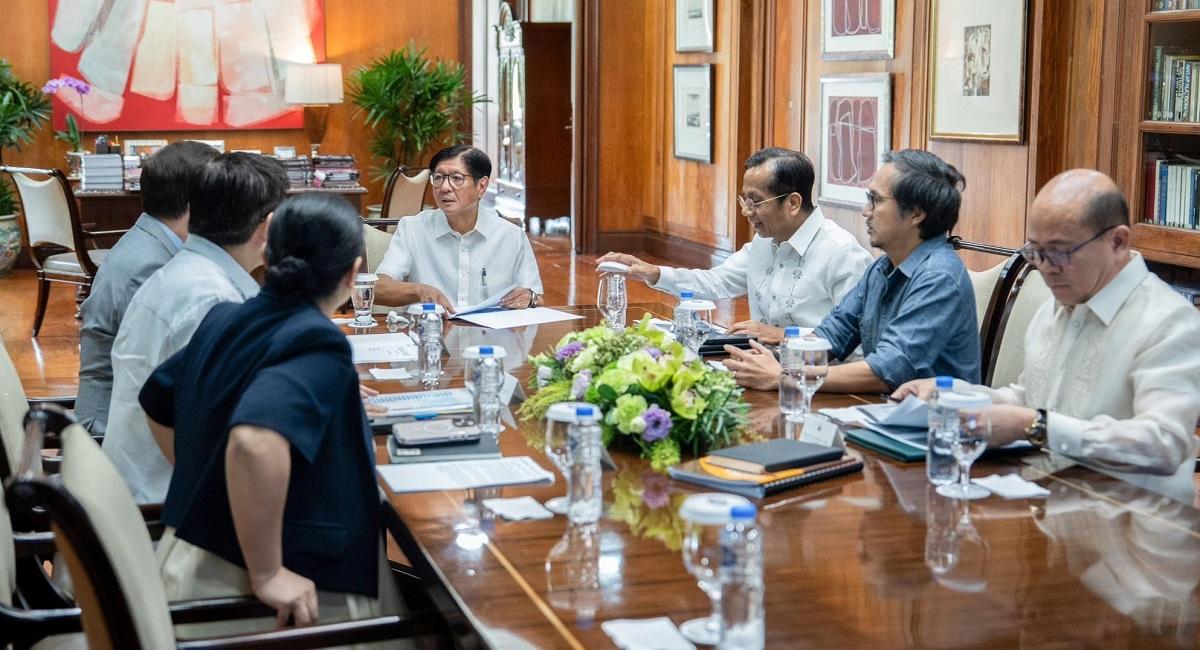
In 2025, President Ferdinand “Bongbong” Marcos Jr. projected confidence in the Philippine economy as he cited easing inflation, improving employment, and growing business optimism. A year later, the country faces both internal and external headwinds.
"Kung datos lang ang pag-uusapan, maganda ang ating ekonomiya, tumaas ang kumpiyansa ng mga negosyante. Bumaba ang inflation, dumami ang trabaho,” he said in his State of the Nation Address (SONA) last year.
“Ngunit ang lahat ng ito ay palamuti lamang, walang saysay, kung ang ating kababayan naman ay hirap pa rin at nabibigatan sa kanilang buhay,” he added.
(If we look only at the data, our economy is doing well. Business confidence has increased. Inflation has eased, and employment has grown.
But all of these are merely ornaments, meaningless, if our people continue to struggle and carry heavy burdens in their daily lives.)
A year later, the Philippines has achieved a decades-long goal of being classified as an upper-middle income economy, reflecting an increase in gross national income per capita.
EXPLAINER: What the Philippines’ upper-middle-income status means for Filipinos
Other indicators, however, present a mixed picture.
Inflation
Inflation—the rate at which consumer prices grow—stood at 1.4% in June 2025, a month before Marcos’ SONA last year.
This year, June's inflation is 6.4%. This is slower than the 6.8% in May, but still remains above the Bangko Sentral ng Pilipinas’ (BSP) target range of 2% to 4%. The central bank expects it to average 6.4% this year.
Inflation has largely been driven by higher global oil prices due to the conflict between the United States and Iran. The Philippines, a net fuel importer, in March declared a state of national energy emergency as the war shut the Strait of Hormuz, choking the world's global oil supply.
Economic growth
The gross domestic product (GDP)—the value of all the goods and services produced by a country within a certain period—grew by 5.5% in the second quarter of 2025, the quarter before the 2025 SONA, slightly faster than the 5.5% in the previous three months.
In the same quarter this year, the Philippine economy grew by 2.8%, down from 3% in the previous quarter, and 5.4% from a year ago. This is also the weakest showing since the 3.8% contraction during the COVID-19 lockdowns in the first quarter of 2021.
Economic managers have already downgraded their growth target range to 3.5% to 4.5% from from 5% to 6% previously. Economy and Planning Secretary Arsenio Balisacan said the first half of the year will be hit by the impact of the flood control corruption scandal on spending, and the Middle East crisis that has triggered global fuel prices to skyrocket.
“We see that the second-half would be a much more improved situation insofar as the infrastructure and government spending is concerned,” he said.
Latest data from the Department of Budget and Management (DBM) show that infrastructure and other capital outlays—funds for the purchase and maintenance of physical assets, another key indicator—stood at P41.5 billion in April 2026.
This reflected a 52% drop from the P85.8 billion the same month a year ago, marking the 10th straight month of decline after the flood control corruption scandal jolted the bureaucracy.
It also brought the year-to-date infrastructure spending to P189.3 billion, down 45.6% from P347.6 billion, as the DBM said the turnaround times for payments processing were extended due to review procedures.
Business confidence
The overall business confidence index (CI) was at 28.2% in the second quarter of 2025—the quarter preceding Marcos’ 2025 SONA—indicating that more business leaders were optimistic about the economy.
Latest data available from the BSP, however, shows that the overall business CI stood at -25.2 in May 2026, meaning more business leaders are pessimistic than optimistic about the economy. This is already an improvement from the -35.8% recorded in April.
For the next three months, the CI was at 0.6 (from -7.5% in May). This improved further for the next 12 months at 27.8 (from 19.5 in May).
“Philippine business sentiment improved in May on expectations that consumer spending will pick up to support corporate earnings,” the BSP said.
Foreign Direct Investments (FDIs)
Net inflows of FDIs fell to $250 million in April, down from $611 million in March and $607 million a year ago. This is the lowest in nearly 10 years since June 2016’s $244 million, and compares with the $350 million in June 2025.
FDI data cover investments by foreign investors in Philippine companies in which they own at least a 10% stake, including funds from overseas affiliates to their Philippine parent firms. — BM, GMA News

