

 GMA Brandtalk
 Tracking
 Archives

Ube farmers form federation amid crop's popularity
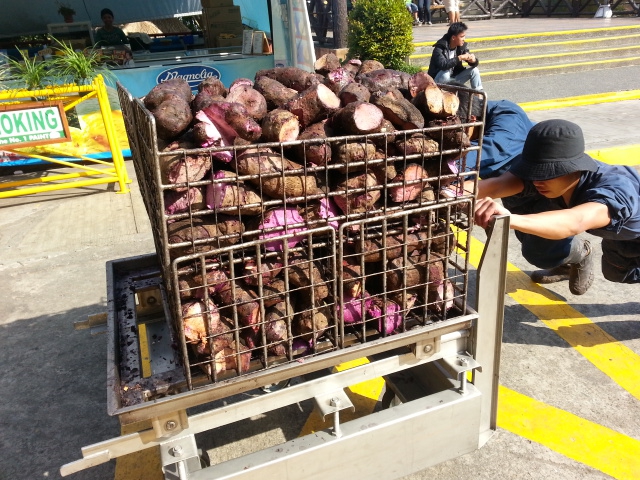
A federation consisting of Ube farmers and other industry stakeholders was formed to push for a bigger market for the Philippine Ube amid the root crop's rising popularity.
The Department of Agriculture (DA) expressed its support to the United Ube PH Association Inc., a national organization consisting of farmers, cooperatives, growers, processors, traders, exporters, researchers, the academe, government agencies, and other industry players.
“This organization gives the ube industry a stronger advocate and a clearer path to market. We want Philippine ube to become one of our export winners, and that means building an industry strong enough to meet global demand while ensuring our farmers capture more of its value,” said DA Secretary Francisco Tiu Laurel Jr. in a statement.
United Ube PH became an officially recognized non-stock, non-profit organization for the Philippine ube industry following its Securities and Exchange Commission registration in August.
The federation is currently holding exploratory discussions with Philippine and German chambers and developing long-term supply and purchase agreements, the DA said.
The organization is also drafting a bilateral agreement with the DA for government-industry cooperation and identifying areas for joint intervention.
With the formation of the federation, the local Ube industry is eyeing to boost exportation as current production is estimated at around 50 to 60 metric tons per operator.
“Ube is no longer simply a traditional crop associated with our local food culture. It has become a high-potential agricultural commodity with growing demand for fresh ube and value-added products in both domestic and international markets,” DA Undersecretary Philip Young said in a statement.
The DA earlier said that it has earmarked funding under its proposed 2027 budget to support the country’s Ube industry amid growing global demand.
There were also 10 varieties of the purple yam that have been identified to sustain the demand.
Ube is widely cultivated in Bohol, dubbed as the Philippines’ “Ube Capital, as well as in Benguet, Batangas, and Quezon.
The country has distinct cultivars, or plant varieties, like Ubi Kinampay of Bohol and Leyte Ubi, which it can proudly claim as uniquely Filipino. —VAL, GMA News

