

 GMA Brandtalk
 Tracking
 Archives

ADVERTISEMENT
Filtered By: Newstv
NewsTV
Brigada Blogs: A pilgrimage for San Pedro Calungsod
Filipino Catholics around the world celebrated the canonization of St. Pedro Calungsod, the second Filipino saint. Reporter Cesar Apolinario travelled to the Vatican to cover the canonization for the GMA News TV program “Brigada.” Here, he shares with GMA News Online some of the side stories he discovered during his coverage. He also reflects on why so many Filipino overseas workers are inspired by the story of St. Pedro Calungsod: 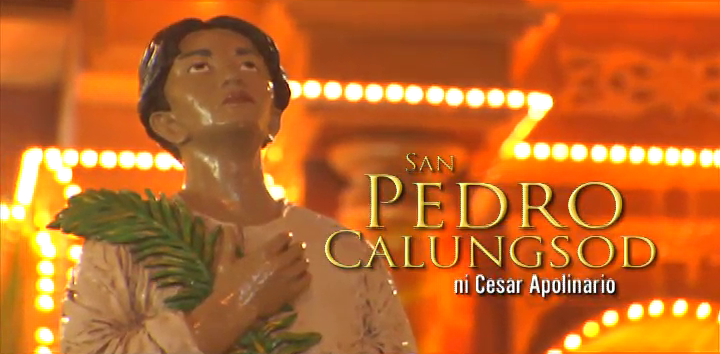 St. Pedro Calungsod's canonization was covered by all the major media organizations in the Philippines. How did you make your story on the canonization different from the other reports done on the subject? I’m the kind of a reporter who looks for simple, not-so-sensational stories. Everyone in the broadcast industry goes gaga over big stories, but when you’re covering big stories, it’s like you’re almost at the end of a book with hardly any more pages left to turn. Small stories, on the other hand, are like the middle of a book. The best part is yet to come. When doing the story on St. Pedro Calungsod, I tried to focus on the small stories as well, like the stories of the Filipinos I met in Italy. I feel proud that I was given the chance to cover this momentous event at the most holy Vatican. But I'm more proud to have witnessed a Filipino being canonized in a foreign land. I was there, witnessing history unfold. Why do you think Filipinos are so interested in the canonization? We are a Catholic nation, the biggest and only one in Asia. Around 30,000 Filipino attended the canonization—if that’s not a huge number, I don’t know what is. Pinoys are interested in international news stories with a “Filipino” angle. You met a lot of Filipinos while you were there. What are some of the most memorable and interesting stories you encountered during your coverage? During one of the masses, I met an OFW named Michael. He came all the way from Abu Dhabi and spent his days at the Vatican attending all the events, including the mass at St. Peter's Basilica, the thanksgiving masses for St. Pedro Calungsod, as well the procession and the celebration for our saint. I myself was an OFW before I landed a job at GMA. My own story was a lot like Michael’s. His main goal goal is to earn a living to support his family, who isn’t well off. I was touched to learn that Michael joined a "paluwagan,” a system in which a group of people pool their money, and the members of the group take turns using the pooled cash on a monthly basis. It’s a typical Filipino way of sharing and saving money. Michael specifically requested to get his share in October so he could go to the Vatican for the canonization of our kababayan who, like Michael, also once left our country with a purpose—to serve and to preach the word of God. The “paluwagaan” practice says a lot about us Filipinos. It shows that we Pinoys are willing to do almost anything to reach our dreams—in Michael’s case, to attend the canonization. While some Pinoys might just gamble away their hard-earned money, Michael joined the “paluwagan” to attend the canonization, a reflection of his strong Catholic faith. Pedro Calungsod was a migrant. Did you speak with any Filipino migrants who could relate to Calungsod's story? According to Fr. Federico Lombardi, head of the Vatican press office, there were about 25,000 to 30,000 Filipinos who attended the canonization. I learned Filipinos, many of whom were OFWs from Italy and other countries, made up the largest crowd at the canonization. I will never forget attending this one mass, during which I saw many Filipinos crying. Most of them were OFWs from all over the world. They cried during the sermon, when the priest talked about St. Pedro Calungsod being an OFW. OFW talaga ang bagong bayani. What did you want your audience to take away from your story about St. Pedro Calungsod's life and canonization? The reporter's primary job is to capture the event, and to tell the news as it unfolds. There’s a story in everything, big or small. The “masa” audience, however, doesn’t really care that much about how the canonization program went, or how many people attended. Anywaym, this information was reported by all the international networks, including CNN and BBC. Pinoys look for the small stories, like the "paluwagan" story. I also did a story about a Malaysian national who happened to be a Christian from a Muslim country. He didn’t know until he was at the Vatican that an Asian man was also going to be canonized that day. When he learned this, he wanted to catch a glimpse of St. Pedro Calungsod, to ask for the Filipino saint’s blessings. I thought that was pretty cool. —Angel Bombarda/PF, GMA News
St. Pedro Calungsod's canonization was covered by all the major media organizations in the Philippines. How did you make your story on the canonization different from the other reports done on the subject? I’m the kind of a reporter who looks for simple, not-so-sensational stories. Everyone in the broadcast industry goes gaga over big stories, but when you’re covering big stories, it’s like you’re almost at the end of a book with hardly any more pages left to turn. Small stories, on the other hand, are like the middle of a book. The best part is yet to come. When doing the story on St. Pedro Calungsod, I tried to focus on the small stories as well, like the stories of the Filipinos I met in Italy. I feel proud that I was given the chance to cover this momentous event at the most holy Vatican. But I'm more proud to have witnessed a Filipino being canonized in a foreign land. I was there, witnessing history unfold. Why do you think Filipinos are so interested in the canonization? We are a Catholic nation, the biggest and only one in Asia. Around 30,000 Filipino attended the canonization—if that’s not a huge number, I don’t know what is. Pinoys are interested in international news stories with a “Filipino” angle. You met a lot of Filipinos while you were there. What are some of the most memorable and interesting stories you encountered during your coverage? During one of the masses, I met an OFW named Michael. He came all the way from Abu Dhabi and spent his days at the Vatican attending all the events, including the mass at St. Peter's Basilica, the thanksgiving masses for St. Pedro Calungsod, as well the procession and the celebration for our saint. I myself was an OFW before I landed a job at GMA. My own story was a lot like Michael’s. His main goal goal is to earn a living to support his family, who isn’t well off. I was touched to learn that Michael joined a "paluwagan,” a system in which a group of people pool their money, and the members of the group take turns using the pooled cash on a monthly basis. It’s a typical Filipino way of sharing and saving money. Michael specifically requested to get his share in October so he could go to the Vatican for the canonization of our kababayan who, like Michael, also once left our country with a purpose—to serve and to preach the word of God. The “paluwagaan” practice says a lot about us Filipinos. It shows that we Pinoys are willing to do almost anything to reach our dreams—in Michael’s case, to attend the canonization. While some Pinoys might just gamble away their hard-earned money, Michael joined the “paluwagan” to attend the canonization, a reflection of his strong Catholic faith. Pedro Calungsod was a migrant. Did you speak with any Filipino migrants who could relate to Calungsod's story? According to Fr. Federico Lombardi, head of the Vatican press office, there were about 25,000 to 30,000 Filipinos who attended the canonization. I learned Filipinos, many of whom were OFWs from Italy and other countries, made up the largest crowd at the canonization. I will never forget attending this one mass, during which I saw many Filipinos crying. Most of them were OFWs from all over the world. They cried during the sermon, when the priest talked about St. Pedro Calungsod being an OFW. OFW talaga ang bagong bayani. What did you want your audience to take away from your story about St. Pedro Calungsod's life and canonization? The reporter's primary job is to capture the event, and to tell the news as it unfolds. There’s a story in everything, big or small. The “masa” audience, however, doesn’t really care that much about how the canonization program went, or how many people attended. Anywaym, this information was reported by all the international networks, including CNN and BBC. Pinoys look for the small stories, like the "paluwagan" story. I also did a story about a Malaysian national who happened to be a Christian from a Muslim country. He didn’t know until he was at the Vatican that an Asian man was also going to be canonized that day. When he learned this, he wanted to catch a glimpse of St. Pedro Calungsod, to ask for the Filipino saint’s blessings. I thought that was pretty cool. —Angel Bombarda/PF, GMA News 
