

 GMA Brandtalk
 Tracking
 Archives

What are storm chasers and why do they matter when typhoons strike?
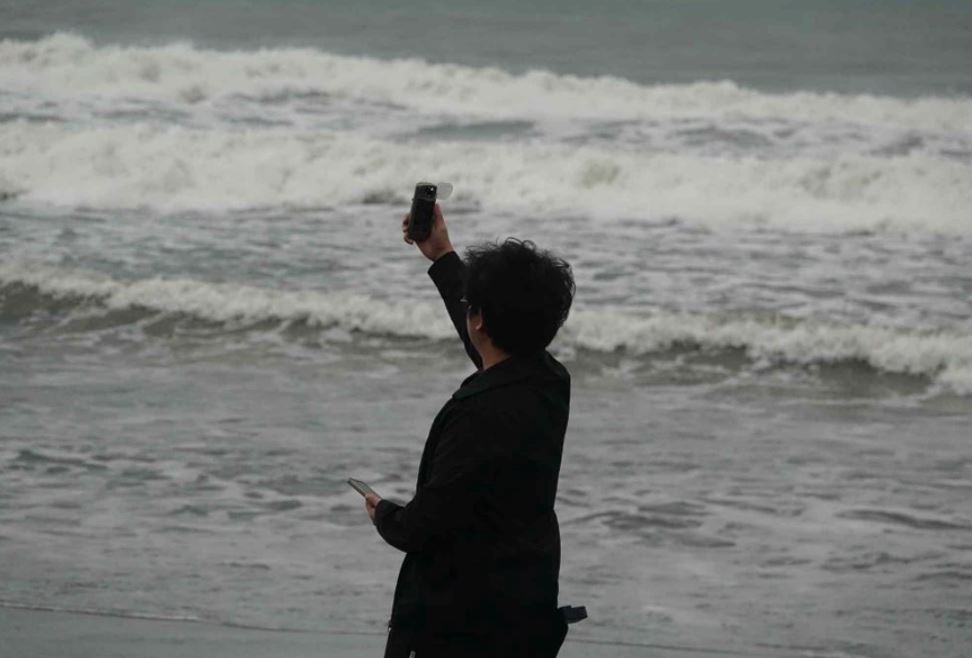
As PAGASA officially declared the onset of the rainy season, Filipinos are once again turning to weather forecasts for updates on typhoons and other weather disturbances.
Critical information—including a storm’s location, track, potential landfall area, Tropical Cyclone Wind Signals (TCWS), and expected impacts—comes largely from the weather agency’s network of monitoring stations across the country.
These monitoring stations use a mix of manual observations and automated systems to track rainfall, wind, temperature, humidity, and atmospheric pressure, providing the data needed for forecasts and weather warnings.
"However, weather experts said these stations have limitations in terms of real-time observation and localized monitoring, thus the need to deploy a small team called ‘storm chasers’ on the ground during typhoons to conduct ground truth investigation," according to a report by Claire Bernadette Mondares from DOST-Science and Technology Information Institute.
Weather specialist and storm chaser Marco Polo Ibañez said the Philippines' topography is very complex, including coastal communities, and not all can be covered by monitoring stations, satellite, and radar.
What are storm chasers and why they matter?
Storm chasers have existed even in the ‘90’s, PAGASA said, quoting web sources.
According to the weather agency, several sources define a storm chaser as "someone who intentionally pursues severe weather to conduct scientific research or media coverage."
Storm chasers may also be described as a group of meteorologists formed as a specialized technical working group, specifically during typhoon season, said engineer Wilfredo Tuazon, assistant weather services chief of the Hydro Meteorology, Tropical Meteorology, and Instruments Research and Development Section and the storm chaser team coordinator.
Weather specialist and storm chaser Lean Michael Malabanan said that by having a team on the ground, DOST-PAGASA gets to know the local perspective of the affected community and assess how they respond and prepare for the weather information they receive.
“Mahalagang-mahalaga na malaman namin kung paano tumatakbo 'yong isip nila para mas ma-refine pa natin, kung paano natin i-de-deliver 'yong mga weather and climate information natin,” Malabanan said.
(It's very important that we know how their minds work so that we can further refine how we deliver our weather and climate information.)
Unlike weather forecasters who are office-based and are more focused on the entire country’s weather status, storm chasers are deployed onsite, chasing a tropical cyclone that is forecast to cause severe damage, Ibañez said.
He said the storm chasing team works closely with the forecasters by providing hourly field updates that serve as the forecaster’s eyes on the ground, allowing them to validate and cross-check forecasted weather conditions against actual observations in real time.
This continuous feedback enhances situational awareness and helps ensure that weather advisories and warnings remain accurate and responsive to evolving conditions, he added.
Meet the PH storm chasers
Tuazon, Ibañez, and Malabanan are among the storm chasers deployed during the Super Typhoon Uwan in November 2025 at Barangay Sabang, Baler Aurora.
Tuazon said the storm-chasing team is usually composed of five to seven members, including a team leader, a documenter, an instrumentalist, at least three meteorologists, and drivers who are also in charge of assisting the team.
The team leader acts as the overall coordinator and head of delegation for the team, while the documenter collects photos and videos before, during, and after the deployment. The instrumentalist is in charge of installing the equipment used to gather data, such as, but not limited to, digital barometers, ultrasonic wind sensors, and automatic and manual rain gauges.
Currently, DOST-PAGASA can only deploy storm chasers in Luzon due to budget constraints.
The agency has around 10-15 storm chasers. But not all can be deployed in the field during typhoons, as some are given different tasks. —LDF/KG, GMA News

